The psychological dependence of humanity on playing is huge. Its nature and functional utility are unclear. These linked yet contradictory issues have created the intrigue that has fed philosophical thought for more than two hundred years. During this period, philosophy transferred many of the subjects of its analysis to the aegis of the humanities that it spawned. Each of them pays close attention to human play and studies it with its own methods of theoretical and experimental research. Thus, what was once a general philosophical comprehension of human play has branched out into different directions, definitions, and theories. This new book represents a renewed general view of human play. The unique quality of the volume lies in its fairly rare interdisciplinary methodology, encompassing a broad spectrum of the humanities: philosophy, anthropology, sociology, and the history of play, and behavioral analysis of playing, which have been done by the author. As a result, the volume ends with the proposition of a new general approach to human play that is named by the author “play field theory”. Such an approach makes reflections on play, sport, and culture a source for all scholars studying play, by widening their knowledge through both a new general view and their familiarization with notions from neighboring fields and disciplines.
Felix Lebed, Ph.D., is Head of the M.Ed. degree program in the Physical Education Department at Kaye Academic College of Education, Israel.
Part I: The idea of play Chapter 1: “Slow-moving” Philosophy of PlayUsefulness of Play before Philosophical Comprehension First Steps Toward Philosophy: Functionalism as a Key for Explanations of Human PlayBibliographyChapter 2: Principal Definability of PlayIntroductionPlay, Games, and Sports in the English Language (a Cultural-anthropological View)Reflection of Human Play in Different Languages in the 20th and 21st CenturiesThe Wittgensteinian ObstacleBibliographyChapter 3: Definition of Play as EscapeIntroductionQualitative Content Analysis of Philosophical Ideas about Human PlayDiscussionBibliographyChapter 4: Sport is Play TooIntroductionThe Diversity of the Concept of Sport in English Cultural TraditionIs Physical Activity Necessary and Sufficient for a Definition of Sport?Sport as Play and GameOfficialization and Unproductiveness as Necessary Characteristics of SportBibliographyPart II: “Contemplation” of Play and Games PlayingIntroduction to Part IIChapter 5: Games’ Typologies Common and Unique in Games Humans PlayTypologies of Games by Aims and Forms of PlayingThree-measure Taxonomy of Games and Sports BibliographyChapter 6: Ways Moving from Games to SportsIntroduction CrystallizationInventing Games by Developing and Adopting Original Ideas“Natural selection”BibliographyChapter 7: Key Characteristics of an Invasive GameMutually Active Conflict between Sides"Perturbation" and a Personal Space-time in Invasive GamesBibliographyPart III: Play and Society Introduction to Part IIIChapter 8. Social Person in PlayIntroduction"Being There": Kinds of Human Play in Different Behavioral EnvironmentsPersonal vs. Individual PlayEmergent Indeterminacy: Hidden Flows of Small Groups PlayingWanted Suspense: Large Groups PlayingConclusionsBibliography Chapter 9. Masses in PlayIntroductionPlay and Social Communication in Ancient Sacral RitualPlay in Sacral MysteriesFestival vs. Carnival Play in the GrandstandsSummaryBibliographyChapter 10. Sports Spectators and Fans in PlayAccepted Typologies of Sport SpectatorsNew Typology of Sport Spectators as “players”: Empirical ResearchAppendix: Questionnaire for Spectators and FansBibliographyChapter 11: Professional Sport in Symbiosis with FansIntroductionFrom play to Meta-sportDialectics in the Transformations of Professional SportBibliographyAfterword: Introduction to the Play Field Theory (PFT)
Christian Brandt, Fabian Hertel, Sean Huddleston, Germany) Brandt, Christian (University of Bayreuth, UK) Hertel, Fabian (Centre for the Study of Football and Its Communities, UK) Huddleston, Sean (University of the West of Scotland
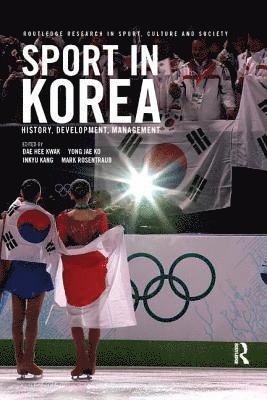
Dae Hee Kwak, Yong Jae Ko, Inkyu Kang, Mark Rosentraub, USA) Kwak, Dae Hee (University of Michigan, USA) Ko, Yong Jae (University of Florida, USA) Kang, Inkyu (Penn State University, USA) Rosentraub, Mark (University of Michigan