
Del i serien Library of Hebrew Bible/Old Testament Studies
Rashi - Linguist despite Himself
A Study of the Linguistic Dimension of Rabbi Solomon Yishaqi's Commentary on Deuteronomy
Inbunden, Engelska, 2010
2 719 kr
Beställningsvara. Skickas inom 10-15 vardagar. Fri frakt för medlemmar vid köp för minst 249 kr.
Finns i fler format (1)
The commentary on the Torah of the eleventh-century French rabbi, Solomon Yishaqi of Troyes (better known as Rashi), is one of the major texts of mediaeval Judaism. Rashi's commentary has enjoyed an almost canonical status among many traditional Jews from mediaeval times to the present day. The popularity of his Torah commentary is often ascribed to Rashi's skillful combination of traditional midrashic interpretations of Scripture with observations on the language employed therein. In this respect, Rashi is often presented as a linguist or grammarian. This book presents a critical reappraisal of this issue through a close reading of Rashi's commentary on the book of Deuteronomy. Falling into two major sections, Part One (Contexts) presents a theoretical framework for the detailed study in Part Two (Texts), which forms the main core of the book by presenting a detailed analysis of Rashi's commentary on the book of Deuteronomy.
Produktinformation
- Utgivningsdatum2010-10-28
- Mått161 x 236 x 21 mm
- Vikt490 g
- FormatInbunden
- SpråkEngelska
- SerieLibrary of Hebrew Bible/Old Testament Studies
- Antal sidor224
- FörlagBloomsbury Publishing PLC
- ISBN9780567438560
Tillhör följande kategorier
Hoppa över listan


Mer från samma serie
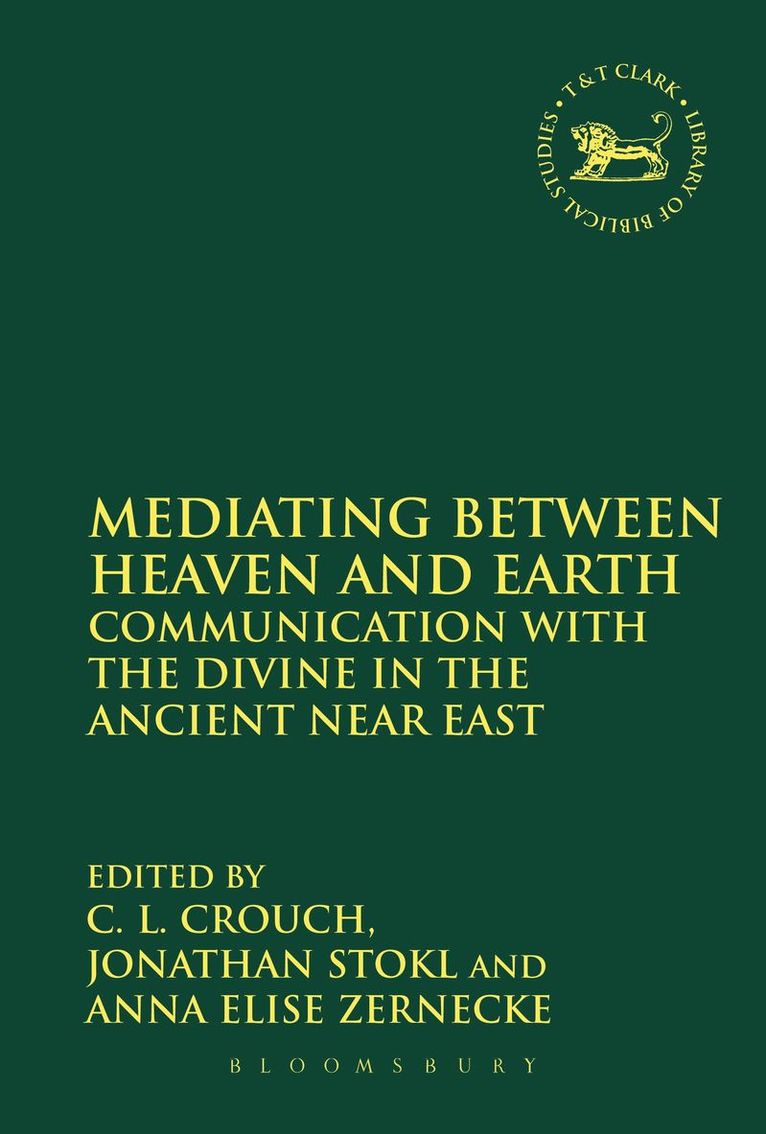
Mediating Between Heaven and Earth
C.L. Crouch, Jonathan Stökl, Anna Elise Zernecke
Häftad, 2014
709 kr
Cognitive Perspectives on Israelite Identity
Dermot Anthony Nestor, Andrew Mein
Inbunden, 2010
2 719 kr
Hoppa över listan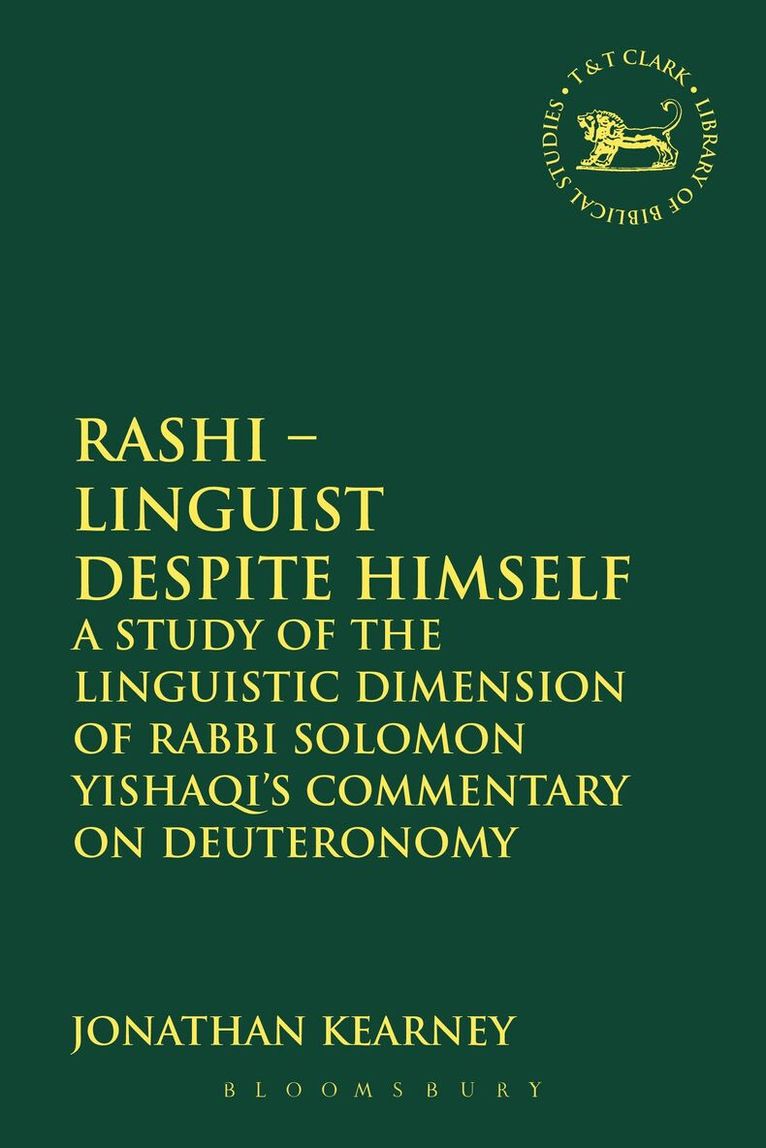







Du kanske också är intresserad av
- Nyhet
Del 3
- Nyhet
Del 11
- Nyhet
Del 6
- Nyhet
Del 4
Del 3
Del 1
Del 2