
Del i serien Advances in Criminological Theory
Qualitative Research in Criminology
Advances in Criminological Theory
Inbunden, Engelska, 2015
3 909 kr
Beställningsvara. Skickas inom 3-6 vardagar. Fri frakt för medlemmar vid köp för minst 249 kr.
This volume investigates the significant role qualitative research plays in expanding and refining our understandings of crime and justice. It features seventeen original essays that discuss the relationship between methodology and theory. The result is a theoretically engaged volume that explores the approaches of qualitative scholars in the collection and treatment of data in criminological scholarship.Among the key issues addressed in the volume are methodological rigor in qualitative research; movement between method, theory building, theoretical refinement and expansion; diversity of qualitative methodologies, from classic field research to contemporary innovations; and considerations of the future of qualitative criminological research.Qualitative research use has expanded rapidly in the last twenty years. This volume of Advances in Criminological Theory presents a cogent appraisal of qualitative criminology and the ways in which rigorous qualitative research contributes to theorizing about crime and justice.
Produktinformation
- Utgivningsdatum2015-08-30
- Mått152 x 229 x 19 mm
- Vikt630 g
- FormatInbunden
- SpråkEngelska
- SerieAdvances in Criminological Theory
- Antal sidor370
- FörlagTaylor & Francis Inc
- ISBN9781412856775
Tillhör följande kategorier
Hoppa över listan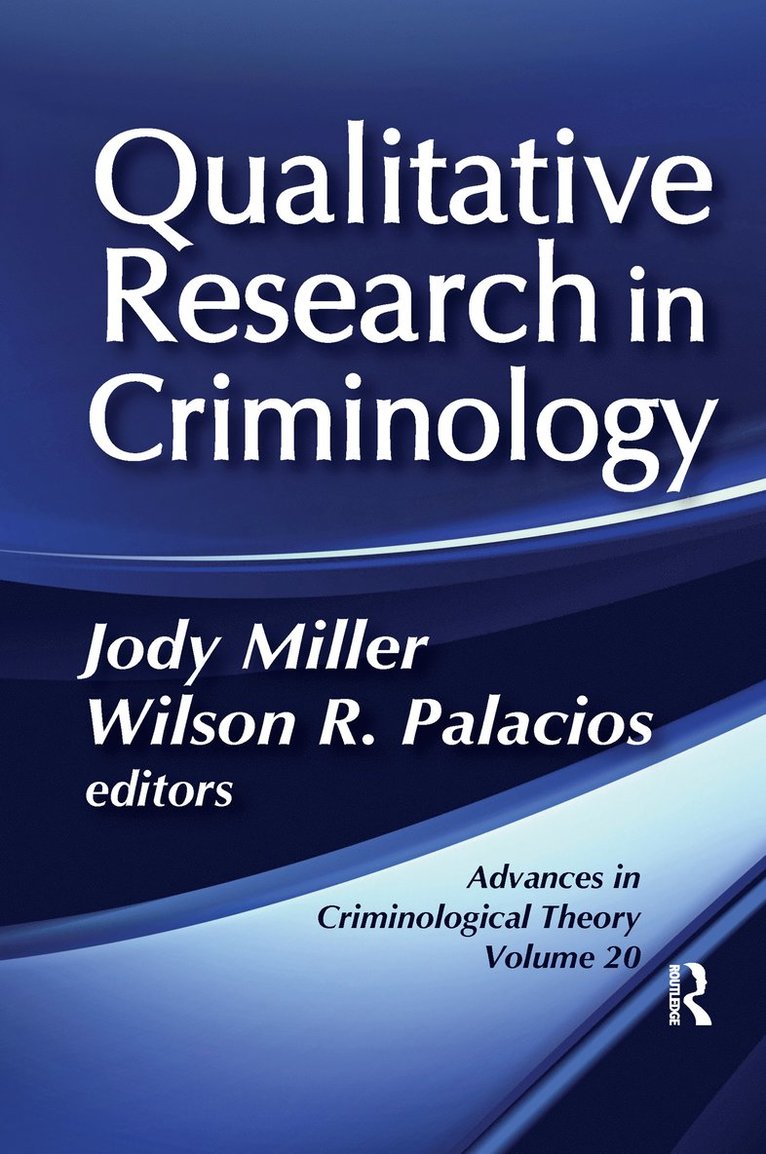




Du kanske också är intresserad av
Process and Structure of Crime
Robert F. Meier, Leslie W. Kennedy, Vincent F. Sacco
Häftad, 2018
959 kr
- Nyhet
Del 3
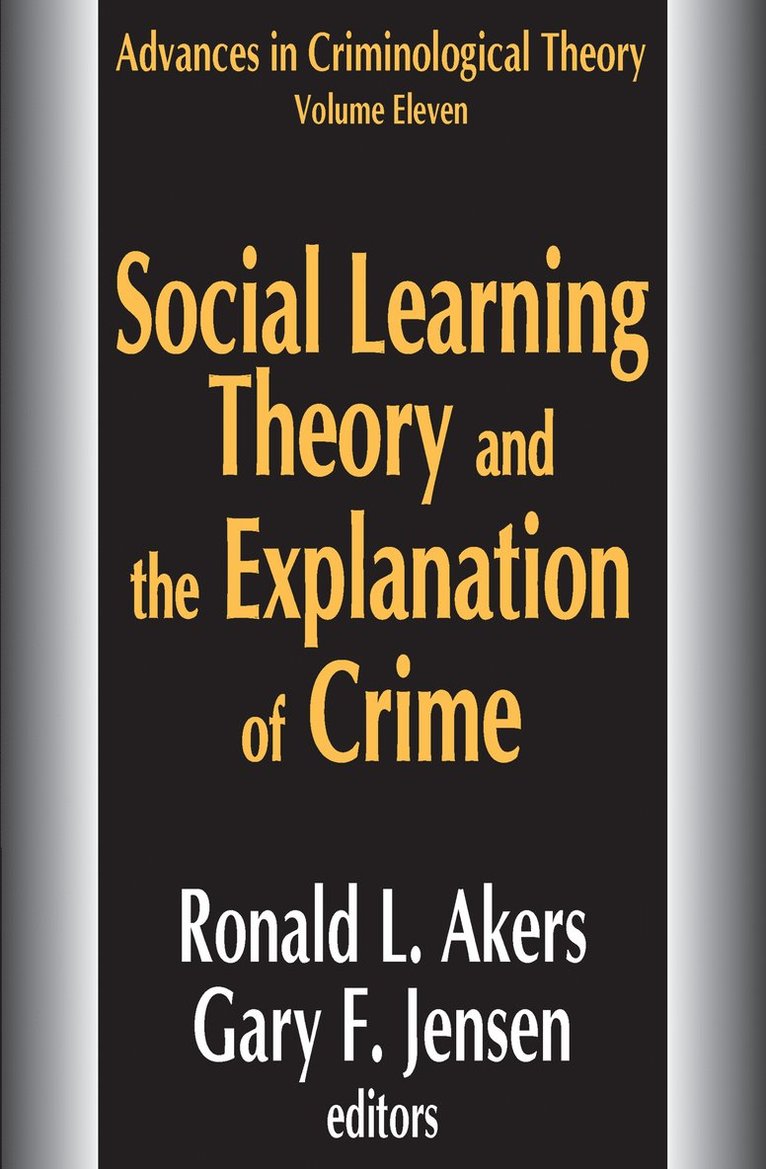
Social Learning Theory and the Explanation of Crime
Ronald L. Akers, Gary F. Jensen
Häftad, 2007
949 kr