
Del i serien Elgar Practical Guides
Practical Guide to Using International Human Rights and Criminal Law Procedures
Häftad, Engelska, 2019
1 239 kr
Beställningsvara. Skickas inom 5-8 vardagar. Fri frakt för medlemmar vid köp för minst 249 kr.
Finns i fler format (1)
With this book, the authors provide a practical, experience-based guide for advocates seeking remedies for human rights violations through the use of international institutions. They offer step-by-step approaches for maximizing the institutions 'intended effect' promotion of human rights at all levels. Since 1948, when the United Nations adopted the Universal Declaration of Human Rights, mechanisms for addressing human rights violations have multiplied to include UN Charter based bodies, treaty-based organizations including the international criminal court, and regional institutions. Each mechanism has its own admissibility requirements: accreditation, timeliness of claims and exhaustion of remedies. For practitioners, the maze of rules and institutions can be difficult to navigate. The authors are able to offer guidance on how to work within international criminal and human rights mechanisms in a way that is useful to non-government actors and applies to English-speaking practitioners almost anywhere on the globe.These pages will serve as an indispensable manual for human rights practitioners, defenders and lawyers, members of non-governmental organizations engaged in advocacy and the students, scholars and faculty of law schools.
Produktinformation
- Utgivningsdatum2019-07-26
- Mått138 x 210 x 11 mm
- Vikt284 g
- FormatHäftad
- SpråkEngelska
- SerieElgar Practical Guides
- FörlagEdward Elgar Publishing Ltd
- ISBN9781788119733
Tillhör följande kategorier
Hoppa över listan

Mer från samma serie
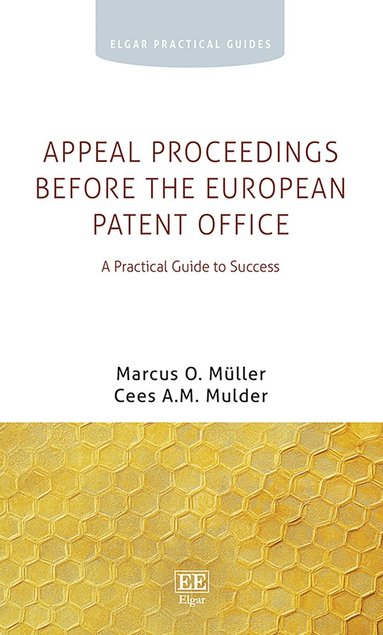
Appeal Proceedings before the European Patent Office
Marcus O. Müller, Cees A.M. Mulder
Inbunden, 2025
2 819 kr
Hoppa över listan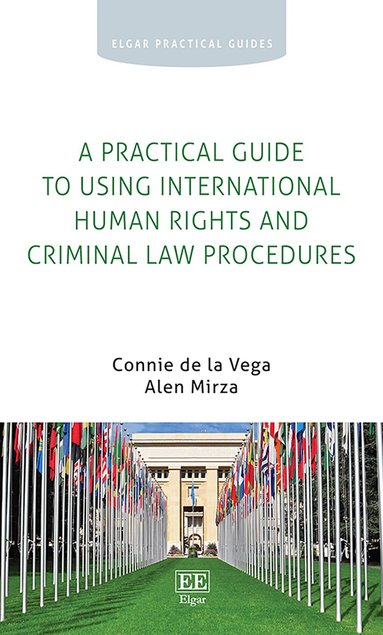



Du kanske också är intresserad av
Practical Guide to Using International Human Rights and Criminal Law Procedures
Connie de la Vega, Alen Mirza
Inbunden, 2019
2 369 kr
Appeal Proceedings before the European Patent Office
Marcus O. Müller, Cees A.M. Mulder
Inbunden, 2025
2 819 kr
- Nyhet
Del 7