Skickas . Fri frakt för medlemmar vid köp för minst 249 kr.
This volume aims to capture evidence of marginalized voices in various contexts globally and show how speakers seek to reclaim their voices and challenge power relations. The chapters reveal how speakers actively confront inequities in society such as the unequal distribution of resources. Through bottom-up initiatives and conscious involvement in language use, documentation and the development of language domains, speakers can address issues of language-based marginalization, (re)establish linguistic human rights and reclaim their linguistic and cultural identity. Chapters in the volume explore commitments to democratic participation, to voice, to the heterogeneity of linguistic resources and to the political value of sociolinguistic understanding. Drawing upon the framework of linguistic citizenship, they link questions of language to sociopolitical discourses of justice, rights and equity, as well as to issues of power and access within a political and democratic framework.
Julia Gspandl is a sign language sociolinguist in the Plurilingualism Research Unit at the University of Graz, Austria. She was recently awarded the Theodor-Körner-Preis 2022 for her research project on the languaging competencies of deaf migrants in Austria.Christina Korb is an affiliated researcher in the Plurilingualism Research Unit at the University of Graz, Austria. She is currently working on a research project concerning educational opportunities among the Slovene minority in Styria.Angelika Heiling is assistant to the Head of Research in the Plurilingualism Research Unit at the University of Graz, Austria. Her research is on critical sociolinguistics with a focus on urban multilingualism, migrant and minority language contexts.Elizabeth J. Erling was recently awarded an Elise Richter Fellowship and is leading a research project on understanding the disparities in English language education in Austria at the University of Vienna.
ContributorsJulia Gspandl, Christina Korb, Angelika Heiling and Elizabeth J. Erling: The Power of Voice in Transforming Multilingual Societies: An IntroductionPart 1. Multilingual PracticesChapter 1. Mary Edward: Multilingualism in Adamorobe and the Case for Adamorobe Sign Language (AdaSL)Chapter 2. Agnes Grond: Şexbizinî Facebook Groups: Virtual Communities as Spaces for Practice, Maintenance and Exploration of an Endangered Language Chapter 3. Vlada V. Baranova: The Grassroots Initiatives for the Revitalization of Kalmyk: Who is Involved in Language Planning, and How?Part 2. Facilitating Voice Chapter 4. Sandra Radinger: Reclaiming Voice in the Austrian Refugee Context through Experiences of AmbiguityChapter 5. Melissa Barnes and Katrina Tour: Giving Voice to Mothers from Refugee Backgrounds: Their Agentic Roles in Children’s LearningChapter 6. Anik Nandi, Maite Garcia-Ruiz and Ibon Manterola: Reclaiming Voice through Family Language Policies: Parental (Socio)linguistic Citizenship in Castilian-Spanish-Dominated Multilingual SettingsPart 3. Building Communities of VoicingChapter 7. Danny Foster: (Socio)linguistic Citizenship in Rural Tanzania: A Perspective from the Capability Approach Chapter 8. Eilidh McEwan: Deaf Capabilities in the Global South: Reflections on Sign Languages and Emancipation Using the Capabilities ApproachChapter 9. Khoi Nguyen: Forming (Socio)linguistic Citizenship through Philanthropy on Facebook Pages of the Vietnamese Diaspora in the UKChapter 10. Phoebe Siu, Bong-gi Sohn and Angel M.Y. Lin: Reclaiming a Plurilingual Voice in EMI Classrooms: Co-creating Translanguaging Space through the Multimodalities-Entextualisation CycleBen Rampton, Mel Cooke, Constant Leung, Dermot Bryers, Becky Winstanley and Sam Holmes: Afterword: Localising (Socio)linguistic CitizenshipIndex
The Power of Voice in Transforming Multilingual Societies is an urgent call to analysts, theorists, researchers, think-tankers, policymakers, and governments to take seriously the voice and (socio)linguistic citizenship of marginalized citizens. Each chapter makes an important intervention on how to uplift every multilingual voice and advances the utility of (socio)linguistic citizenship, first developed in the global South.
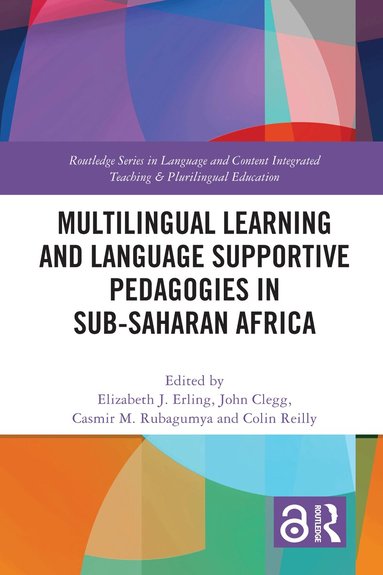
Elizabeth J. Erling, John Clegg, Casmir M. Rubagumya, Colin Reilly, Elizabeth J. (University of Education Upper Austria) Erling, UK) Clegg, John (University of Bristol, Casmir M. (St John's University of Tanzania) Rubagumya, Colin (University of Essex,UK) Reilly
Colin Reilly, Feliciano Chimbutane, John Clegg, Casmir Rubagumya, Elizabeth J. Erling, Colin (University of Essex,UK) Reilly, Mozambique) Chimbutane, Feliciano (Eduardo Mondlane University, UK) Clegg, John (University of Bristol, Casmir (St John's University of Tanzania) Rubagumya, Elizabeth J. (University of Education Upper Austria) Erling
Elizabeth J. Erling, John Clegg, Casmir M. Rubagumya, Colin Reilly, Elizabeth J. (University of Education Upper Austria) Erling, UK) Clegg, John (University of Bristol, Casmir M. (St John's University of Tanzania) Rubagumya, Colin (University of Essex,UK) Reilly