
Del i serien Eco-Efficiency in Industry and Science
Potential for Industrial Energy-Efficiency Improvement in the Long Term
Inbunden, Engelska, 2000
1 439 kr
Beställningsvara. Skickas inom 10-15 vardagar. Fri frakt för medlemmar vid köp för minst 249 kr.
Finns i fler format (1)
It is essential that we find out what opportunities exist for the improvement of energy efficiency, and their limitations, since this is the most cost-effective way to reduce greenhouse gas emissions. This study presents a method for identifying potential technologies which can contribute to the long-term improvement of energy efficiency. An objective measurement of maximum improvement is derived by calculating the theoretical minimum specific energy required to perform a task. Next, a list is drawn up of technologies that could conceivably improve efficiency, extending beyond those normally found in literature on the subject. This method is applied to three major energy-consuming branches of industry: paper and board; iron and steel; and nitrogen fertilizer. Each of the studies provides an in-depth analysis of the industry and an extensive survey of possible ways to improve it.
Produktinformation
- Utgivningsdatum2000-05-31
- Mått155 x 235 x 19 mm
- Vikt571 g
- FormatInbunden
- SpråkEngelska
- SerieEco-Efficiency in Industry and Science
- Antal sidor254
- Upplaga2000
- FörlagKluwer Academic Publishers
- ISBN9780792362821
Tillhör följande kategorier
Hoppa över listan

Mer från samma serie
Adoption of Environmental Innovations
Koos van Dijken, Yvonne Prince, T.J. Wolters, Marco Frey, Giuliano Mussati, Paul Kalff, Ole Hansen, Søren Kerndrup, Bent Søndergård, Eduardo Lopes Rodrigues, Sandra Meredith
Inbunden, 1999
2 949 kr
Eco-Management Accounting
Matteo Bartolomeo, M.D. Bennett, J.J. Bouma, Peter Heydkamp, Peter James, F.B. de Walle, T.J. Wolters
Inbunden, 1999
1 479 kr
Economic Models of Material-Product Chains for Environmental Policy Analysis
P.P. Kandelaars
Inbunden, 1999
1 439 kr
Analytical Tools for Environmental Design and Management in a Systems Perspective
Wrisberg, Nicoline Wrisberg, Helias A. Udo de Haes, Ursula Triebswetter, Peter Eder, R. Clift
Inbunden, 2002
1 429 kr
Del 9
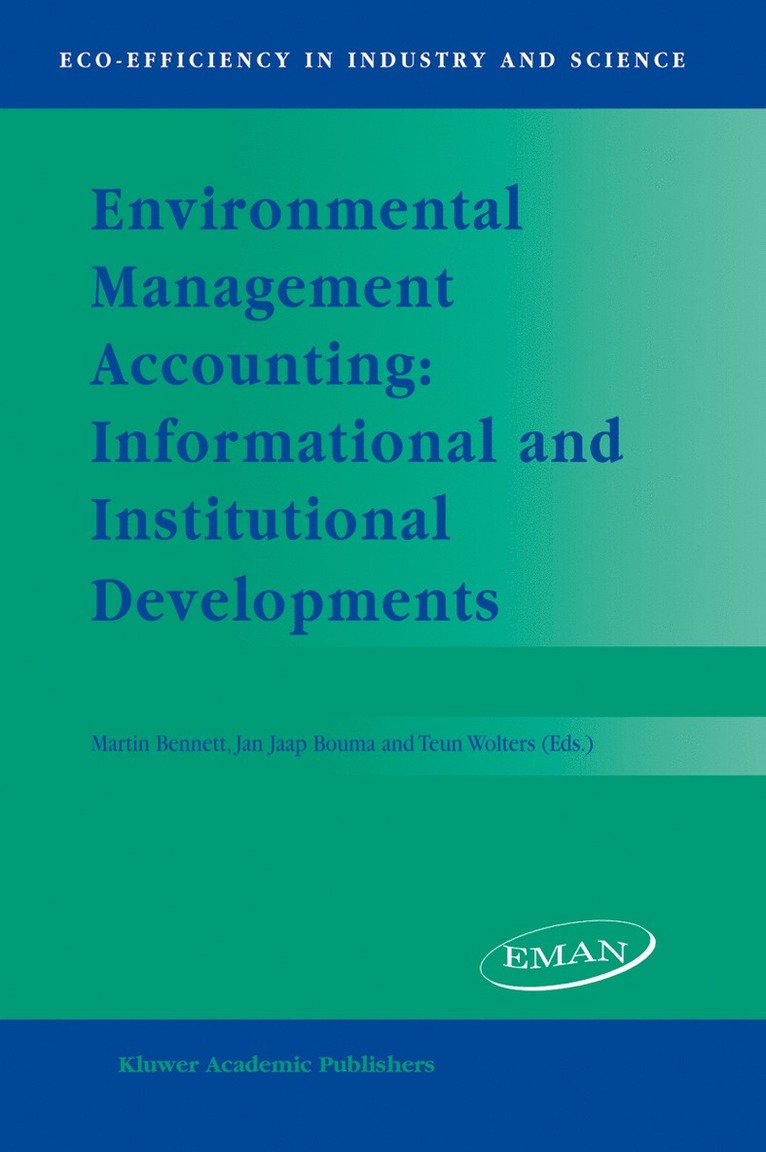
Environmental Management Accounting: Informational and Institutional Developments
M.D. Bennett, J.J. Bouma, T.J. Wolters
Inbunden, 2002
2 139 kr
Environmental Management Accounting: Informational and Institutional Developments
Jean-Pierre Antoine, Martin Bennett, M.D. Bennett, J.J. Bouma, T.J. Wolters
Häftad, 2002
2 139 kr
Hoppa över listan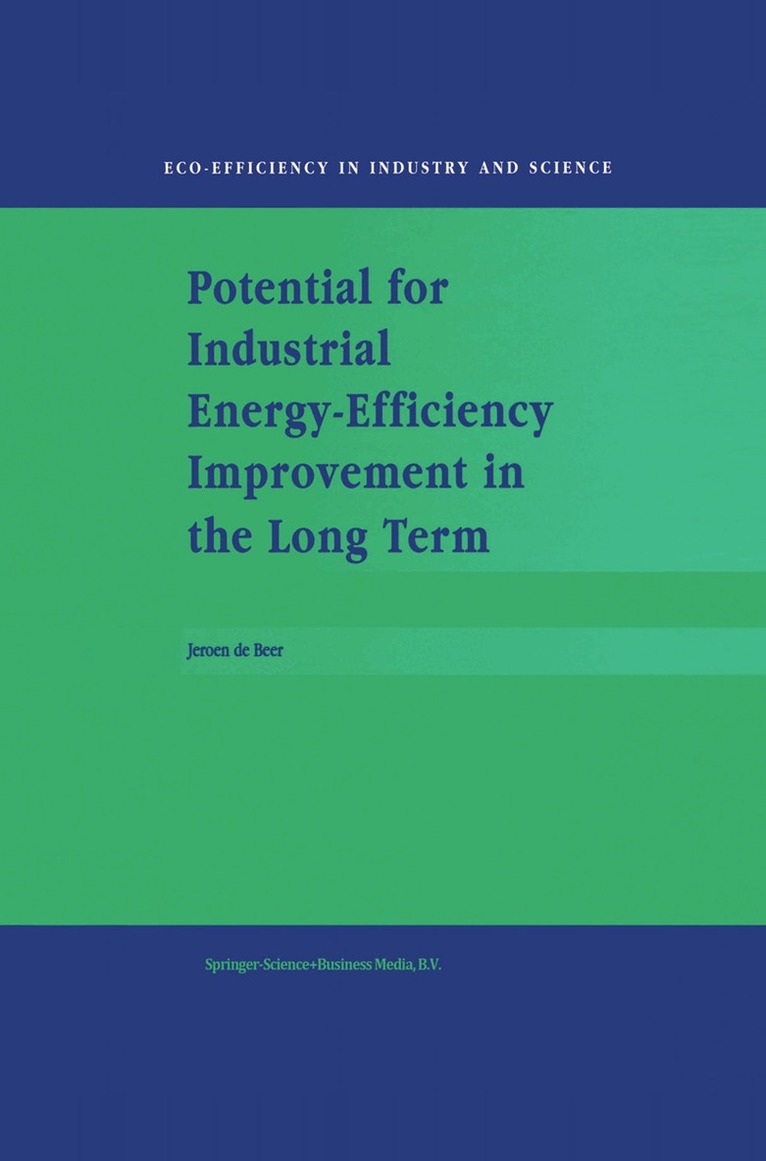








Du kanske också är intresserad av
Potential for Industrial Energy-Efficiency Improvement in the Long Term
J. de Beer
Häftad, 2010
1 439 kr
- Nyhet
Del 3
- Nyhet
Del 11
- Nyhet
- Nyhet
Del 6
Del 1
Del 3
- Nyhet
Del 4
- Nyhet
Del 4