
Postharvest Techniques and Management for Dry Flowers
Inbunden, Engelska, 2011
1 279 kr
Beställningsvara. Skickas inom 5-8 vardagar. Fri frakt för medlemmar vid köp för minst 249 kr.
Finns i fler format (1)
There are numerous reasons for drying plant materials, one of which includes the abundance of available materials. It is estimated that approximately 80% of flower species can be successfully dried and preserved. Advanced training and costly equipment are not necessary to create a wide range of designs. Fresh flowers easily lose their market value and quality, but dried ornamentals can be sold for longer periods if properly preserved, packaged, and handled. Another distinct characteristic of dried ornamentals is their versatility, as they can be arranged in various crafts according to individual preferences, design, and use. This book aims to promote the use of dry flower technology among students of horticulture, agriculture, and enthusiasts.
Produktinformation
- Utgivningsdatum2011-01-15
- Mått150 x 590 x 15 mm
- Vikt590 g
- FormatInbunden
- SpråkEngelska
- Antal sidor222
- FörlagNew India Publishing Agency
- ISBN9789380235868
Tillhör följande kategorier
Hoppa över listan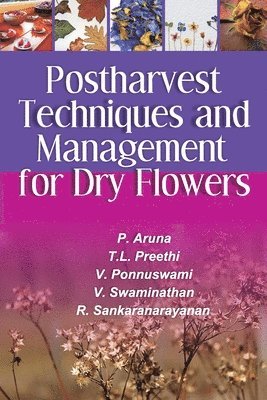




Du kanske också är intresserad av
Postharvest Techniques and Management for Dry Flowers
Aruna, T.L. Preethi, V. Ponnuswami, V. Swaminathan, R. Sankaranarayanan
Häftad, 2011
639 kr
Qualidade e prazo de validade da manga através do uso de cobertura morta e bioinoculantes
P M Suresh, V Swaminathan
Häftad, 2026
709 kr
Qualität und Haltbarkeit von Mangos durch Mulchen und Bio-Impfstoffe
P M Suresh, V Swaminathan
Häftad, 2026
709 kr
Qualité et durée de conservation des mangues grâce au paillage et aux bio-inoculants
P M Suresh, V Swaminathan
Häftad, 2026
709 kr
Qualità e durata di conservazione del mango grazie all'uso di pacciamatura e bioinoculanti
P M Suresh, V Swaminathan
Häftad, 2026
709 kr