
Del i serien Interventions
Postcolonial Encounters in International Relations
The Politics of Transgression in the Maghreb
Häftad, Engelska, 2016
839 kr
Beställningsvara. Skickas inom 10-15 vardagar. Fri frakt för medlemmar vid köp för minst 249 kr.
Finns i fler format (1)
Postcolonial Encounters in International Relations examines the social and cultural aspects of the political violence that underpinned the French colonial project in the Maghreb, and the multi-layered postcolonial realities that ensued. This book explores the reality of the lives of North African migrants in postcolonial France, with a particular focus on their access to political entitlements such as citizenship and rights. This reality is complicated even further by complex practices of memory undertaken by Franco-Maghrebian intellectuals, who negotiate, in their writings, between the violent memory of the French colonial project in the Maghreb, and the contemporary conundrums of postcolonial migration. The book pursues thus the politics of (post)colonial memory by tracing its representations in literary, political, and visual narratives belonging to various Franco-Maghrebian intellectuals, who see themselves as living and writing between France and the Maghreb. By adopting a postcolonial perspective, a perspective quite marginal in International Relations, the book investigates a different international relations, which emerges via narratives of migration. A postcolonial standpoint is instrumental in understanding the relations between class, gender, and race, which interrogate and reflect more generally on the shared (post)colonial violence between North Africa and France, and on the politics of mediating violence through complex practices of memory.
Produktinformation
- Utgivningsdatum2016-10-11
- Mått156 x 234 x 17 mm
- Vikt453 g
- FormatHäftad
- SpråkEngelska
- SerieInterventions
- Antal sidor256
- FörlagTaylor & Francis Ltd
- ISBN9781138289512
Tillhör följande kategorier
Hoppa över listan

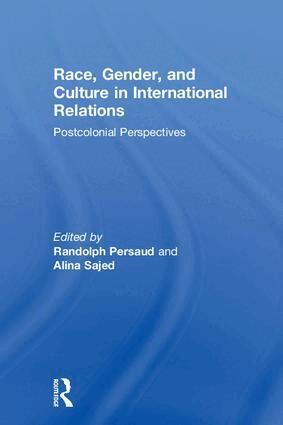
Mer från samma författare
Race, Gender, and Culture in International Relations
Randolph B. Persaud, Alina Sajed
Inbunden, 2018
3 049 kr
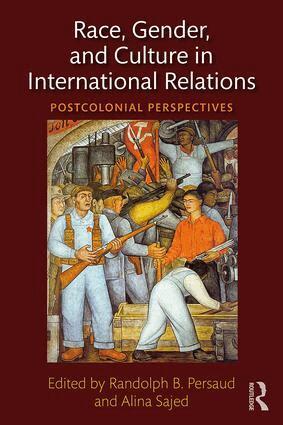
Race, Gender, and Culture in International Relations
Randolph B. Persaud, Alina Sajed
Häftad, 2018
809 kr
Hoppa över listan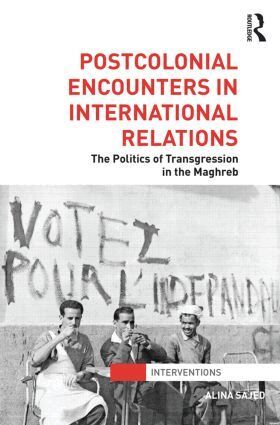





Du kanske också är intresserad av
Race, Gender, and Culture in International Relations
Randolph B. Persaud, Alina Sajed
Inbunden, 2018
3 049 kr
Race, Gender, and Culture in International Relations
Randolph B. Persaud, Alina Sajed
Häftad, 2018
809 kr
- Nyhet
Del 7
- Nyhet
Del 6
- Nyhet
Del 4
- Nyhet
Del 3