
Del i serien Edinburgh Studies in Modern Arabic Literature
Post-War Anglophone Lebanese Fiction
Home Matters in the Diaspora
Inbunden, Engelska, 2012
1 949 kr
Beställningsvara. Skickas inom 7-10 vardagar. Fri frakt för medlemmar vid köp för minst 249 kr.
Finns i fler format (1)
This book examines the phenomenon of the post-civil war Anglophone Lebanese fictional narrative. The texts chosen for study have been produced in, and are substantially about, life in exile. They therefore deal not only with the brutal civil strife in Lebanon (1975-1990) but with one of its crucial and long-standing by-products: expatriation. Syrine Hout shows how these texts characterise a distinctly new literary and cultural trend and have founded an Anglophone Lebanese diasporic literature. The authors discussed in the book are Rabih Alameddine, Tony Hanania, Rawi Hage, Nada Awar Jarrar, Patricia Sarrafian Ward and Nathalie Abi-Ezzi. In her exploration of their writings Hout teases out the different meanings and reformulations of home, be it Lebanon as a nation, a house, a host country, an irretrievable pre-war childhood, a state of in-between dwelling, a portable state of mind, and/or a utopian ideal.
Produktinformation
- Utgivningsdatum2012-09-12
- Mått156 x 234 x 20 mm
- Vikt550 g
- FormatInbunden
- SpråkEngelska
- SerieEdinburgh Studies in Modern Arabic Literature
- Antal sidor224
- FörlagEdinburgh University Press
- ISBN9780748643424
Tillhör följande kategorier
Hoppa över listan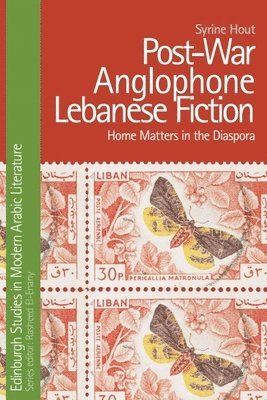






Du kanske också är intresserad av
- Nyhet
Del 11
- Nyhet
Del 4
- Nyhet
Del 3
Del 1
Del 3
- Nyhet
Del 6
Del 2
Del 7