
Del 9 i serien Contemporary Hispanic and Lusophone Cultures
Porous City
A Cultural History of Rio de Janeiro
Inbunden, Engelska, 2013
2 749 kr
Beställningsvara. Skickas inom 5-8 vardagar. Fri frakt för medlemmar vid köp för minst 249 kr.
Finns i fler format (1)
During the 1990s Rio de Janeiro earned the epithet of ‘divided city', an image underscored by the contrast between its upper-class buildings and nearby hillside ‘favelas.’ The city’s cultural production, however, has been shaped by porous boundaries and multi-ethnic encounters. Drawing on a broad range of historical, theoretical and literary sources, Porous City generates new ways of understanding Rio’s past, its role in the making of Brazilian culture, and its significance to key global debates about modernity and urban practices.This book offers an original perspective on Rio de Janeiro that focuses on the New City, one of the most compelling spaces in the history of modern cities. Once known as both a ‘Little Africa’ and as a ‘Jewish Neighborhood,’ the New City was an important reference for prominent writers, artists, pioneering social scientists and foreign visitors (from Christian missionaries to Orson Welles). It played a crucial role in foundational narratives of Brazil as ‘the country of carnival’ and as a ‘racial democracy.’ Going back to the neighborhood’s creation by royal decree in 1811, this study sheds light on how initially marginalized practices –like samba music– became emblematic of national identity.A critical crossroads of Rio, the New City was largely razed for the construction of a monumental avenue during World War II. Popular musicians protested, but ‘progress’ in the automobile age had a price. The area is now being rediscovered due to developments spurred by the 2016 Olympics. At another moment of transition, Porous City revisits this fascinating metropolis.
Produktinformation
- Utgivningsdatum2013-10-22
- Mått163 x 239 x undefined mm
- FormatInbunden
- SpråkEngelska
- SerieContemporary Hispanic and Lusophone Cultures
- Antal sidor240
- FörlagLiverpool University Press
- ISBN9781846319754
- UtmärkelserWinner of Roberto Reis Prize of the Brazilian Studies Association 2014 (United States)
Tillhör följande kategorier
Hoppa över listan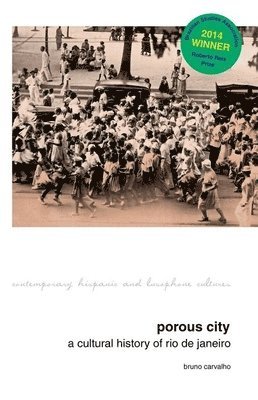


Du kanske också är intresserad av
Del 9
Del 17
- Nyhet
Del 11
Del 31
Subverting Sex, Gender, and Genre in Cuban and Mexican Detective Fiction
Ailsa Peate
Inbunden, 2024
3 209 kr
- Nyhet
Del 38
Del 22
Del 26
Daring Adaptations, Creative Failures and Experimental Performances in Iberian Theatre
María Chouza-Calo, Esther Fernández, Jonathan Thacker
Inbunden, 2023
2 759 kr