
Policy in Transition
How Regime Change Affects Policymaking
Inbunden, Engelska, 2027
2 339 kr
Beställningsvara. Skickas inom 11-20 vardagar. Fri frakt för medlemmar vid köp för minst 249 kr.
Regime transitions often raise expectations for sweeping policy change-yet those expectations are not always realized. Focusing on the mechanisms linking regime type and policy, Policy in Transition explains how, and under which conditions, policy changes are likely to occur after a regime transition. Whether policies change depends on how the transition reshapes the space for contestation and on the visibility of the policy in question. This finding argument is supported through an in-depth comparative historical analysis of the evolution of housing and financial policies across regime types changes in Argentina and Brazil since the 1960s. Drawing on extensive archival materials, public records, historical media, and interviews with key actors, the book studies policymaking across different authoritarian and democratic regimes providing nuanced insights into the relationship between political regimes and policy change.
Produktinformation
- Utgivningsdatum2027-03-31
- FormatInbunden
- SpråkEngelska
- Antal sidor240
- FörlagCambridge University Press
- ISBN9781009839396
Tillhör följande kategorier
Hoppa över listan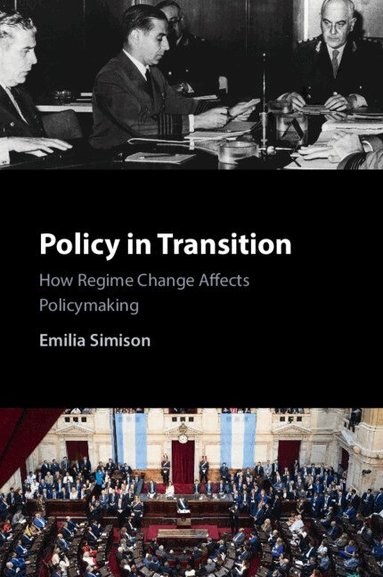






Du kanske också är intresserad av
- Nyhet
Del 7
- Nyhet
Del 11
- Nyhet
Del 4
- Nyhet
Del 6
- Nyhet
Del 3
- Nyhet