
Del i serien Routledge Research in Early Modern History
Plural Pasts
Power, Identity and the Ottoman Sieges of Nagykanizsa Castle
Inbunden, Engelska, 2017
4 059 kr
Beställningsvara. Skickas inom 10-15 vardagar. Fri frakt för medlemmar vid köp för minst 249 kr.
Finns i fler format (1)
Through a study of a variety of Ottoman and modern Turkish accounts of the Ottoman-Habsburg sieges of Nagykanizsa Castle (1600-01) including official documents, correspondence, histories, and more literary genres such as gazavatnames [campaign narratives], Plural Pasts explores Ottoman literacy practices. By considering the diverse roles that the various accounts served – construction of identities, forging of diplomatic alliances and legitimization of political ideologies and geo-political imaginations – it explores the cultural and socio-political significance the various accounts had for different audiences. In addition, it interweaves theoretical reflection with textual analysis. Using the sieges of Nagykanizsa as a case study, it offers a sophisticated contribution to ongoing historiographical arguments: namely, how historians construct hierarchies of primary sources and judge some to be more truthful, or more valuable, than others; how texts are assigned to particular genres based on perceived epistemological status – as story or history, fact or fiction; and the circular role that historians and their histories play in constructing, reflecting and reinforcing cultural and political imaginaries.
Produktinformation
- Utgivningsdatum2017-02-14
- Mått152 x 229 x 16 mm
- Vikt414 g
- FormatInbunden
- SpråkEngelska
- SerieRoutledge Research in Early Modern History
- Antal sidor202
- FörlagTaylor & Francis Ltd
- ISBN9781472485342
Tillhör följande kategorier
Hoppa över listan

Mer från samma serie
Swedish and Finnish Historiographies of the Swedish Realm, c. 1520–1809
Miia Kuha, Petri Karonen
Häftad, 2025
629 kr
Criminal Justice During the Long Eighteenth Century
David Lemmings, Allyson N. May
Inbunden, 2018
3 309 kr
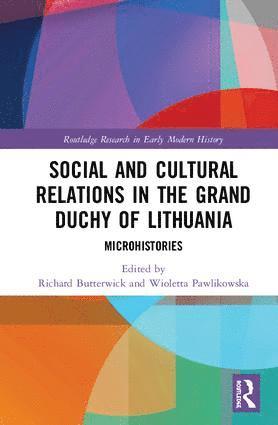
Social and Cultural Relations in the Grand Duchy of Lithuania
Richard Butterwick, Wioletta Pawlikowska
Inbunden, 2019
3 309 kr