Beställningsvara. Skickas inom 11-20 vardagar. Fri frakt för medlemmar vid köp för minst 249 kr.
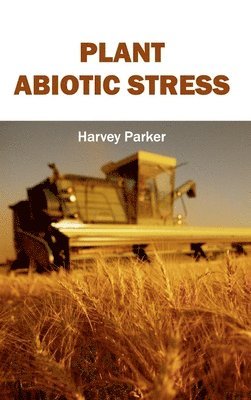
A fully revised review of the latest research in molecular basis of plant abiotic stress response and adaptationAbiotic stressors are non-living environmental stressors that can have a negative impact on a plants ability to grow and thrive in a given environment. Stressors can range from temperature stress (both extreme heat and extreme cold) water stress, aridity, salinity among others. This book explores the full gamut of plant abiotic stressors and plants molecular responses and adaptations to adverse environmental conditions.The new edition of Plant Abiotic Stress provides up-to-date coverage of the latest research advances in plant abiotic stress adaptation, with special emphasis on the associated and integrative aspects of physiology, signaling, and molecular-genetics. Since the last edition, major advances in whole genome analysis have revealed previously unknown linkages between genes, genomes, and phenotypes, and new biological and –omics approaches have elucidated previously unknown cellular mechanisms underlying stress tolerance.Chapters are organized by topic, but highlight processes that are integrative among diverse stress responses. As with the first edition, Plant Abiotic Stress will have broad appeal to scientists in fields of applied agriculture, ecology, plant sciences, and biology.
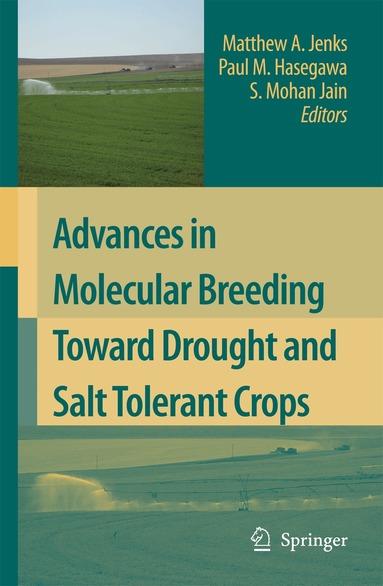
Matthew A. Jenks is Leader of the Plant Physiology and Genetics Research Unit at the Arid-Land Agricultural Research Center for the United States Department of Agriculture. Paul M. Hasegawa is the Bruno Moser Distinguished Professor in the Department of Horticulture and Landscape Architecture and Center for Plant Environmental Stress Physiology at Purdue University.
Contributors xiPreface xv1 Flood tolerance mediated by the rice Sub1A transcription factor 1Kenong Xu, Abdelbagi M. Ismail, and Pamela Ronald1.1 Introduction 11.2 I solation of the rice Sub1 locus 31.3 Sub1 rice in farmers’ fields 51.4 The Sub1 effect 71.5 The Sub1-mediated gene network 71.6 Conclusion 112 Drought tolerance mechanisms and their molecular basis 15Paul E. Verslues, Govinal Badiger Bhaskara, Ravi Kesari, and M. Nagaraj Kumar2.1 Introduction 152.1.1 The water potential concept 152.1.2 Escape, avoidance, and tolerance strategies of drought response 162.1.3 What is drought tolerance? 172.1.4 Responses to longer-term moderate water limitation versus stress shock and short-term response 182.1.5 Natural variation and next generation sequencing 192.2 Some key drought tolerance mechanisms 202.2.1 Osmoregulation/osmotic adjustment 202.2.2 Regulated changes in growth 222.2.3 Redox buffering and energy metabolism 242.2.4 Senescence and cell death 272.2.5 Metabolism 282.3 Emerging drought tolerance regulatory mechanisms 282.3.1 Drought perception and early signaling 292.3.2 Alternative splicing 312.3.3 Post-translational modification: ubiquitination and sumoylation 352.3.4 Kinase/phosphatase signaling 352.4 Conclusion 383 Stomatal regulation of plant water status 47Yoshiyuki Murata and Izumi C. Mori3.1 Stomatal transpiration and cuticular transpiration 473.2 Abiotic stress 513.2.1 Drought 513.2.2 Light and heat 543.2.3 Carbon dioxide 563.2.4 Ozone 573.3 Abiotic stress and biotic stress 593.3.1 Interaction between ABA signaling and MeJA signaling 593.3.2 Interaction with other signaling 603.4 C4 plants and crassulacean acid metabolism 613.5 Conclusion 634 Root-associated stress response networks 69Jennifer P.C. To, Philip N. Benfey, and Tedd D. Elich4.1 Introduction 694.2 Root organization 714.2.1 Root developmental zones 714.2.2 Root tissue types 734.3 Systems analysis of root-associated stress responses 764.4 Root-tissue to system-level changes in response to stress 784.4.1 Nitrogen 784.4.2 Salinity 854.4.3 Root system architecture in stress responses 924.5 Conclusion 945 Plant low-temperature tolerance and its cellular mechanisms 109Yukio Kawamura and Matsuo Uemura5.1 Introduction 1095.2 Chilling injury 1105.2.1 Cold inactivation of vacuolar H+-ATPase 1105.2.2 Lipid phase transition (Lα to Lβ) 1125.2.3 Chill-induced cytoplasmic acidification 1135.2.4 Light-dependent chilling injury 1145.3 Freezing injury 1155.3.1 Freeze-induced ultrastructures in the plasma membrane 1175.3.2 Another freeze-induced injury of the plasma membrane 1185.4 Cold acclimation 1185.4.1 Lipid composition of the plasma membrane during cold acclimation 1195.4.2 Changes in plasma membrane proteins during cold acclimation 1205.4.3 Compatible solute accumulation during cold acclimation 1205.5 Freezing tolerance 1215.5.1 Membrane cryostability due to lipid composition 1225.5.2 Membrane cryostability due to hydrophilic proteins 1225.5.3 Compatible solutes and freezing tolerance 1235.5.4 Membrane cryodynamics and membrane resealing 1245.5.5 Other membrane cryodynamics 1245.6 Conclusion 1266 Salinity tolerance 133Joanne Tilbrook and Stuart Roy6.1 Plant growth on saline soils 1336.1.1 Effects of salt stress on plant growth 1356.1.2 Osmotic stress 1366.1.3 Ionic stress 1376.2 Tolerance mechanisms 1386.2.1 Osmotic tolerance 1386.2.2 Ionic tolerance 1396.2.3 Ion exclusion 1396.2.4 Ion tissue tolerance 1406.3 Identification of variation in salinity tolerance 1406.3.1 Variation in current crops 1406.3.2 Variation in near wild relatives 1416.3.3 Variation in model species 1436.3.4 New phenomic approaches to identify variation in salinity tolerance 1446.4 Forward genetic approaches to identify salinity tolerant loci and candidate genes 1446.4.1 QTL mapping 1446.4.2 Transcriptomics 1486.4.3 Proteomics 1496.4.4 Metabolomics 1506.5 Known candidate genes for salinity tolerance 1516.5.1 The high-affinity potassium transporter family 1526.5.2 The salt overly sensitive pathway 1536.5.3 Vacuolar Na+/H+ antiporters and vacuolar pyrophosphatases 1546.5.4 Osmoprotectants 1556.5.5 Calcium signaling pathways 1556.6 Prospects for generating transgenic crops 1566.6.1 Overexpression of genes involved with the transport of ions 1586.6.2 Manipulation of genes involved in signaling pathways 1596.6.3 Altering the expression of genes involved in compatible solute synthesis 1596.6.4 The need for cell-type- and temporal-specific expression 1596.7 Conclusion 1617 Molecular and physiological mechanisms of plant tolerance to toxic metals 179Matthew J. Milner, Miguel Piñeros, and Leon V. Kochian7.1 Introduction 1797.2 Plant Zn tolerance 1817.2.1 Physiology of Zn tolerance 1817.2.2 Molecular biology of Zn tolerance 1857.2.3 Role of metal-binding ligands in Zn tolerance 1887.3 Plant Cd tolerance 1907.4 Plant aluminum tolerance 1907.4.1 Physiology of Al tolerance 1907.4.2 Molecular biology of Al tolerance 1947.5 Conclusion 1968 Epigenetic regulation of abiotic stress responses in plants 203Viswanathan Chinnusamy, Monika Dalal, and Jian-Kang Zhu8.1 Introduction 2038.2 Epigenetic controls of gene expression 2048.2.1 Establishment of histone code 2058.2.2 DNA cytosine methylation 2058.3 E pigenetic regulation of abiotic stress responses 2108.3.1 Stress regulation of genes for histone modification and RdDM 2118.3.2 Gene regulation mediated by stress-induced histone modifications 2128.3.3 Gene regulation mediated by stress-induced changes in dna methylation 2188.3.4 Stress-induced transposon regulation 2198.4 Transgenerational inheritance and adaptive value of epigenetic modifications 2208.5 Conclusion 2219 Genomics of plant abiotic stress tolerance 231Dong-ha Oh, Maheshi Dassanayake, Hyewon Hong, Suja George, Seol Ki Paeng, Anna Kroporn ika, Ray A. Bressan, Sang Yeol Lee, Dae-Jin Yun, and Hans J. Bohnert9.1 Genomics in plant research—an introduction 2319.2 Plant genomes 2012—a transient account 2369.3 Genomes, transcriptomes, and bioinformatics 2379.4 Genomes that inform about abiotic stress 2409.5 Plants evolved for salinity tolerance 2429.6 ARMS genomes—Thellungiella genome sequences 2449.6.1 Lineage-specific gene duplications 2449.6.2 Divergence of transcriptome profiles and responses 2479.6.3 Lineage-specific genes 2499.7 A breeding strategy for abiotic stress avoidance 2499.8 Conclusion 25010 QTL and association mapping for plant abiotic stress tolerance: trait characterization and introgression for crop improvement 257DELPHINE FLEURY and Peter Langridge10.1 Introduction 25710.2 Genetic mapping of abiotic stress tolerance traits 26010.2.1 Quantitative trait loci 26010.2.2 QTL for abiotic stress tolerance 26210.3 Association mapping of abiotic stress tolerance traits 26310.3.1 Linkage disequilibrium and population structure 26310.3.2 Association study of abiotic stress tolerance 26410.4 Transfer of QTL findings to breeding programs 26510.5 Issues in genetic analysis of abiotic stress tolerance 26810.5.1 Phenotyping methods 26810.5.2 Selection of germplasm for genetic analysis 27010.5.3 Stability of QTL across environments 27210.6 Current directions of quantitative genetics for abiotic stress tolerance 27410.6.1 Physiological components of abiotic stress tolerance QTL 27410.6.2 Integration of physiological components into abiotic stress tolerance QTL 27510.6.3 Meta QTL 27610.6.4 New population designs for QTL mapping 27610.7 Conclusion 279Index 289Color plate section is located between pages 132 and 133