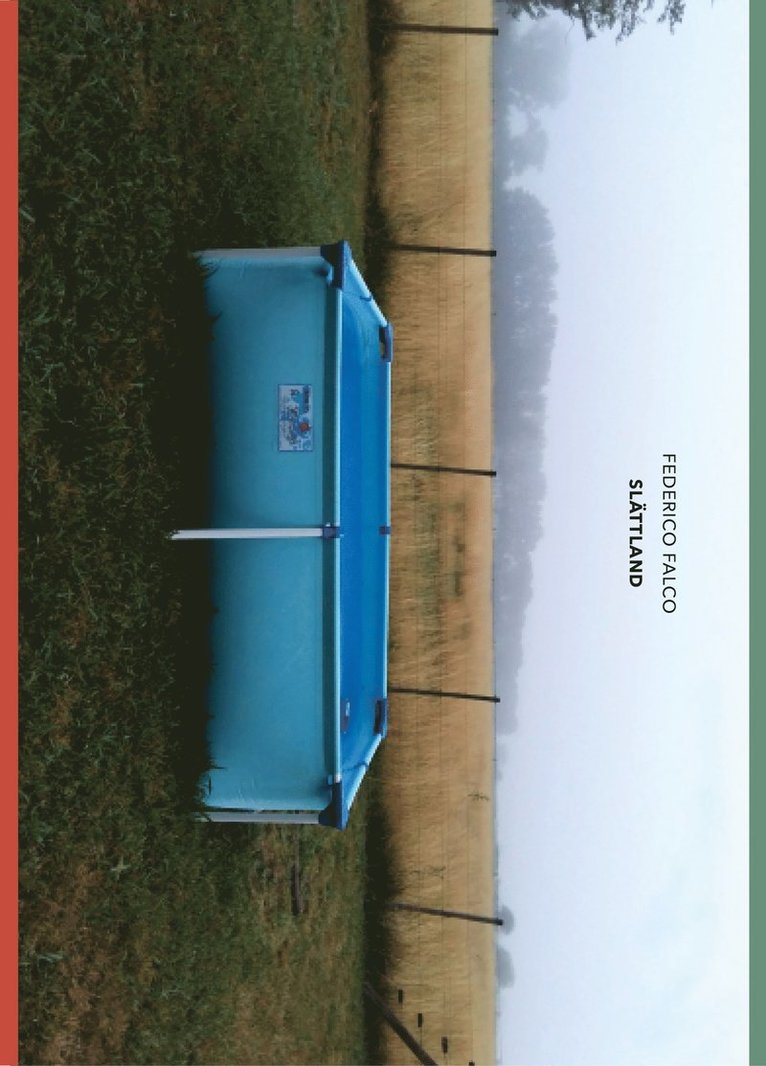
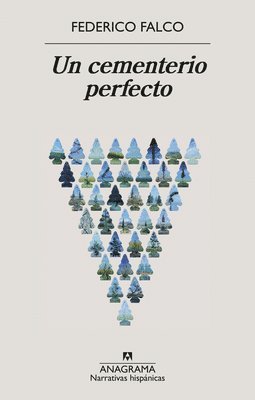
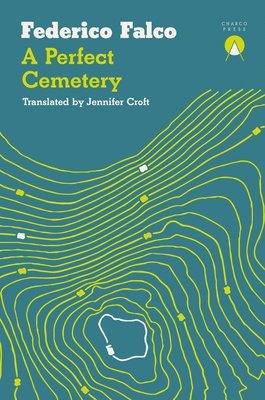
English PEN Translates Award"This meditative, astute novel is an aesthetic experience from an author striving to merge the paintbrush and the pen." —The Times Literary Supplement"In his attention to the slow rhythm of our days, Falco makes the case for writing that simply observes the plain work of living, and in so doing, reveals its gentle poetry." —The Telegraph"A profoundly poetic reflection on the human experience […] The Plains is a captivating and thought-provoking exploration of love, loss, and personal growth." —Morning Star"The Plains is awash with a kind of fragmented, undulating delicacy." —Asymptote"The melancholic aspects of this beautifully rendered novel and its refusal to follow formal patterns of narration, its prose imbued with hurt and healing, are reminiscent of Jeremy Cooper’s ostensible nature diary Ash Before Oak." —Irish Times"An absolutely magnificent book, and unlike any other. It got to my very neurones!" —Deborah Eisenberg , author of YOUR DUCK IS MY DUCK "Under the false appearance of a book without sound or fury, The Plains hides massacres, guerrillas and duels." —El País"Falco is a measured writer. That’s it: he writes just the right amount needed, shows some and hides the rest. Nothing is lacking and nothing goes spare in The Plains, a story that is told in small doses." —Revista Indie Hoy""Falco’s imagery and sentiments are frequently lyrical, and Croft’s translation revels in those subtleties."" —Southwest Review"A moving and beautifully made novel." —Review31"The countryside – the plains – sometimes feels like freedom and sometimes represents the inhospitable. Language recreates the landscape, and though ‘mysteriously it seems doomed to failure it ends up actually enhancing the landscape’. Recounting the other, recreating it with words, is also a way of remaining." —Clarín"The Plains is a unique novel. The story has a stark simplicity that makes it all the more overwhelming and pointed." —Infobae"From the earliest Romantics to Juan José Saer or César Aira, Argentinian literature has spent centuries trying to populate and make sense of emptiness of the Pampas. Never before, we might say, has it conceived such a lovingly populated solitude." —Revista Otra Parte"This is a singular text – a thorny issue to call it a novel – where there is hardly any plot, more like a sketch of fictional notes written from the subsoil, a sort of slow epic told from the field, a pure liquid flow of the ephemeral, of the fugitive and fleeting that is recounted here autobiographically as if it sought to be the story of a character who is in search of lost time and found in the ‘horizontality’ of the pampa which ‘is also the absence of height’." —El Tiempo"To a large extent The Plains is a tribute to the traditional Argentine landscape, to its pampas, where the city cowboys, the city gauchos, go to fight against their sadness. A moving and terribly beautiful book." —Culturamas"The novel is one of the most successful among writers from Cordoba about this flat countryside." —Letralia"A beautiful book about mourning a separation in which we can also glimpse the difficult journey to become oneself, the complex arithmetic of love, and the value of literature as catharsis. A slow, elusive, delicate and subtle book." —El Cultural"The Plains can be smelled, touched, heard, tasted, and contemplated. The universe the narrator creates to cope with his grief is built with an astonishing physicality, uncontainable, and he allows us to enter it with a deceptive simplicity." —Revista penúltiMa"A novel of great versatility and beauty." —Cuadernos del Sur************Praise for Federico FalcoWinner of an English PEN Translates Award 2023Winner of the Medifé/Filba Prize 2021Finalist of the Herralde Prize for Novels 2022"The quiet assurance with which Falco addresses rural environments represents a departure recalling the perspectives of writers from the northern hemisphere such as Denis Johnson, Knut Hamsun or Tobias Wolff." —The Times Literary Supplement"Expansive and ingeniously crafted—an unforgettable collection." —Kirkus, starred review"Falco proves himself as a fine storyteller." —Publishers Weekly"These rich and authentic portraits of Argentinian lives are well worth seeking out...You could imagine Alastair McLeod or John McGahern paying homage. (5 stars)" —RTÉ"Moving, morbid, and humorous at the same time." —LA Review of Books"Falco is a master of the short story."" —Martin MacInnes , author of INFINITE GROUND and GATHERING EVIDENCE "His stories shimmer like revelations – the clarity, mystery, beauty, depth, and sheer, thrilling peculiarity of ordinary life when the veil lifts. They’re exhilarating to read, just as exhilarating to re-read."" —Deborah Eisenberg , author of YOUR DUCK IS MY DUCK "Each powerful story captivates and I cannot recommend this collection enough." —Morning Star"When people praise Chekhov, stories like this are what they're thinking of." —James Crossley, Madison Books"Croft’s translations of the stories in A Perfect Cemetery are loyal to the profound beauty, rootedness, and longing they portray." —World Literature Today"At long last, Argentine author Federico Falco finally has a full-length work in translation. A Perfect Cemetery is a 2016 collection of five stories, several of which are much longer than traditional short stories (thankfully so). With confident prose, storytelling verve, and remarkable consideration for both character and landscape, Falco writes impressively well. Though plights of fancy embroil each of Falco’s characters, they are conveyed with a compassion and authenticity that make them seem utterly lifelike." —Jeremy Garber, Powell's Bookshop"Every word and sentence, including those of Croft’s sincere and illuminating note that concludes the volume, should be savored, consumed in a rush only during those moments when you’re flying down the summer streets with Silvi on her bicycle as she searches for the boy she believes she loves." —On the Seawall"As so often in this compelling collection, the stories only open out once you finish them." —David's Book World"The succinctness of the plotlines in these stories is inversely proportional to their vast narrative expanse, to everything the writing is able to carve out between the sharply curtailed dialogues and all that simmers underneath." —La Nación"Perfectly honed... [Falco’s] skill is apparent in the originality of these plots, the economy and naturalness of the characters’ conversations, and in the meticulous observation of a gesture that may encapsulate whole central motifs" —Ñ Magazine