
Philosopher's "I"
Autobiography and the Search for the Self
Inbunden, Engelska, 2006
1 499 kr
Tillfälligt slut
Using works written over the course of 1,500 years, considers philosophers' autobiographies as a genre of philosophical writing.This book examines philosophers' autobiographies as a genre of philosophical writing. Author J. Lenore Wright focuses her attention on five philosophical autobiographies: Augustine's Confessions, Descartes' Meditations, Rousseau's The Confessions, Nietzsche's Ecce Homo, and Hazel Barnes's The Story I Tell Myself. In the context of first-person narration, she shows how the philosophers in question turn their attention inward and unleash their analytical rigor on themselves.Wright argues that philosophical autobiography makes philosophical analysis necessary and that one cannot unfold without the other. Her distinction between the ontological and rhetorical dimensions of the self creates a rich middle ground in which questions of essence and identity bear upon existence.
Produktinformation
- Utgivningsdatum2006-10-05
- Mått152 x 229 x 12 mm
- Vikt445 g
- FormatInbunden
- SpråkEngelska
- Antal sidor228
- FörlagState University of New York Press
- ISBN9780791469132
Tillhör följande kategorier
Hoppa över listan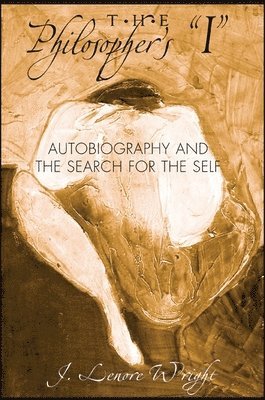

Du kanske också är intresserad av
- Nyhet
Del 7
- Nyhet
Del 4
- Nyhet
Del 6
- Nyhet
Del 3
- Nyhet
- Nyhet
Del 11
- Nyhet