
Persian Gardens and Pavilions
Reflections in History, Poetry and the Arts
Häftad, Engelska, 2020
749 kr
Beställningsvara. Skickas inom 5-8 vardagar. Fri frakt för medlemmar vid köp för minst 249 kr.
From Timur's tent in Samarqand to Shah 'Abbas's palace in Isfahan and Humayun's tomb in Delhi, the pavilion has been an integral part of Persianate gardens since its earliest appearance at the Achaemenid garden in Pasargadae in the sixth century BC. Here, Mohammad Gharipour places both the garden and the pavilion within their historical, literary and artistic contexts, emphasizing the importance of the pavilion, which has hitherto been overlooked in the study of Iranian historical architecture. Starting with an examination of the depictions and representations of gardens in religious texts, Gharipour analyses how the idea of the garden developed from the model of pre-Islamic gardens in Achaemenid and Sassanian Persia to its mentions in the Zoroastrian text of Aban Yasht and on to its central role as paradise in the Qur'an. Continuing on with an exploration of gardens and pavilions in Persian poetry, Gharipour offers in-depth analysis of their literal and metaphorical values.It is in the poetry of major Persian poets such as Ferdowsi, Naser Khosrow, Sa'di, Rumi and Hafez that Gharipour finds that whilst gardens are praised for their spiritual values, they also contain significant symbolic worth in terms of temporal wealth and power. Persian Gardens and Pavilions then goes onto examine the garden and the pavilion as reflected in Persian miniature painting, sculpture and carpets, as well as accounts of travelers to Persia. With masters such as Bizhad representing daily life as well as the more mystical prose and poetry in, for example, Sa'di's Bustan (The Orchard) and Golestan (The Rose Garden), the garden and the pavilion can be seen to have crucial semiotic significance and cultural meanings. But in addition to this, they also point to historical patterns of patronage and ownership which were of central importance in the diplomatic and social life of the royal courts of Persia. Gharipour thereby highlights the metaphorical, spiritual, symbolic and religious aspects of gardens, as well as their more materialistic and economic functions.This book reaches back through Persia's rich history to explore the material and psychological relationships between human beings, pavilions and gardens, and will be a valuable resource for Art History, Architecture and Iranian Studies.
Produktinformation
- Utgivningsdatum2020-07-09
- Mått185 x 239 x 18 mm
- Vikt704 g
- FormatHäftad
- SpråkEngelska
- Antal sidor256
- FörlagBloomsbury Publishing PLC
- ISBN9780755600366
Tillhör följande kategorier
Hoppa över listan




Mer från samma författare
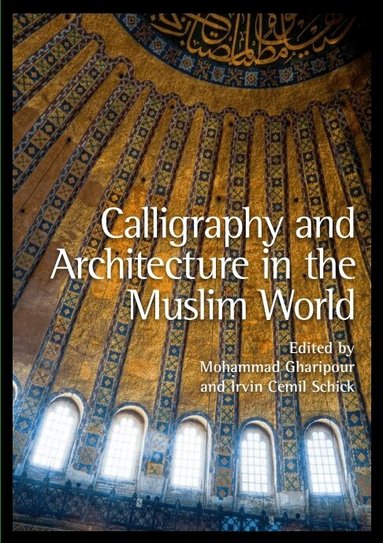
Calligraphy and Architecture in the Muslim World
Mohammad Gharipour, Irvin Cemil Schick
Inbunden, 2013
2 609 kr
Hoppa över listan




Du kanske också är intresserad av
History of Architectural Education in the Middle East and North Africa
Farhan Karim, Mohammad Gharipour
Inbunden, 2024
2 729 kr
Del 3