
Del i serien Cambridge Modern China Series
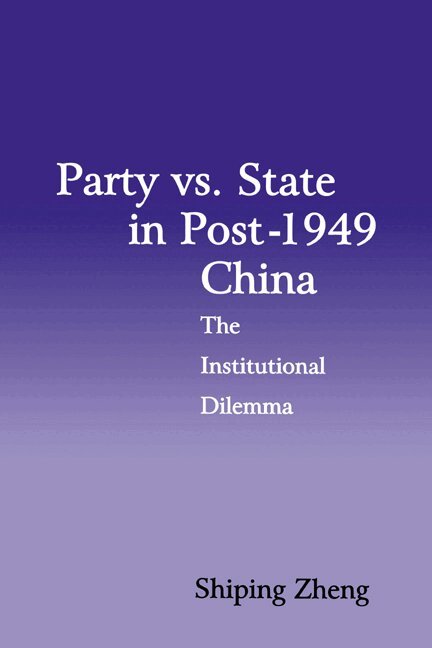
Party vs. State in Post-1949 China
The Institutional Dilemma
Inbunden, Engelska, 1997
2 069 kr
Beställningsvara. Skickas inom 5-8 vardagar. Fri frakt för medlemmar vid köp för minst 249 kr.
Finns i fler format (1)
This book provides the most comprehensive analysis of one of the most important issues in China today: the tensions between the Chinese Communist Party and the Chinese state legislative, judicial, administrative, and military institutions. Taking the 'neo-institutionalist' approach, the author suggests that the Communist Party in post-1949 China faces an institutional dilemma: the Party cannot live with the state, and it cannot live without the state. Zheng demonstrates that it is not only conceptually constructive, but analytically imperative to distinguish the state from the Communist Party. Secondly, he integrates detailed study with broader generalizations about Chinese politics, thus making efforts to overcome the tendency toward specialized scholarship at the expense of comparative and systemic understanding of China. He also opens a new dimension of Chinese politics - the uncertain and conflictual relationship between the Communist Party and the Chinese state.
Produktinformation
- Utgivningsdatum1997-07-13
- Mått159 x 237 x 23 mm
- Vikt615 g
- FormatInbunden
- SpråkEngelska
- SerieCambridge Modern China Series
- Antal sidor312
- FörlagCambridge University Press
- ISBN9780521582056
Tillhör följande kategorier
Hoppa över listan
Mer från samma serie
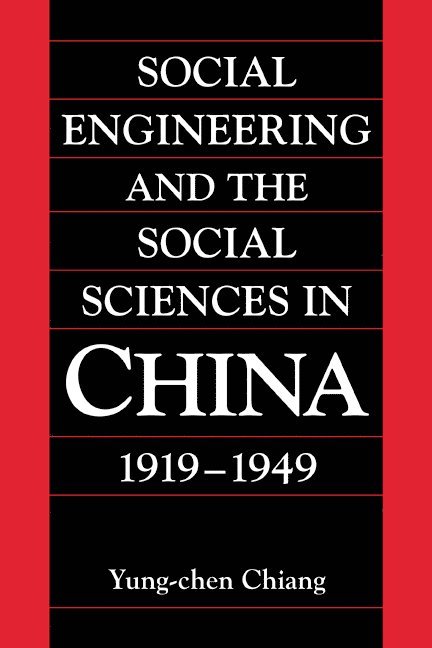
Social Engineering and the Social Sciences in China, 1919-1949
Yung-chen Chiang, William Kirby
Häftad, 2006
729 kr
Hoppa över listan


Du kanske också är intresserad av
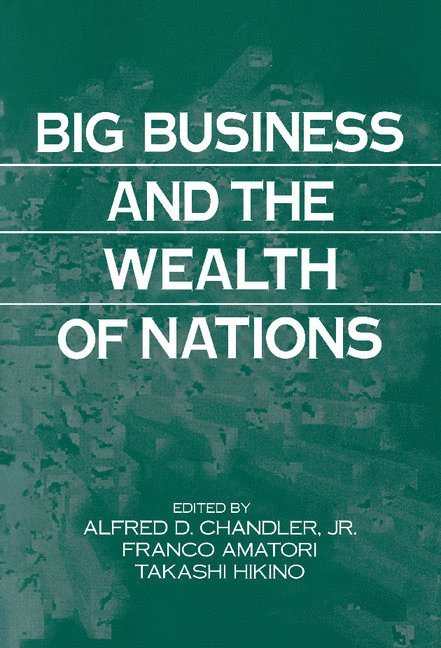
Big Business and the Wealth of Nations
Alfred D. Chandler Jr, Franco Amatori, Takashi Hikino
Inbunden, 1997
1 619 kr
Del 22