
Del 37
Del 43 i serien Studies in Linguistics and Philosophy
Parameter of Aspect
Inbunden, Engelska, 1991
2 949 kr
Beställningsvara. Skickas inom 10-15 vardagar. Fri frakt för medlemmar vid köp för minst 249 kr.
Finns i fler format (2)
During the period I have been working on this project I have received institutional support of several kinds, for which I am most grateful. I thank the Institute for Advanced Study at Stanford University, and the Spencer Foundation, for a stimulating environment in which the basic idea of this book was developed. The Max Planck Institute for Psycholinguistics at Nijmegen enabled me to spend several months working on the the manuscript. ANational Science Foundation grant to develop Discourse Representation theory, and a grant from The University Research Institute of the University of Texas, allowed me time to pursue this project. I also thank the Center for Cognitive Science at the University of Texas for research support. I thank Helen Aristar-Dry for reading early drafts of the manuscript, Östen Dahl for penetrating remarks on a preliminary version, and my collaborator Gilbert Rappaport for relentIess comments and questions throughout. The individuals with whom I have worked on particular languages are mentioned in the relevant chapters. I owe a particular debt of gratitude to the members of my graduate seminar on aspect in the spring of 1990: they raised many questions of importance which made a real difference to the working out of the theory. I have benefitted from presenting parts of this material publicly, including cOlloquia at the University of California at Berkeley, the University of California at San Diego, the University of Pennsylvania, Rice University, the University of Texas, and the University of Tel Aviv.
Produktinformation
- Utgivningsdatum1991-10-31
- Mått156 x 234 x 31 mm
- Vikt901 g
- FormatInbunden
- SpråkEngelska
- SerieStudies in Linguistics and Philosophy
- Antal sidor470
- Upplaga1991
- FörlagKluwer Academic Publishers
- ISBN9780792311362
Tillhör följande kategorier
Hoppa över listan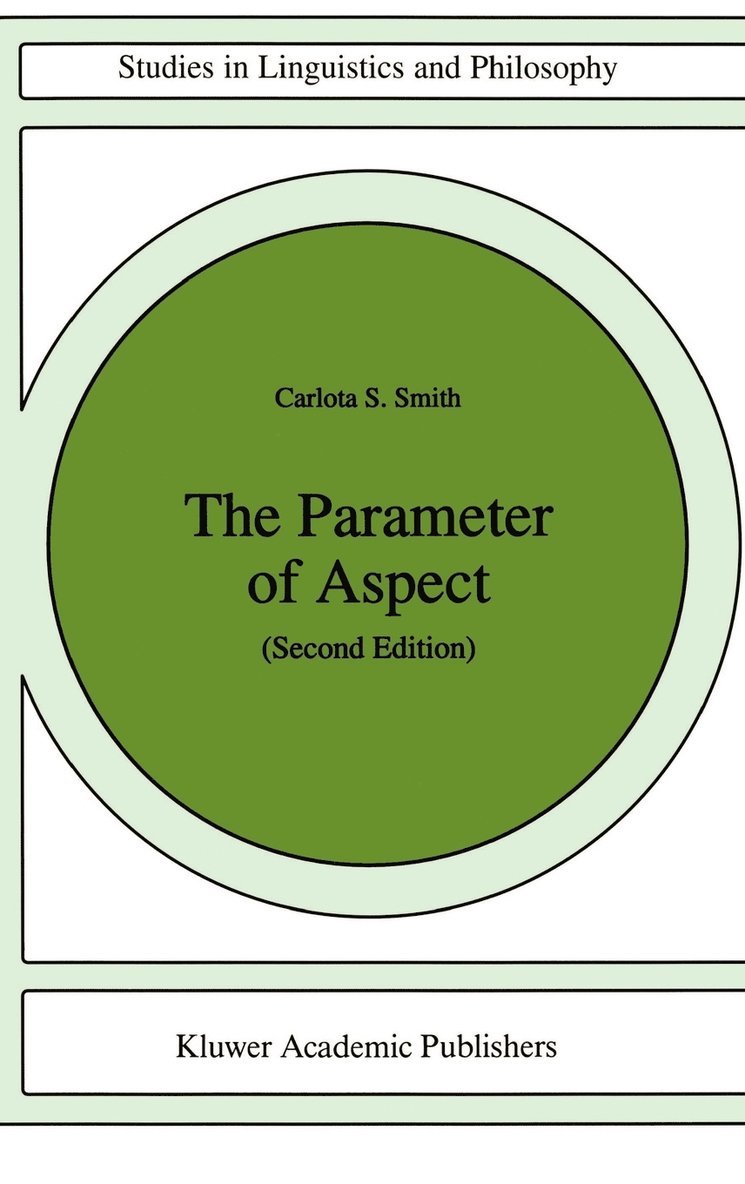








Du kanske också är intresserad av
Del 43
Del 43
- Nyhet
Del 3
- Nyhet
Del 11
- Nyhet
Del 4
- Nyhet
Del 6
Del 1
Del 3
Del 2
Del 7