
On Monsters
An Unnatural History of Our Worst Fears
Inbunden, Engelska, 2010
479 kr
Beställningsvara. Skickas inom 3-6 vardagar. Fri frakt för medlemmar vid köp för minst 249 kr.
Finns i fler format (1)
Monsters. Real or imagined, literal or metaphorical, they have exerted a dread fascination on the human mind for many centuries. They attract and repel us, intrigue and terrify us, and in the process reveal something deeply important about the darker recesses of our collective psyche.Stephen Asma's On Monsters is a wide-ranging cultural and conceptual history of monsters--how they have evolved over time, what functions they have served for us, and what shapes they are likely to take in the future. Asma begins with a letter from Alexander the Great in 326 B.C. detailing an encounter in India with an "enormous beast--larger than an elephantthree ominous horns on its forehead." From there the monsters come fast and furious--Behemoth and Leviathan, Gog and Magog, the leopard-bear-lion beast of Revelation, Satan and his demons, Grendel and Frankenstein, circus freaks and headless children, right up to the serial killers and terrorists of today and the post-human cyborgs of tomorrow. Monsters embody our deepest anxieties and vulnerabilities, Asma argues, but they also symbolize the mysterious and incoherent territory just beyond the safe enclosures of rational thought. Exploring philosophical treatises, theological tracts, newspapers, pamphlets, films, scientific notebooks, and novels, Asma unpacks traditional monster stories for the clues they offer about the inner logic of an era's fears and fascinations. In doing so, he illuminates the many ways monsters have become repositories for those human qualities that must be repudiated, externalized, and defeated. Asma suggests that how we handle monsters reflects how we handle uncertainty, ambiguity, insecurity. And in a world that is daily becoming less secure and more ambiguous, he shows how we might learn to better live with monsters--and thereby avoid becoming one.
Produktinformation
- Utgivningsdatum2010-01-14
- Mått155 x 236 x 33 mm
- Vikt703 g
- FormatInbunden
- SpråkEngelska
- Antal sidor368
- FörlagOUP USA
- ISBN9780195336160
Tillhör följande kategorier
Hoppa över listan



Mer från samma författare
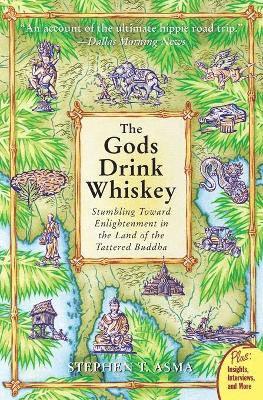
God's Drink Whiskey: Stumbling Towards Enlightenment In The Land Of The Tattered Buddha
Stephen T Asma
Häftad, 2006
179 kr
Hoppa över listan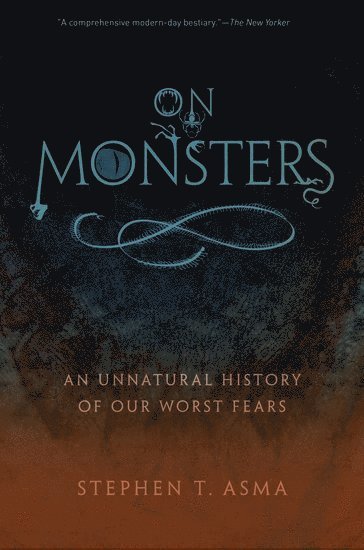


Du kanske också är intresserad av
God's Drink Whiskey: Stumbling Towards Enlightenment In The Land Of The Tattered Buddha
Stephen T Asma
Häftad, 2006
179 kr
- Nyhet
Del 3
- Nyhet
Del 11