
Del i serien Contemporary Chinese Studies
Obedient Autonomy
Chinese Intellectuals and the Achievement of Orderly Life
Inbunden, Engelska, 2004
1 579 kr
Beställningsvara. Skickas inom 5-8 vardagar. Fri frakt för medlemmar vid köp för minst 249 kr.
Finns i fler format (1)
In the west, the idea of autonomy is often associated with a sense of freedom – a self-interested state of being unfettered by rules or obligations to others. This original anthropological study explores a type of "obedient" autonomy that thrives on setbacks, blossoms as more rules are imposed, and flourishes in adversity. Obedient Autonomy analyzes this model, and explains its precepts through examining the specialized and highly organized discipline of archaeology in China.The book follows Chinese students on their journey to becoming full-fledged archaeologists in a bureaucracy-saturated environment. Often required to travel in teams to the countryside, archaeologists are uniquely obliged to overcome divisions among themselves, between themselves and their peasant-workers, and between themselves and bureaucratic officials. This analysis reveals how these interactions provide teachers of archaeology with stories used to foster obedient autonomy in their students. Moreover, it demonstrates how this form of autonomy enables a person to order and control their future careers in what appears to be a disorderly and uncertain world.A masterly contextualization of archaeology in China, Obedient Autonomy shows how the discipline has accommodated itself to a Chinese social structure, and uncovers the moral, ethical, political, and economic underpinnings of that context. It will be accessible to students of anthropology even as it will provoke Euro-American archaeologists and interest social theorists of science, philosophers, gender theorists, and students of Chinese society.
Produktinformation
- Utgivningsdatum2004-02-11
- Mått152 x 229 x undefined mm
- Vikt540 g
- FormatInbunden
- SpråkEngelska
- SerieContemporary Chinese Studies
- Antal sidor320
- FörlagUniversity of British Columbia Press
- ISBN9780774809290
- UtmärkelserWinner of K.D. Srivastava Award, UBC Press 2004 (Canada)
Tillhör följande kategorier
Hoppa över listan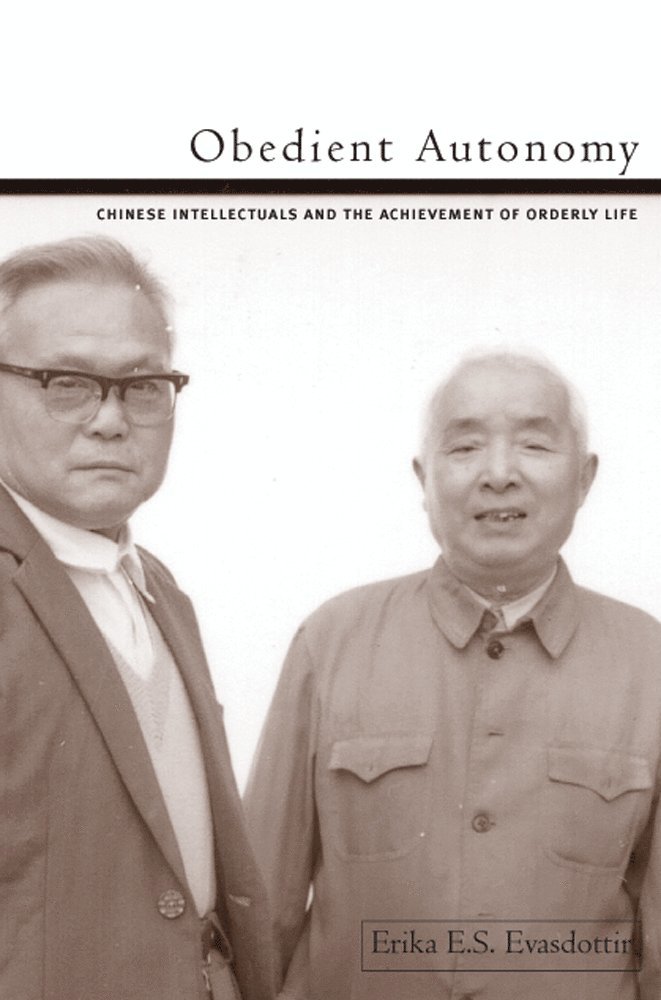







Du kanske också är intresserad av
- Nyhet
Del 3
- Nyhet
Del 11
- Nyhet
Del 4
Del 3
Del 1
- Nyhet
Del 6
Del 2
Del 7
- Nyhet
Del 1