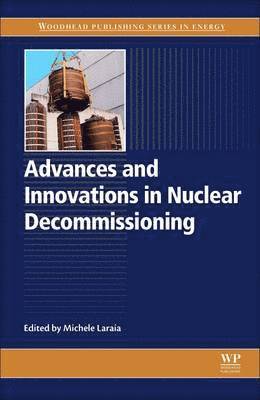
Nuclear Decommissioning
Planning, Execution and International Experience
Inbunden, Engelska, 2012
3 869 kr
- Critically reviews nuclear decommissioning processes and technologies applicable to nuclear power plants and other civilian nuclear facilities
- Discusses the fundamental planning issues in starting a nuclear decommissioning process
- Considers the execution phase of nuclear decommissioning projects, including dismantling, decontamination, and radioactive waste management, as well as environmental remediation, site clearance and reuse
Produktinformation
- Utgivningsdatum2012-02-21
- Mått156 x 234 x undefined mm
- Vikt1 420 g
- FormatInbunden
- SpråkEngelska
- SerieWoodhead Publishing Series in Energy
- Antal sidor856
- FörlagElsevier Science
- ISBN9780857091154
Tillhör följande kategorier
Michele Laraia, a chemical engineer by background, gained his first degree at the University of Rome. In 1975 he began to work at Italy's Regulatory Body, since 1982 as licensing manager of decommissioning projects. From July 1991, Michele worked at the International Atomic Energy Agency, Waste Technology Section, as Unit Leader responsible for decontamination and decommissioning of nuclear installations and environmental remediation. The objectives of the work were to provide guidance to Member States on the planning and implementation of nuclear decommissioning and site remediation, to disseminate information on good practices, and to provide direct assistance to Member States in the implementation of their programmes. Following his retirement in November 2011 Michele offers consultant services in the above-mentioned areas.
- Contributor contact detailsWoodhead Publishing Series in EnergyPrefaceDedicationChapter 1: Introduction to nuclear decommissioning: definitions and historyAbstract:1.1 Semantics1.2 Definitions1.3 Reasons for publishing this book1.4 Planning for decommissioning1.5 Execution1.6 International experience1.7 ConclusionsPart I: Planning: fundamental aspects of starting a nuclear decommissioning processChapter 2: Overview of nuclear decommissioning principles and approachesAbstract:2.1 The scale of the decommissioning industry2.2 What is decommissioning?2.3 Reasons for final shutdown2.4 The no-action baseline2.5 History and evolution2.6 Responsibilities and interests of parties involved in decommissioning2.7 Overview of technical and nontechnical aspects relevant to decommissioning2.8 Future trends2.9 Sources of further information and adviceChapter 3: Nuclear decommissioning policy, infrastructure, strategies and project planningAbstract:3.1 Introduction3.2 Decommissioning policy3.3 Factors affecting decommissioning strategy3.4 Options for decommissioning3.5 The planning process3.6 Challenges and lessons learned3.7 Future trends3.8 Sources of further information and adviceChapter 4: Financing and economics of nuclear facility decommissioningAbstract:4.1 Introduction4.2 Nuclear decommissioning cost estimating and financing4.3 Recent experience in decommissioning4.4 Funding schemes4.5 Challenges and lessons learned4.6 Future trends4.7 Sources of further information and adviceChapter 5: Characterisation of radioactive materials in redundant nuclear facilities: key issues for the decommissioning planAbstract:5.1 Introduction5.2 Characterisation objectives5.3 The radionuclide inventory5.4 Stages in the characterisation process5.5 Characterisation methods5.6 Equipment and measurement techniques for characterising wastes5.7 Hazardous materials5.8 Physical characterisation5.9 Economic issues5.10 Challenges and lessons learned5.11 Future trends5.12 Sources of further information and adviceChapter 6: Managing the transition from operation to decommissioning of a nuclear facilityAbstract:6.1 Introduction6.2 Objectives of the transition period6.3 Strategic aspects6.4 Management and administrative aspects6.5 Implementation aspects6.6 Challenges and lessons learned6.7 Sources of further informationChapter 7: Nuclear decommissioning project organization, management and human resourcesAbstract:7.1 Introduction7.2 Organization responsible for decommissioning7.3 Responsibilities, qualifications and training7.4 Contractors versus operational staff7.5 Management of change7.6 Challenges and lessons learned7.7 Future trends7.8 Sources of further informationChapter 8: Public engagement and stakeholder consultation in nuclear decommissioning projectsAbstract:8.1 Introduction8.3 Stakeholders relevant to the decommissioning process8.4 Identifying stakeholders8.5 The Dounreay low-level waste-disposal facility8.6 Factors that may influence stakeholder involvement in decommissioning8.7 How to handle stakeholders8.8 Challenges and lessons learned8.9 Future trends8.10 Sources of further information and advice8.12 Appendix: list of abbreviationsChapter 9: Radiological protection in the decommissioning of nuclear facilities: safety, regulations and licensingAbstract:9.1 Introduction9.2 Personnel health and safety issues (ALARA)9.3 Environmental protection9.4 Risk prevention and decommissioning preparation9.5 National and international guidance9.6 The licensing process for decommissioning9.7 Challenges and lessons learned9.8 Future trendsChapter 10: Nuclear facility design and operation to facilitate decommissioning: lessons learnedAbstract:10.1 Introduction10.2 Project factors relevant to design for decommissioning10.3 Physical features and practice to facilitate decommissioning10.4 Application of lessons learned: practical guidance10.5 Challenges and future trends10.6 Sources of further information and advice10.7 AcknowledgementPart II: Execution: nuclear decommissioning processes and technologies, radioactive waste management, site rehabilitation and cleanupChapter 11: Safe enclosure and entombment strategies in nuclear decommissioning projectsAbstract:11.1 Introduction11.2 Definition of safe enclosure and entombment11.3 Examples for deferred dismantling strategies (safe enclosure)11.4 Examples for entombment11.5 Reasons for selecting the deferred dismantling option11.6 Preparatory activities11.7 Management of a safe enclosure/entombment period11.8 National approaches and international guidance11.9 Challenges and lessons learned11.10 Future trends11.11 Sources of further information and adviceChapter 12: Dismantling and demolition processes and technologies in nuclear decommissioning projectsAbstract:12.1 Introduction12.2 Thermal cutting techniques12.3 Mechanical cutting techniques12.4 Factors affecting selection of cutting processes and technology12.5 Cutting versus intact handling of large components12.6 Demolition of buildings12.7 Application of specific cutting techniques: pros and cons12.8 Challenges and lessons learned12.9 Emerging techniques and future trends12.10 Sources of further information and adviceChapter 13: Decontamination processes and technologies in nuclear decommissioning projectsAbstract:13.1 Introduction13.2 Why and when to decontaminate13.3 Decontamination of metals13.4 Decontamination of building surfaces13.5 Factors affecting selection of decontamination processes and technology13.6 Application of specific decontamination techniques: pros and cons13.7 Challenges and lessons learned13.8 Emerging techniques and future trends13.9 Sources of further information and adviceChapter 14: Remote operation and robotics technologies in nuclear decommissioning projectsAbstract:14.1 Introduction14.2 Remote operation and robotics: definitions and principles14.3 Development and application of remotely operated and robotics technologies in decommissioning14.4 Challenges and lessons learned14.5 Future trends14.6 Sources of further information and adviceChapter 15: Radioactive waste management in nuclear decommissioning projectsAbstract:15.1 Introduction15.2 Spent fuel removal as a prerequisite to decommissioning15.3 Airborne, waterborne and solid waste from decommissioning: amounts and characterization15.4 Ventilation and filtration requirements for airborne waste15.5 Management of liquid waste including decontamination solutions15.6 Solid waste characterization and segregation for onward processing15.7 Recycling/reuse and clearance processes15.8 Waste management and disposal in decommissioning projects15.9 Challenges and lessons learned15.10 Future trends15.11 Sources of further information and adviceChapter 16: Environmental remediation and restoration technologies in nuclear decommissioning projectsAbstract:16.1 Introduction16.2 Environmental restoration process16.3 Types of site remediation techniques and technologies applicable in nuclear decommissioning16.4 Ex situ remediation techniques and technologies16.5 In situ treatment technologies16.6 Remediation of contaminated groundwater16.7 Disposal of radioactive wastes from remediation16.8 Challenges16.9 Lessons learned16.10 Future trends16.11 ConclusionsChapter 17: Site clearance and licence termination in nuclear decommissioning projectsAbstract:17.1 Introduction17.2 Regulatory approaches for site clearance and licence termination17.3 A process for site clearance and licence termination17.4 Challenges and lessons learned17.5 Future trendsChapter 18: Reuse and redevelopment of decommissioned nuclear sites: strategies and lessons learnedAbstract:18.1 Introduction18.2 Site redevelopment as an integral part of a facility’s lifecycle18.3 Early planning for redevelopment18.4 Policy issues in planning for redevelopment18.5 Management issues18.6 Technical issues18.7 Social issues18.8 Operating experience in reuse of decommissioned sites18.9 The non-nuclear sector18.10 Future trendsPart III: International experience: nuclear decommissioning applications and case studiesChapter 19: Decommissioning of Western-type light-water nuclear reactors (LWRs)Abstract:19.1 Introduction19.2 Types of materials and decommissioning issues19.3 Decommissioning technologies for major components of light-water reactors (LWRs)19.4 Specific LWR reactor vessel (RV) internals segmentation experience in the USA19.5 Specific LWR RV disposition experience in the USA19.6 Major components dismantling19.7 Decommissioning technologies for LWR buildings and structures19.8 Site remediation and reuse in the USA19.9 Challenges and lessons learned19.10 Future trendsChapter 20: Decommissioning of Russian-type water-cooled water-moderated nuclear reactors (WWERs)Abstract:20.1 Introduction20.2 WWER-specific features relevant to decommissioning20.3 Planning and implementation of WWER decommissioning20.4 Decommissioning technologies for WWER activated components (RPV and internals)20.5 Decommissioning technologies for WWER building structures20.6 Decommissioning waste (material) management20.7 Challenges and lessons learned20.9 AppendixChapter 21: Decommissioning of gas-cooled nuclear reactors (GCRs)Abstract:21.1 Introduction21.2 Types of materials and aspects of their decommissioning21.3 Decommissioning strategies for gas-cooled reactors (GCRs)21.4 Decommissioning technologies for GCR containment components21.5 Application of particular techniques to GCR decommissioning projects21.6 Challenges and lessons learned21.7 Future trends21.8 Sources of further information and adviceChapter 22: Decommissioning of nuclear fuel cycle facilitiesAbstract:22.1 Introduction22.2 Overview of nuclear fuel cycle facilities22.3 Decommissioning strategies and plans22.4 Decommissioning phases22.5 Specific issues in decommissioning of NFC facilities22.6 Decommissioning techniques for NFC facilities22.7 Demolition techniques22.8 Challenges and lessons learned22.9 Future trends22.10 Sources of further information and adviceChapter 23: Decommissioning of small nuclear facilities: industrial, medical and research facilitiesAbstract:23.1 Introduction23.2 Types of facilities23.3 Planning and management23.4 Application of particular techniques23.5 Waste management23.6 Challenges and lessons learned23.7 Future trends23.8 Sources of further information and adviceChapter 24: Decommissioning of legacy nuclear waste sites: Dounreay, UKAbstract:24.1 Introduction24.2 Decommissioning programme24.3 High-hazard decommissioning projects24.4 High-alpha-contaminated facilities decommissioning24.5 Pond decommissioning24.6 Fuel production and reprocessing facilities decommissioning24.7 Cells and laboratories decommissioning24.8 Legacy waste facilities24.9 Fuels management24.10 Infrastructure decommissioning24.11 Waste management24.12 Environmental restoration24.13 Future challengesChapter 25: Decommissioning of legacy nuclear waste sites: Idaho National Laboratory, USAAbstract:25.1 Introduction25.2 Types of materials and decommissioning issues25.3 Waste retrieval and decontamination processes25.4 Application of appropriate decommissioning technologies25.5 Environmental restoration and site clearance: case studies25.6 Challenges and lessons learned25.7 Future trends25.8 Sources of further information and adviceChapter 26: Information management for nuclear decommissioning projectsAbstract:26.1 Introduction26.2 Importance of information management in decommissioning26.3 Key decommissioning information26.4 Records and information management and preservation26.5 Knowledge management in decommissioning26.6 Challenges and lessons learned26.7 Future trends26.8 Sources of further information and adviceIndex
"...designed for young people and future generations in Japan and other countries that have nuclear reactors, as well as the US and Ukraine..which experienced serious nuclear accidents. I expect this book to become the bible in the field of nuclear decommissioning." --International Journal of Environmental Studies, Vol 69, Issue 4 -12"This book critically reviews the decommissioning and decontamination processes and technologies available for rehabilitating sites used for nuclear power generation…Therefore it is a helpful reference tool for nuclear power operators, nuclear plant managers, engineers, regulators and consultants, as well as researchers and academics in this field."--International Journal for Nuclear Power, April 2014"An unprecedented book covering every technically important decommissioning field, written by international decommissioning leaders." --Dr Takeshi Ishikura, Executive Research Fellow, Nuclear Power Engineering Center (NUPEC), The Institute of Applied Energy (IAE), Japan"This book provides an essential framework for all decommissioning key activities, enriched and illustrated by practical case studies. I will keep it within easy reach in my bookshelf., Dr Hans G. Riotte, Head, Radiation Protection and Radioactive Waste Management Division, OECD Nuclear Energy Agency (NEA), FranceThis excellent book describes the entire process of decommissioning, from planning to management to completion, in a clear and comprehensive manner. I found the detailed examples of successful projects and best practice particularly helpful." --Shelly Mobbs, Eden Nuclear and Environment, UK