
Del i serien Routledge Critical Studies in Asian Education
Nonformal Education and Civil Society in Japan
Inbunden, Engelska, 2015
3 059 kr
Beställningsvara. Skickas inom 10-15 vardagar. Fri frakt för medlemmar vid köp för minst 249 kr.
Nonformal Education and Civil Society in Japan critically examines an aspect of education that has received little attention to date: intentional teaching and learning activities that occur outside formal schooling. In the last two decades nonformal education has rapidly increased in extent and significance. This is because individual needs for education have become so diverse and rapidly changing that formal education alone is unable to satisfy them. Increasingly diverse demands on education resulted from a combination of transnational migration, heightened human rights awareness, the aging population, and competition in the globalised labour market. Some in the private sector saw this situation as a business opportunity. Others in the civil society volunteered to assist the vulnerable. The rise in nonformal education has also been facilitated by national policy developments since the 1990s. Drawing on case studies, this book illuminates a diverse range of nonformal education activities; and suggests that the nature of the relationship between nonformal education and mainstream schooling has changed. Not only have the two sectors become more interdependent, but the formal education sector increasingly acknowledges nonformal education’s important and necessary roles. These changes signal a significant departure from the past in the overall functioning of Japanese education. The case studies include: neighbourhood homework clubs for migrant children, community-based literacy classes, after-school care programs, sport clubs, alternative schools for long-term absent students, schools for foreigners, training in intercultural competence at universities and corporations, kôminkan (community halls), and lifelong learning for the seniors. This book will appeal to both scholars of Japanese Studies/Asian Studies, and those of comparative education and sociology/anthropology of education.
Produktinformation
- Utgivningsdatum2015-09-15
- Mått156 x 234 x 19 mm
- Vikt560 g
- FormatInbunden
- SpråkEngelska
- SerieRoutledge Critical Studies in Asian Education
- Antal sidor216
- FörlagTaylor & Francis Ltd
- ISBN9780415745307
Tillhör följande kategorier
Hoppa över listan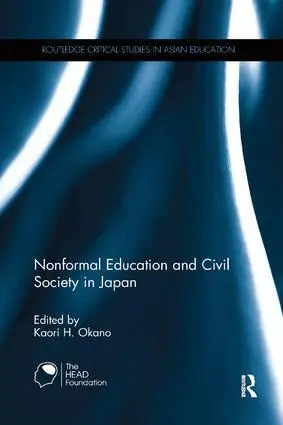


Du kanske också är intresserad av
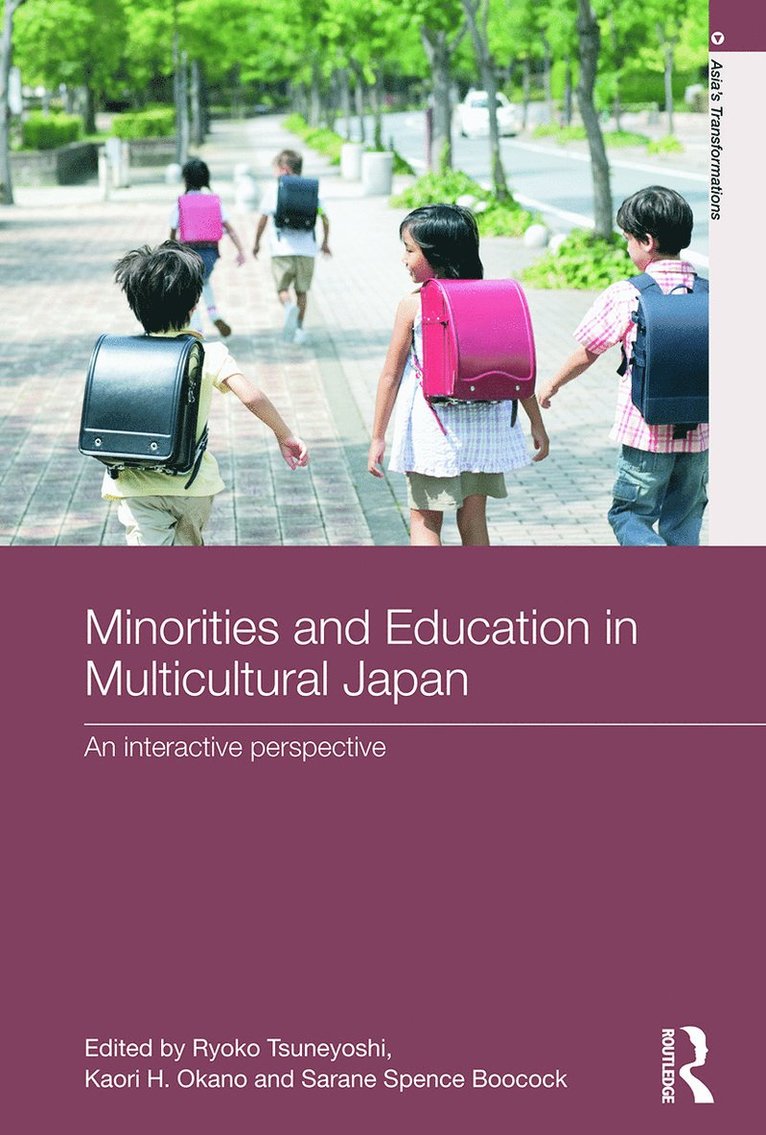
Minorities and Education in Multicultural Japan
Ryoko Tsuneyoshi, Kaori H. Okano, Sarane Boocock
Häftad, 2011
909 kr
Minorities and Education in Multicultural Japan
Ryoko Tsuneyoshi, Kaori H. Okano, Sarane Boocock
Inbunden, 2010
3 059 kr
- Nyhet
Del 1

Del 1