
Nietzsche's Struggle against Pessimism
Häftad, Engelska, 2025
539 kr
Beställningsvara. Skickas inom 5-8 vardagar. Fri frakt för medlemmar vid köp för minst 249 kr.
Finns i fler format (1)
On what grounds could life be made worth living, given its abundant suffering? Friedrich Nietzsche was among many who attempted to answer this question. While always seeking to resist pessimism, Nietzsche's strategy for doing so, and the extent to which he was willing to concede conceptual grounds to pessimists, shifted dramatically over time. His reading of pessimists such as Eduard von Hartmann, Olga Plümacher, and Julius Bahnsen-as well as their critics, such as Eugen Dühring and James Sully-has been under-explored in the secondary literature, isolating him from his intellectual context. Patrick Hassan's book seeks to correct this. After closely mapping Nietzsche's philosophical development on to the relevant axiological and epistemological issues, it disentangles his various critiques of pessimism, elucidating how familiar Nietzschean themes (e.g. eternal recurrence, aesthetic justification, will to power, and his critique of Christianity) can and should be assessed against this philosophical backdrop.
Produktinformation
- Utgivningsdatum2025-05-22
- Mått229 x 151 x 19 mm
- Vikt426 g
- FormatHäftad
- SpråkEngelska
- Antal sidor290
- FörlagCambridge University Press
- ISBN9781009380294
Tillhör följande kategorier
Hoppa över listan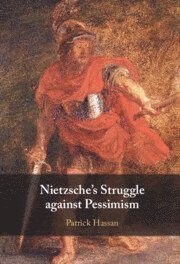






Du kanske också är intresserad av
- Nyhet
Del 3
- Nyhet
Del 11
- Nyhet
Del 4
- Nyhet
Del 4
Del 1
- Nyhet
Del 6