
Del i serien Topics in Current Chemistry
New Aspects in Phosphorus Chemistry II
Inbunden, Engelska, 2002
4 319 kr
Beställningsvara. Skickas inom 10-15 vardagar. Fri frakt för medlemmar vid köp för minst 249 kr.
Finns i fler format (1)
Strong non-ionic bases are highly advantageous as stoichiometric reagents and as catalysts in synthetic organic chemistry owing to side reactions that f- quently occur when ionic bases such as LDA or alkali metal alkoxides are employed. A second reason that non-ionic bases are frequently more useful in these applications is that such bases are often more soluble in less polar organic solvents,particularly at low temperatures. Thirdly,non-ionic bases can provide reactive naked or tightly associated deprotonated substrate anions that are s- bilized by the relatively large,poorly solvated cations formed by the protonated base. In such cations,extensive positive charge delocalization can occur. Prior to our work on pro-azaphosphatranes of type 1 (Scheme 1),the very strong n- ionic bases utilized for organic transformations were largely confined to the nitrogenous bases shown below (Scheme 2). Scheme 1 Scheme 2 4 J. G. Verkade 2 Uses of Strong Nonionic Nitrogen Bases 2. 1 Amines One of the earliest strong non-ionic bases to make its appearance was Proton Sponge and its derivatives [1] and these systems have been reviewed [2].More recently Proton Sponge has been used in the palladium-catalyzed arylation of 2,3-dihydrofuran [3], and it also catalyzes Knoevenagel condensations of s- strates possessing activated methylene groups [4]. Recently the synthesis of the macrocyclic tetramine below (Scheme 3) was reported [5]. The encrypted nitrogens are very basic (pK ,24.
Produktinformation
- Utgivningsdatum2002-11-27
- Mått155 x 235 x 21 mm
- Vikt582 g
- FormatInbunden
- SpråkEngelska
- SerieTopics in Current Chemistry
- Antal sidor263
- Upplaga2003
- FörlagSpringer-Verlag Berlin and Heidelberg GmbH & Co. KG
- ISBN9783540440864
Tillhör följande kategorier
Hoppa över listan
Mer från samma författare
Del 250
Del 229
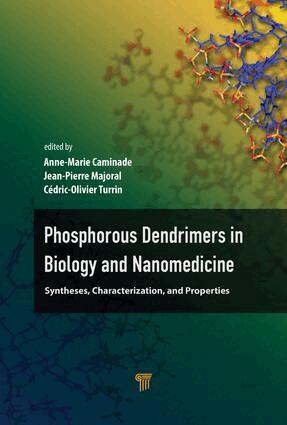
Phosphorous Dendrimers in Biology and Nanomedicine
Anne-Marie Caminade, Cédric-Olivier Turrin, Jean-Pierre Majoral
Inbunden, 2018
2 709 kr
Hoppa över listan




Mer från samma serie
Del 147
Del 143
Del 123
Del 153
Advances in the Theory of Benzenoid Hydrocarbons
Michael J. S. Dewar, Jack D. Dunitz, Klaus Hafner
Inbunden, 1991
2 409 kr
Del 137
Del 144
Small Ring Compounds in Organic Synthesis III
J. R. Y. Salaün, H.-U. Reissig, M. S. Baird
Inbunden, 1988
2 409 kr
Hoppa över listan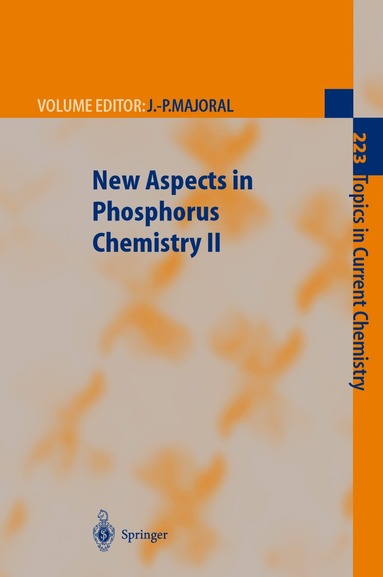
Du kanske också är intresserad av
Del 223
Del 250
Phosphorous Dendrimers in Biology and Nanomedicine
Anne-Marie Caminade, Cédric-Olivier Turrin, Jean-Pierre Majoral
Inbunden, 2018
2 709 kr
Del 229