
Network Governance in Response to Acts of Terrorism
Comparative Analyses
Häftad, Engelska, 2014
839 kr
Beställningsvara. Skickas inom 10-15 vardagar. Fri frakt för medlemmar vid köp för minst 249 kr.
Finns i fler format (1)
High performance during catastrophic terrorist events require the ability to assess and adapt capacity rapidly, restore or enhance disrupted or inadequate communications, utilize flexible decision making swiftly, and expand coordination and trust between multiple emergency and crisis response agencies. These requirements are superimposed on conventional administrative systems that rely on relatively rigid plans, decision protocols, and formal relationships that assume smooth sailing and uninterrupted communications and coordination. Network Governance in Response to Acts of Terrorism focuses on the inter-organizational performance and coordinated response to recent terrorist incidents across different national, legal, and cultural contexts in New York, Bali, Istanbul, Madrid, London, and Mumbai. Effortlessly combining each case study with content analyses of news reports from local and national newspapers, situation reports from government emergency/crisis management agencies, and, interviews with public managers, community leaders, and nonprofit executives involved in response operations, Naim Kapucu presents an overview of how different countries tackle emergencies by employing various collaborative decision-making processes, thus, offering a global perspective with different approaches. These features make this book an important read for both scholars and practitioners eager to reconcile existing decision-making theories with practice.
Produktinformation
- Utgivningsdatum2014-11-10
- Mått152 x 229 x 14 mm
- Vikt408 g
- FormatHäftad
- SpråkEngelska
- SerieRoutledge Research in Public Administration and Public Policy
- Antal sidor282
- FörlagTaylor & Francis Ltd
- ISBN9781138849037
Tillhör följande kategorier
Hoppa över listan
Mer från samma författare
- Nyhet
- Nyhet
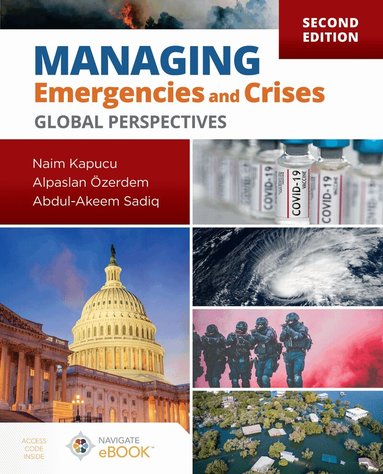
Managing Emergencies and Crises: Global Perspectives
Naim Kapucu, Alpaslan Özerdem, Abdul-Akeem Sadiq
Häftad, 2022
1 379 kr
Hoppa över listan

Mer från samma serie
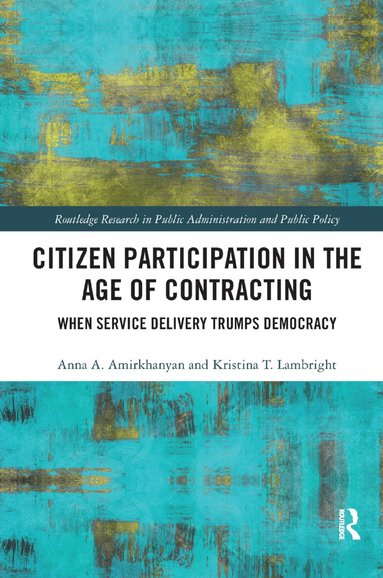
Citizen Participation in the Age of Contracting
Anna A. Amirkhanyan, Kristina T. Lambright
Häftad, 2019
1 029 kr
Multiorganizational Arrangements for Watershed Protection
Madeleine Wright McNamara, John Charles Morris
Inbunden, 2020
1 299 kr
Hoppa över listan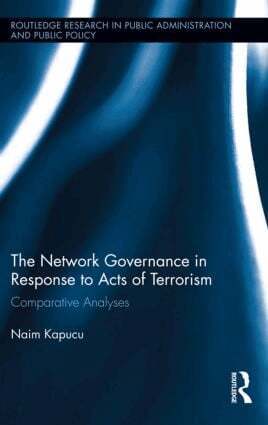
Du kanske också är intresserad av
- Nyhet
Managing Emergencies and Crises: Global Perspectives
Naim Kapucu, Alpaslan Özerdem, Abdul-Akeem Sadiq
Häftad, 2022
1 379 kr