
Del i serien Routledge Frontiers of Political Economy
Neoliberalism: National and Regional Experiments with Global Ideas
Inbunden, Engelska, 2006
3 509 kr
Beställningsvara. Skickas inom 10-15 vardagar. Fri frakt för medlemmar vid köp för minst 249 kr.
Finns i fler format (1)
Critics of globalization often portray neoliberalism as an extremist laissez-faire political-economic philosophy that rejects government any sort of government intervention in the domestic economy. Like most over-used terms, it is more complicated than this introductory sentence suggests. This volume seeks to move beyond these caricature depictions and definitions as well as the emotional rhetoric that has unfortunately dominated both the scholastic and political debate on neoliberalism and global market-oriented reform. This book emphasizes that there are in fact a variety of neoliberalisms that share a common emphasis on the role of the market. Beyond this however, its usages and applications appear much more varied according to the cultural, economic, political, and social context in which it is used.A host of eminent contributors, including Douglass C. North, Arthur T. Denzau, Thomas D. Willett, Mark Blyth, Colin Hay, Craig Parsons, and others provide a rigorous assessment of the significance of neoliberal ideas on economic policy. Through their detailed international case studies the contributors to this book show how varied its impact has in fact been and the result is a book that will stimulate further debate in this most controversial of subject matters.Ravi K. Roy is a Research Scholar at the Claremont Institute for Economic Policy Studies. Arthur T. Denzau is Professor of Economics at Claremont Graduate University. He is also a Research Associate at the Center for American Business at Washington University (St. Louis).Thomas D. Willett is Horton Professor of Economics at Claremont Graduate University. He is also Director of the Claremont Institute for Economic Policy Studies
Produktinformation
- Utgivningsdatum2006-12-07
- Mått156 x 234 x 24 mm
- Vikt840 g
- FormatInbunden
- SpråkEngelska
- SerieRoutledge Frontiers of Political Economy
- Antal sidor368
- FörlagTaylor & Francis Ltd
- ISBN9780415700900
Tillhör följande kategorier
Hoppa över listan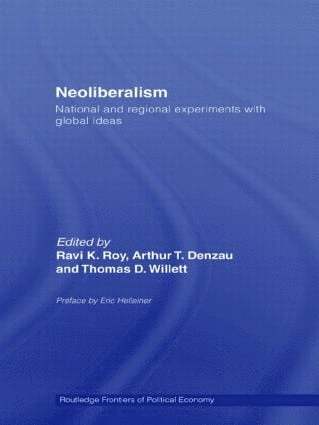



Du kanske också är intresserad av
Neoliberalism: National and Regional Experiments with Global Ideas
Ravi K. Roy, Arthur T. Denzau, Thomas D. Willett
Häftad, 2007
959 kr
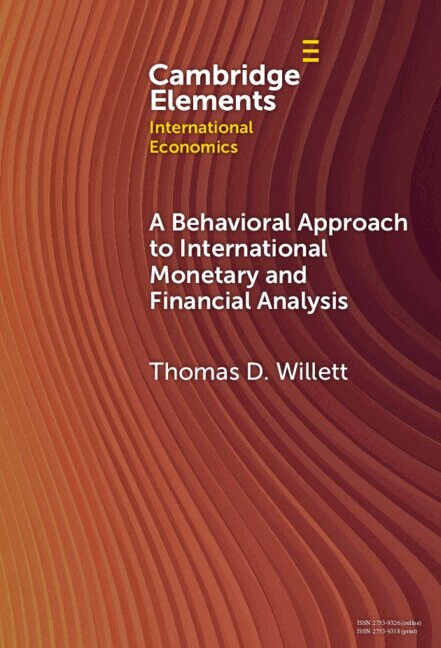
A Behavioral Finance Approach to International Monetary and Financial Analysis
Thomas D. Willett
Inbunden, 2026
1 189 kr
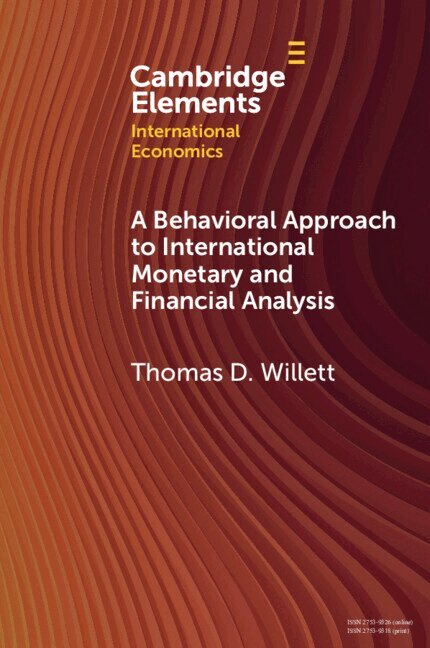
A Behavioral Finance Approach to International Monetary and Financial Analysis
Thomas D. Willett
Häftad, 2026
369 kr