
Del i serien Globale Politische Ökonomie
National Economic Identity and Capital Mobility
State-Business Relations in Latin America
Häftad, Engelska, 2012
669 kr
Beställningsvara. Skickas inom 10-15 vardagar. Fri frakt för medlemmar vid köp för minst 249 kr.
Why has capital account liberalization been a durable policy in some countries, but not in others? The book uses the contrast between the path pursued by Peru and Colombia regarding capital account policy during the last twenty years in order to identify two critical factors to account for this puzzle. First, changes in domestic informal institutions are a necessary element of sustainable capital account policy choices. Second, sustainable capital account liberalization presupposes that business-government relations privilege the interests of economic sectors that depend on the unfettered flow of international capital and are largely unaffected by exchange-rate volatility over the interests of exporters of non-traditional goods worried about exchange-rate appreciation in the context of capital account openness.
Produktinformation
- Utgivningsdatum2012-04-21
- Mått168 x 240 x undefined mm
- FormatHäftad
- SpråkEngelska
- SerieGlobale Politische Ökonomie
- Antal sidor175
- FörlagSpringer Fachmedien Wiesbaden
- ISBN9783531185286
Tillhör följande kategorier
Hoppa över listan




Mer från samma serie
Theorien der Internationalen Politischen Ökonomie
Joscha Wullweber, Antonia Graf, Maria Behrens
Häftad, 2013
479 kr
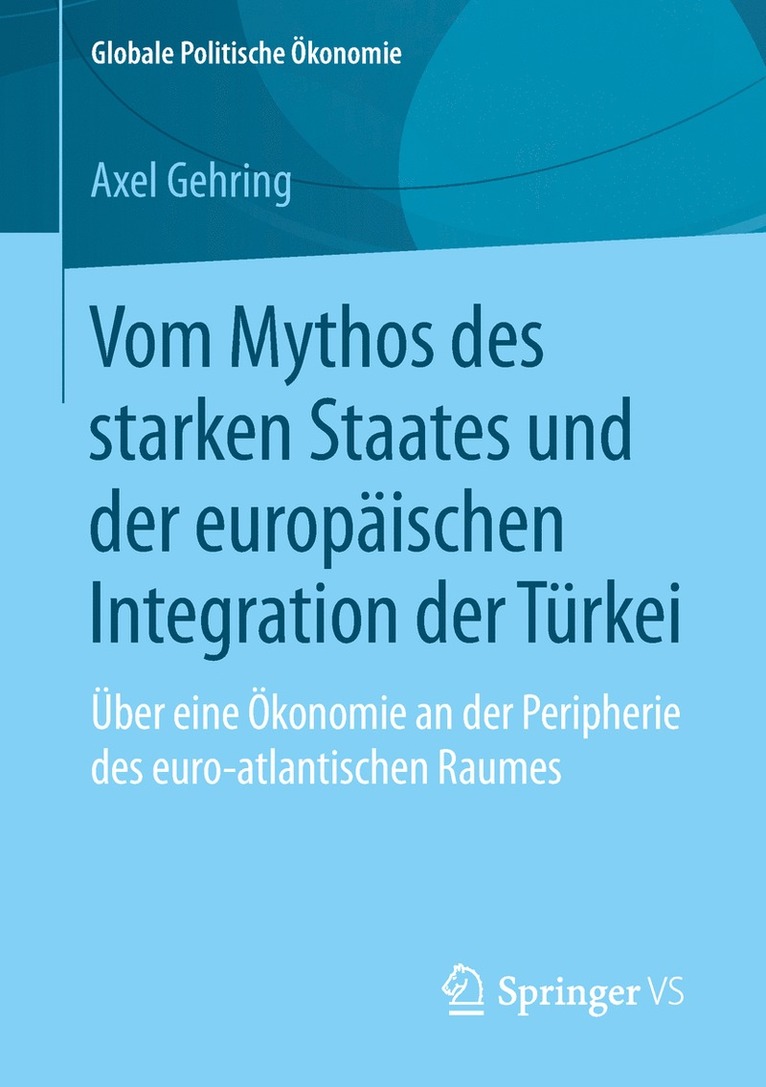
Vom Mythos des starken Staates und der europäischen Integration der Türkei
Axel Gehring
Häftad, 2019
879 kr
Hoppa över listan

Du kanske också är intresserad av
Theorien der Internationalen Politischen Ökonomie
Joscha Wullweber, Antonia Graf, Maria Behrens
Häftad, 2013
479 kr
Vom Mythos des starken Staates und der europäischen Integration der Türkei
Axel Gehring
Häftad, 2019
879 kr