
Música de Chiloé
Folklore, Syncretism, and Cultural Development in a Chilean Aquapelago
Inbunden, Engelska, 2018
1 509 kr
Beställningsvara. Skickas inom 10-15 vardagar. Fri frakt för medlemmar vid köp för minst 249 kr.
The islands of Chiloé, in southern Chile, have developed a distinct culture over several centuries, blending indigenous traditions and Spanish settler heritage to create a vibrant pattern of folklore, music, dance, and related creative practices. This cultural heritage has become an important aspect of the islands’ identity and is key to their successful marketing as a tourist destination. However, these elements exist in tension with new developments, most particularly the introduction of salmon aquaculture, which has disrupted traditional livelihood patterns and polluted the region’s marine environment. This volume analyzes the development of the islands’ distinct culture with a particular focus on music and dance. Key topics include the relation of tradition and modernity, the impact of tourism on cultural practice, and the relationship between social activism and music culture. The authors complement this focus with a discussion of their own creative engagements with the region through the production of the music album Viaje a Chiloé (2018) and through the work of the audiovisual ensemble The Moviolas (in 2015–2018).
Produktinformation
- Utgivningsdatum2018-12-03
- Mått159 x 232 x 18 mm
- Vikt354 g
- FormatInbunden
- SpråkEngelska
- Antal sidor144
- FörlagBloomsbury Publishing Plc
- ISBN9781498528856
Tillhör följande kategorier
Hoppa över listan



Du kanske också är intresserad av
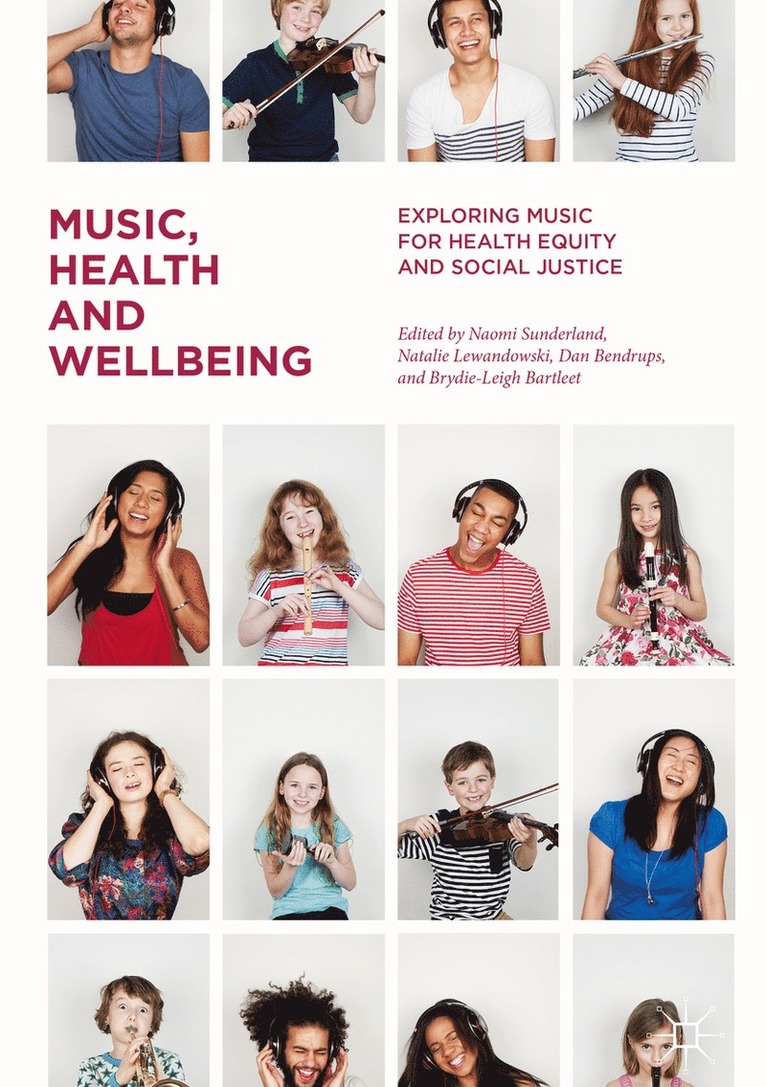
Music, Health and Wellbeing
Naomi Sunderland, Natalie Lewandowski, Dan Bendrups, Brydie-Leigh Bartleet
Inbunden, 2017
2 669 kr
Music, Health and Wellbeing
Naomi Sunderland, Natalie Lewandowski, Dan Bendrups, Brydie-Leigh Bartleet
Häftad, 2018
2 669 kr