
Del i serien Music and Sound on the International Screen
Music, Authorship, Narration, and Art Cinema in Europe
1940s to 1980s
Inbunden, Engelska, 2022
2 839 kr
Beställningsvara. Skickas inom 10-15 vardagar. Fri frakt för medlemmar vid köp för minst 249 kr.
Finns i fler format (1)
Music, Authorship, Narration, and Art Cinema in Europe: 1940s to 1980s investigates the function of music in European cinema after the Second World War up to the fall of the Berlin wall, a period when composers and directors embraced experimentation. Through analyses of music and sound in a wide range of iconic films from across Europe, the essays in this book provide a nuanced reconsideration of three core themes: auteur theory, art house film, and national cinema. Chapters written by an international array of contributors focus on case studies of music in the cinema of Carlos Saura, Jean-Pierre Melville, the Polish School, and Romanian directors, as well as collaborations between directors and composers, including Michelangelo Antonioni and Giovanni Fusco, Federico Fellini and Nino Rota, Leo Arnshtam and Dmitry Shostakovich, and Peter Greenaway and Michael Nyman. The contributors shift the emphasis from a director-centered view to the working relationship between director and composer, and from the visual component to the sonic aspects of these films, without ignoring the close correlation between soundtrack and visual elements. Enriching our understanding of the complex, intertwined nature of authorship in film, the role of film music, and sound, nation-state and art cinema, and European cinematic history, this volume offers a valuable addition to research across music and film studies.
Produktinformation
- Utgivningsdatum2022-12-30
- Mått152 x 229 x 16 mm
- Vikt453 g
- FormatInbunden
- SpråkEngelska
- SerieMusic and Sound on the International Screen
- Antal sidor238
- FörlagTaylor & Francis Ltd
- ISBN9781138238039
Tillhör följande kategorier
Hoppa över listan



Mer från samma författare
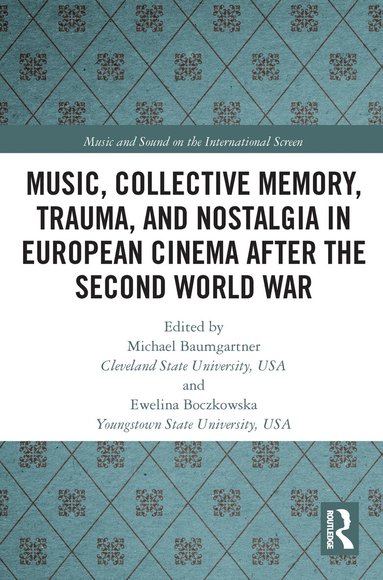
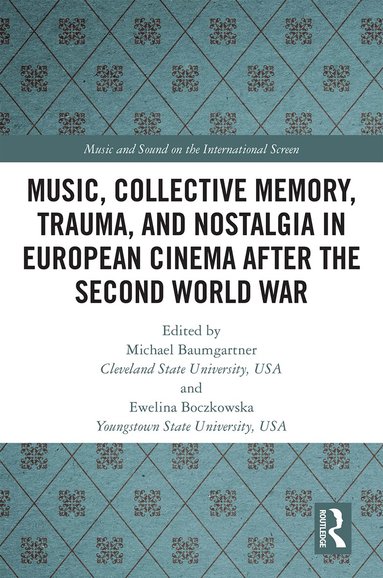
Music, Collective Memory, Trauma, and Nostalgia in European Cinema after the Second World War
Michael Baumgartner, Ewelina Boczkowska
Häftad, 2021
949 kr
Music, Collective Memory, Trauma, and Nostalgia in European Cinema after the Second World War
Michael Baumgartner, Ewelina Boczkowska
Inbunden, 2019
3 689 kr
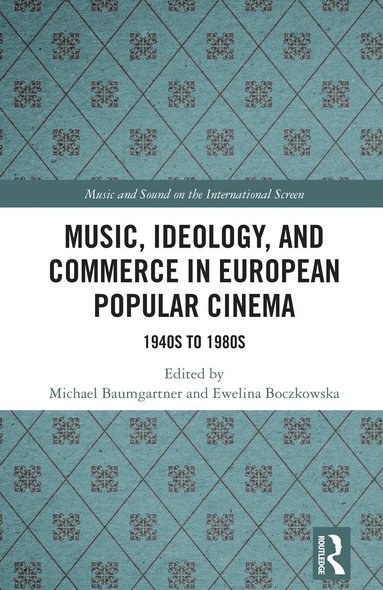
Music, Ideology, and Commerce in European Popular Cinema
Michael Baumgartner, Ewelina Boczkowska
Inbunden, 2026
3 379 kr
Kahnweiler & Rupf (Bilingual edition)
Michael Baumgartner, Hermann und Margrit Rupf-Stiftung
Inbunden, 2024
769 kr
Corporate Social Responsibility and Corporate Citizenship - Business concepts for the future!?
Michael Baumgartner
Häftad, 2002
1 389 kr
Hoppa över listan
Mer från samma serie
Music, Collective Memory, Trauma, and Nostalgia in European Cinema after the Second World War
Michael Baumgartner, Ewelina Boczkowska
Häftad, 2021
949 kr
Music, Collective Memory, Trauma, and Nostalgia in European Cinema after the Second World War
Michael Baumgartner, Ewelina Boczkowska
Inbunden, 2019
3 689 kr
Music, Ideology, and Commerce in European Popular Cinema
Michael Baumgartner, Ewelina Boczkowska
Inbunden, 2026
3 379 kr
Hoppa över listan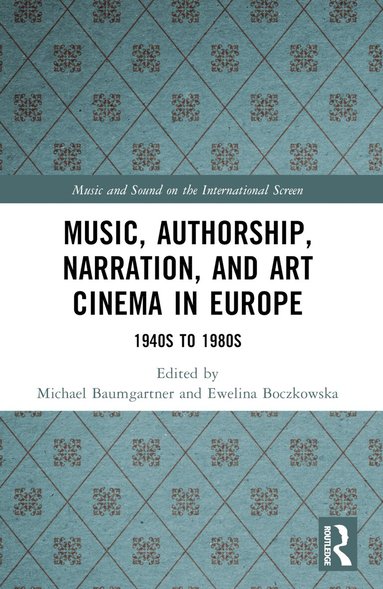
Du kanske också är intresserad av
Music, Authorship, Narration, and Art Cinema in Europe
Michael Baumgartner, Ewelina Boczkowska
Häftad, 2024
869 kr
Music, Ideology, and Commerce in European Popular Cinema
Michael Baumgartner, Ewelina Boczkowska
Inbunden, 2026
3 379 kr
Music, Collective Memory, Trauma, and Nostalgia in European Cinema after the Second World War
Michael Baumgartner, Ewelina Boczkowska
Häftad, 2021
949 kr
Music, Collective Memory, Trauma, and Nostalgia in European Cinema after the Second World War
Michael Baumgartner, Ewelina Boczkowska
Inbunden, 2019
3 689 kr
Corporate Social Responsibility and Corporate Citizenship - Business concepts for the future!?
Michael Baumgartner
Häftad, 2002
1 389 kr
Kahnweiler & Rupf (Bilingual edition)
Michael Baumgartner, Hermann und Margrit Rupf-Stiftung
Inbunden, 2024
769 kr