
Del i serien Civil War America
Modernizing a Slave Economy
The Economic Vision of the Confederate Nation
Häftad, Engelska, 2014
599 kr
Beställningsvara. Skickas inom 10-15 vardagar. Fri frakt för medlemmar vid köp för minst 249 kr.
What would separate Union and Confederate countries look like if the South had won the Civil War? In fact, this was something that southern secessionists actively debated. Imagining themselves as nation builders, they understood the importance of a plan for the economic structure of the Confederacy. The traditional view assumes that Confederate slave-based agrarianism went hand in hand with a natural hostility toward industry and commerce. Turning conventional wisdom on its head, John Majewski's analysis finds that secessionists strongly believed in industrial development and state-led modernization. They blamed the South's lack of development on Union policies of discriminatory taxes on southern commerce and unfair subsidies for northern industry. Majewski argues that Confederates' opposition to a strong central government was politically tied to their struggle against northern legislative dominance. Once the Confederacy was formed, those who had advocated states' rights in the national legislature in order to defend against northern political dominance quickly came to support centralized power and a strong executive for war making and nation building.
Produktinformation
- Utgivningsdatum2014-03-01
- Mått154 x 231 x 20 mm
- Vikt382 g
- FormatHäftad
- SpråkEngelska
- SerieCivil War America
- Antal sidor256
- FörlagThe University of North Carolina Press
- ISBN9781469614915
Tillhör följande kategorier
Hoppa över listan


Mer från samma författare
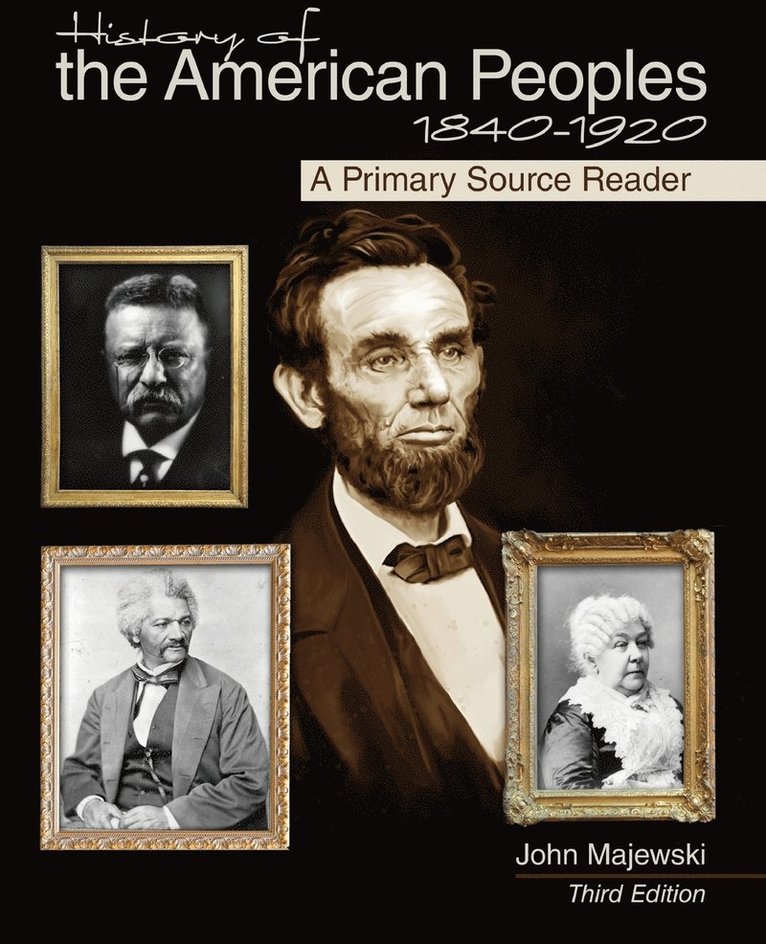
History of the American Peoples, 1840-1920: A Primary Source Reader
John Majewski
Häftad, 2013
1 389 kr
History of the American Peoples, 1840-1920: A Primary Source Reader
John Majewski, Lisa Jacobson, Rena Razek
Häftad, 2016
1 479 kr
Hoppa över listan





Du kanske också är intresserad av
History of the American Peoples, 1840-1920: A Primary Source Reader
John Majewski, Lisa Jacobson, Rena Razek
Häftad, 2016
1 479 kr
History of the American Peoples, 1840-1920: A Primary Source Reader
John Majewski
Häftad, 2013
1 389 kr
- Nyhet
Del 3
- Nyhet
Del 11
- Nyhet
Del 6
- Nyhet
- Nyhet
Del 4