
Mindfulness and Letting Be
On Engaged Thinking and Acting
Inbunden, Engelska, 2014
1 729 kr
Beställningsvara. Skickas inom 10-15 vardagar. Fri frakt för medlemmar vid köp för minst 249 kr.
Finns i fler format (1)
Mindfulness and Letting Be: On Engaged Thinking and Acting is a protest against the extreme mindlessness or thoughtlessness of our age, a malaise covered by manipulative cleverness and by minds filled to the brim with opinions, doctrines, marching orders, and ideologies. Rather than concentrating on a self-contained "mind," Fred Dallmayr pleads for an act of "minding" about oneself, one’s fellow beings, society, and the world. What is required for such mindfulness is not a predatory reason, but a kind of reticence or "mind-fasting" as preparation for a genuine attentiveness able to "let be" without aloofness or indifference. Dallmayr explores the benefits of such mindfulness in the fields of philosophy or theory, practical conduct, language use, art works, historical understanding, and cosmopolitanism, and the insights that arise will be of benefit to students and scholars of continental, social, and political philosophy.
Produktinformation
- Utgivningsdatum2014-09-17
- Mått160 x 239 x 16 mm
- Vikt372 g
- FormatInbunden
- SpråkEngelska
- Antal sidor154
- FörlagBloomsbury Publishing Plc
- ISBN9780739199862
Tillhör följande kategorier
Hoppa över listan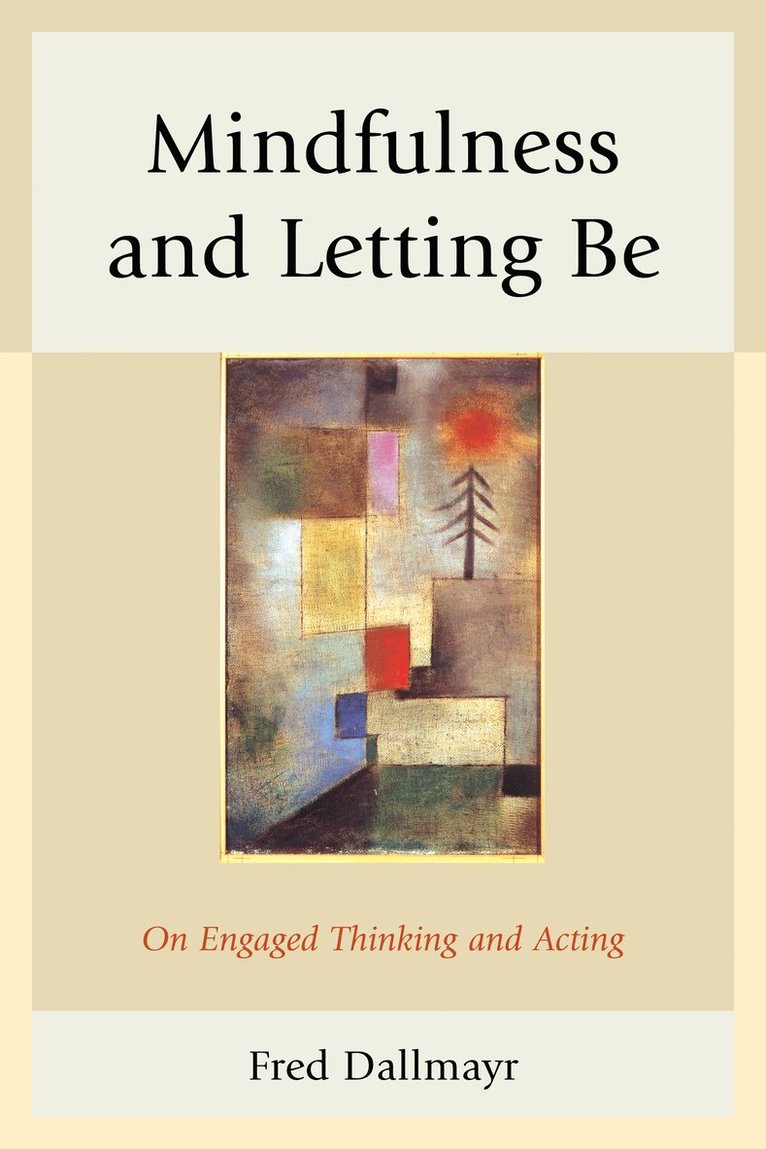







Du kanske också är intresserad av
- Nyhet
Del 3
- Nyhet
Del 11
- Nyhet
Del 1
- Nyhet
Del 4
- Nyhet
Del 4
- Nyhet
Del 6
Del 2
Del 3