
Del i serien Microbes, Materials, and the Engineered Environment
Microbiologically Influenced Corrosion
A Comprehensive Guide to Principles, Assessment and Mitigation
Inbunden, Engelska, 2026
3 509 kr
Beställningsvara. Skickas inom 10-15 vardagar. Fri frakt för medlemmar vid köp för minst 249 kr.
Microbiologically influenced corrosion (MIC) describes the largely negative influence that a microorganism can have on a material, with sometimes severe consequences for humans, nature, and the economy. Although the problem of MIC has been known for decades, work on this topic has been fragmented and isolated; interdisciplinarity is the exception rather than the rule. This book offers a comprehensive and interdisciplinary investigation of the interaction between materials science and microbiology to find solutions to cope with adverse effects of MIC. It includes the current state of the field, advances in technologies, and guidance for the future to address remaining challenges.• Addresses the latest findings, methodologies, standards, gaps, and potential improvements.• Highlights current barriers that need to be overcome and offers solutions to situations not yet found in the literature.• Explores a variety of sectors affected by MIC.• Provides guidance on lab-to-field and field-to-lab knowledge transfer to design sustainable solutions.Written by and aimed at an interdisciplinary audience, this work serves as an essential reference for readers across the materials, chemical, environmental, energy, and related engineering fields as well as microbiologists and biotechnologists seeking to mitigate the negative impact of MIC on industry and livelihoods.The Open Access version of this book, available at http://www.taylorfrancis.com, has been made available under a Creative Commons Attribution-Non Commercial-No Derivatives (CC-BY-NC-ND) 4.0 license.
Produktinformation
- Utgivningsdatum2026-04-03
- Mått156 x 234 x 25 mm
- Vikt980 g
- FormatInbunden
- SpråkEngelska
- SerieMicrobes, Materials, and the Engineered Environment
- Antal sidor412
- FörlagTaylor & Francis Ltd
- ISBN9781032707990
Tillhör följande kategorier
Hoppa över listan






Du kanske också är intresserad av
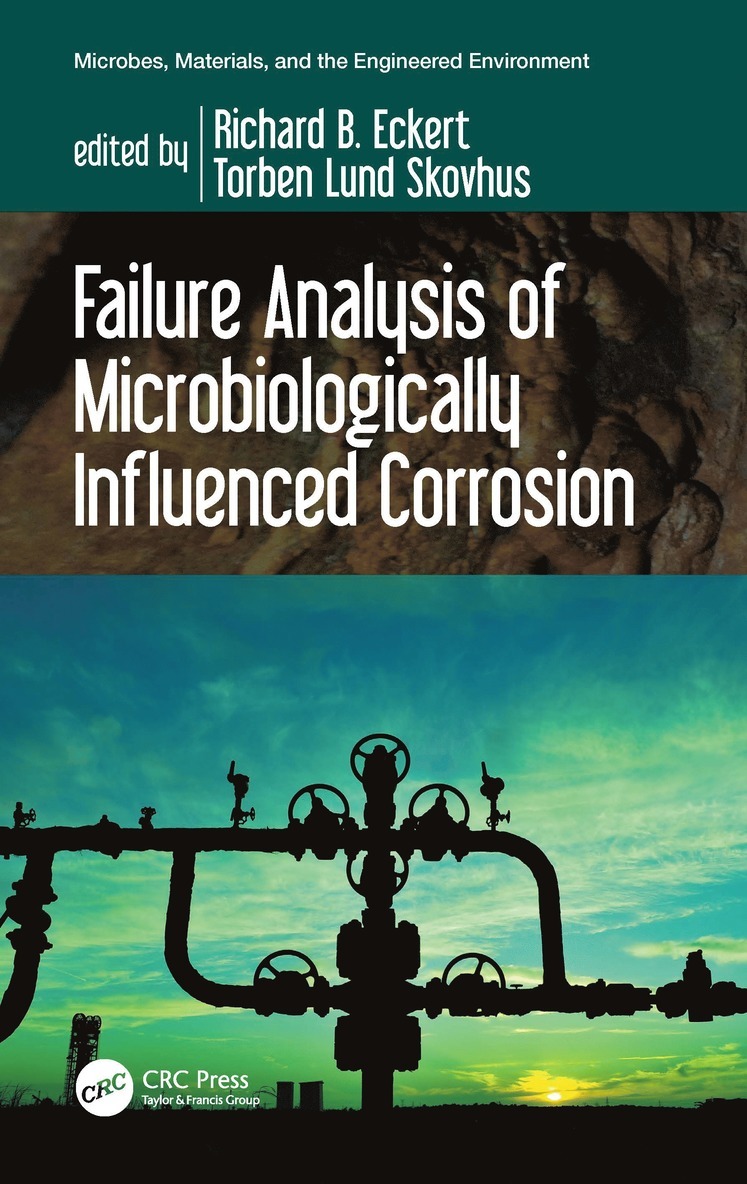
Failure Analysis of Microbiologically Influenced Corrosion
Richard B. Eckert, Torben Lund Skovhus
Inbunden, 2021
3 509 kr