
Metal Contaminated Aquatic Sediments
Inbunden, Engelska, 1996
1 279 kr
Beställningsvara. Skickas inom 10-15 vardagar. Fri frakt för medlemmar vid köp för minst 249 kr.
Over the past decade the sediments of many rivers, lakes, and estuaries have been contaminated by inorganic and organic materials. Contaminants from sediments, under certain conditions, can be released into overlying waters. Thus, sediments may be an important source of contaminants to waters in which littoral and atmospheric contaminants have been reduced or eliminated.Often found in aquatic sediments, metals are exposed to many reactions, such as sorption and precipitation, and are greatly influenced by the redox conditions in the sediment. The reactions - usually over a period of time - reflect biotic processing as well as chemical transformations. This book describes these important processes.Metal Contaminated Aquatic Sediments outlines advances in environmental chemistry, effective new modeling techniques, applications for biological treatment, and cycling and transport of trace metals in sedimentary environments.Each chapter contains a detailed reference section that draws upon a stunning array of sources. The book includes many figures and tables that illustrate the process under discussion.Features
Produktinformation
- Utgivningsdatum1996-01-01
- Mått156 x 234 x 20 mm
- Vikt810 g
- FormatInbunden
- SpråkEngelska
- Antal sidor308
- FörlagTaylor & Francis Inc
- ISBN9781575040103
Tillhör följande kategorier
Hoppa över listan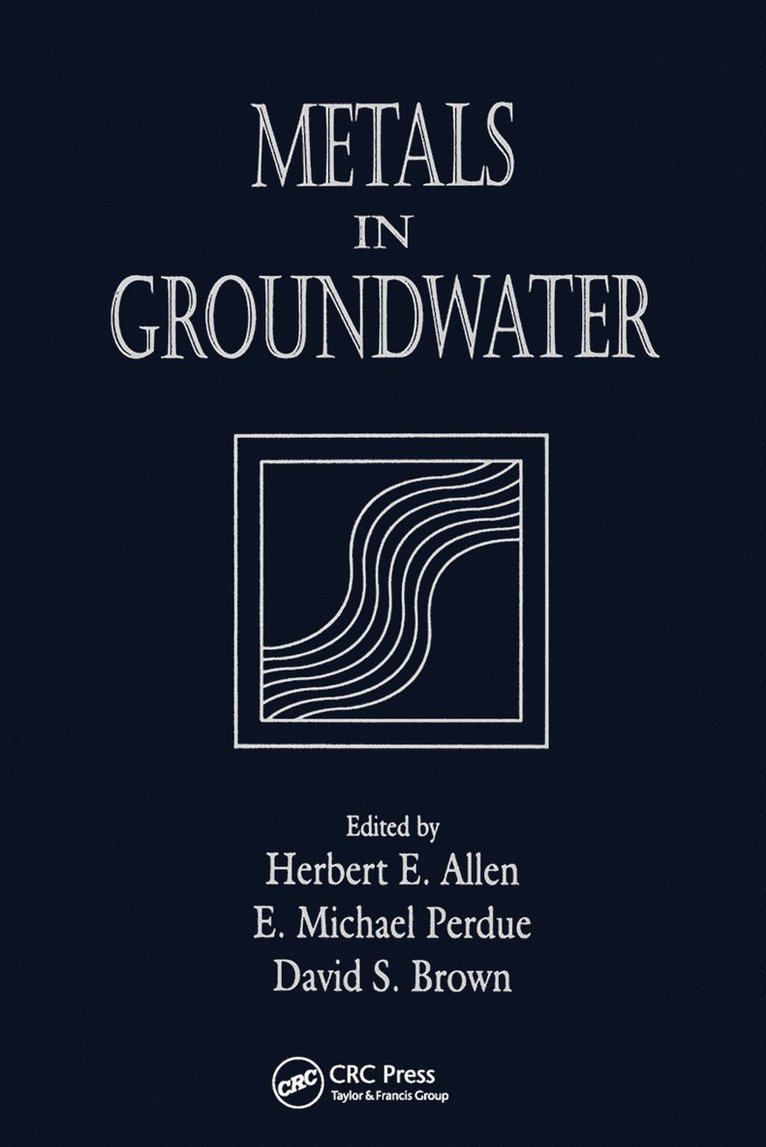
Mer från samma författare
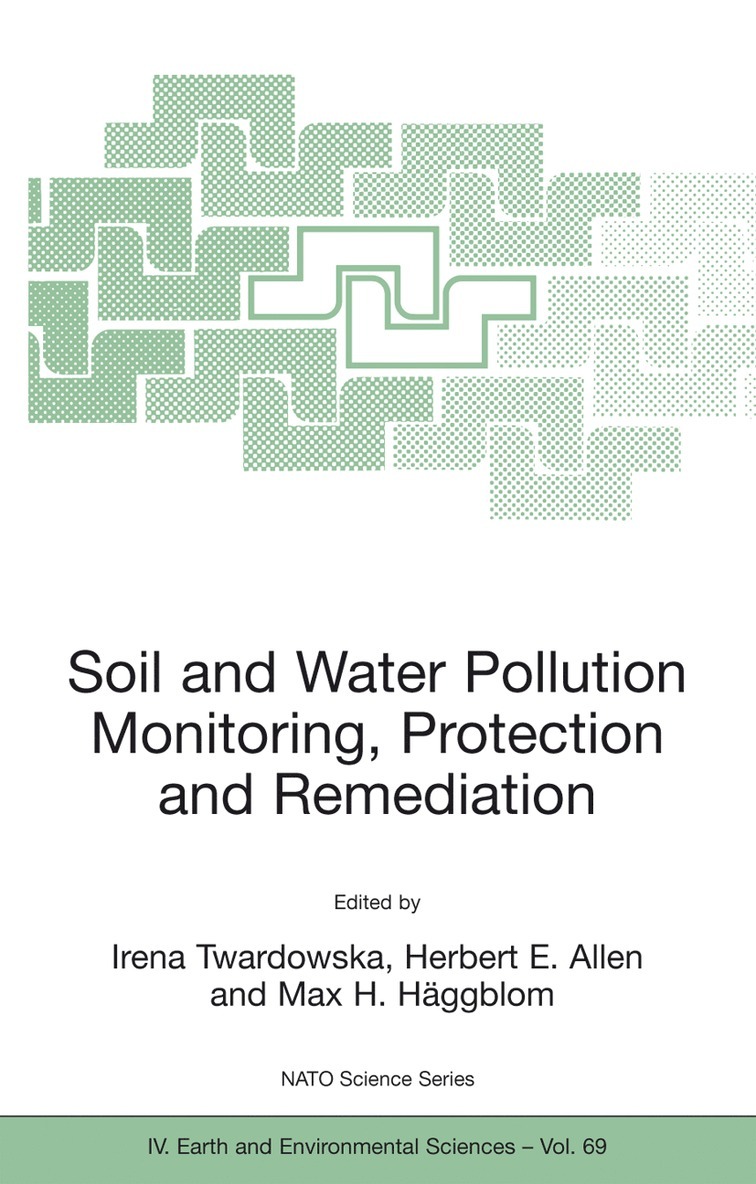
Soil and Water Pollution Monitoring, Protection and Remediation
Irena Twardowska, Herbert E. Allen, Max M. Häggblom
Inbunden, 2007
2 869 kr
Soil and Water Pollution Monitoring, Protection and Remediation
Irena Twardowska, Herbert E. Allen, Max M. Häggblom
Häftad, 2007
2 869 kr
Hoppa över listan





Du kanske också är intresserad av
Soil and Water Pollution Monitoring, Protection and Remediation
Irena Twardowska, Herbert E. Allen, Max M. Häggblom
Inbunden, 2007
2 869 kr
Soil and Water Pollution Monitoring, Protection and Remediation
Irena Twardowska, Herbert E. Allen, Max M. Häggblom
Häftad, 2007
2 869 kr
- Nyhet
Del 3
- Nyhet
Del 11
Del 1
- Nyhet
Del 4
Del 3
- Nyhet
Del 6