
Del i serien Bloomsbury Classics in Linguistics
Metadiscourse
Exploring Interaction in Writing
Häftad, Engelska, 2018
509 kr
Beställningsvara. Skickas inom 10-15 vardagar. Fri frakt för medlemmar vid köp för minst 249 kr.
Finns i fler format (2)
First released in 2005, Ken Hyland's Metadiscourse has become a canonical account of how language is used in written communication. 'Metadiscourse' is defined as the ways that writers reflect on their texts to refer to themselves, their readers or the text itself. It is a key resource in language as it allows the writer to engage with readers in familiar and expected ways and as such it is an important tool for students of academic writing in both the L1 and L2 context.This book achieves for main goals:- to provide an accessible introduction to metadiscourse, discussing its role and importance in written communication and reviewing current thinking on the topic- to explore examples of metadiscourse in a range of texts from business, academic, journalistic, and student writing- to offer a new theory of metadiscourse- to show the relevance of this theory to students, academics and language teachersThe book shows how writers use the devices of metadiscourse to adjust the level of personality in their texts, to offer a representation of themselves and their arguments. It shows how these tools help the reader organise, interpret and evaluate the information presented in the text. Knowing how to identify metadiscourse as a reader is a key skill to be learnt by students of discourse analysis and this book makes this a central goal.
Produktinformation
- Utgivningsdatum2018-10-18
- Mått138 x 214 x 18 mm
- Vikt385 g
- FormatHäftad
- SpråkEngelska
- SerieBloomsbury Classics in Linguistics
- Antal sidor296
- FörlagBloomsbury Publishing PLC
- ISBN9781350063587
Tillhör följande kategorier
Hoppa över listan


Mer från samma författare
Innovation and change in English language education
Ken Hyland, Lillian L C Wong
Inbunden, 2013
3 129 kr
Hoppa över listan
Mer från samma serie
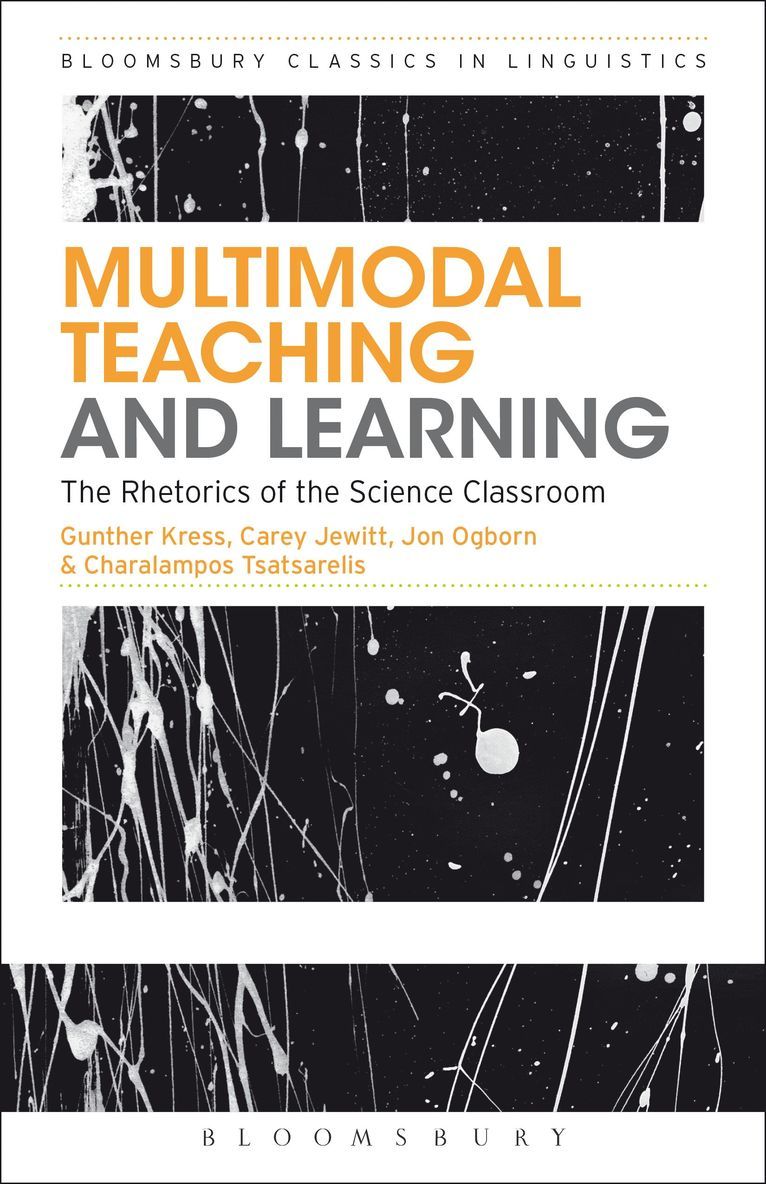
Multimodal Teaching and Learning
Gunther Kress, Carey Jewitt, Jon Ogborn, Tsatsarelis Charalampos
Häftad, 2014
469 kr
Hoppa över listan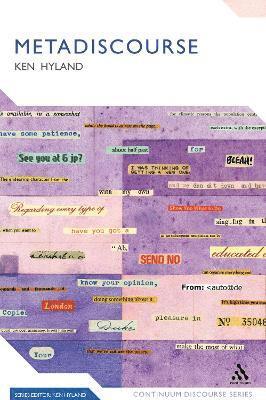
Du kanske också är intresserad av
Multimodal Teaching and Learning
Gunther Kress, Carey Jewitt, Jon Ogborn, Tsatsarelis Charalampos
Häftad, 2014
469 kr