
Meritocracy and Economic Inequality
Häftad, Engelska, 2000
1 119 kr
Beställningsvara. Skickas inom 5-8 vardagar. Fri frakt för medlemmar vid köp för minst 249 kr.
Most Americans strongly favor equality of opportunity if not outcome, but many are weary of poverty's seeming immunity to public policy. This helps to explain the recent attention paid to cultural and genetic explanations of persistent poverty, including claims that economic inequality is a function of intellectual ability, as well as more subtle depictions of the United States as a meritocracy where barriers to achievement are personal--either voluntary or inherited--rather than systemic. This volume of original essays by luminaries in the economic, social, and biological sciences, however, confirms mounting evidence that the connection between intelligence and inequality is surprisingly weak and demonstrates that targeted educational and economic reforms can reduce the income gap and improve the country's aggregate productivity and economic well-being. It also offers a novel agenda of equal access to valuable associations. Amartya Sen, John Roemer, Robert M.Hauser, Glenn Loury, Orley Ashenfelter, and others sift and analyze the latest arguments and quantitative findings on equality in order to explain how merit is and should be defined, how economic rewards are distributed, and how patterns of economic success persist across generations. Moving well beyond exploration, they draw specific conclusions that are bold yet empirically grounded, finding that schooling improves occupational success in ways unrelated to cognitive ability, that IQ is not a strong independent predictor of economic success, and that people's associations--their neighborhoods, working groups, and other social ties--significantly explain many of the poverty traps we observe. The optimistic message of this beautifully edited book is that important violations of equality of opportunity do exist but can be attenuated by policies that will serve the general economy. Policy makers will read with interest concrete suggestions for crafting economically beneficial anti-discrimination measures, enhancing educational and associational opportunity, and centering economic reforms in community-based institutions.Here is an example of some of our most brilliant social thinkers using the most advanced techniques that their disciplines have to offer to tackle an issue of great social importance.
Produktinformation
- Utgivningsdatum2000-01-24
- Mått197 x 254 x 27 mm
- Vikt531 g
- FormatHäftad
- SpråkEngelska
- Antal sidor272
- FörlagPrinceton University Press
- ISBN9780691004686
Tillhör följande kategorier
Hoppa över listan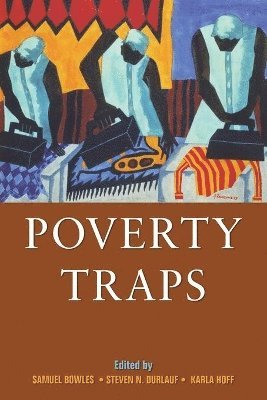

Du kanske också är intresserad av
Economy As An Evolving Complex System
Philip W. Anderson, Kenneth Arrow, David Pines
Häftad, 1988
1 369 kr
Economy As An Evolving Complex System
Philip W. Anderson, Kenneth Arrow, David Pines
Inbunden, 2019
3 209 kr
Public Economics
William Vickrey, Richard Arnott, Anthony B. Atkinson, Kenneth Arrow, Jacques H. Drèze
Häftad, 1997
919 kr
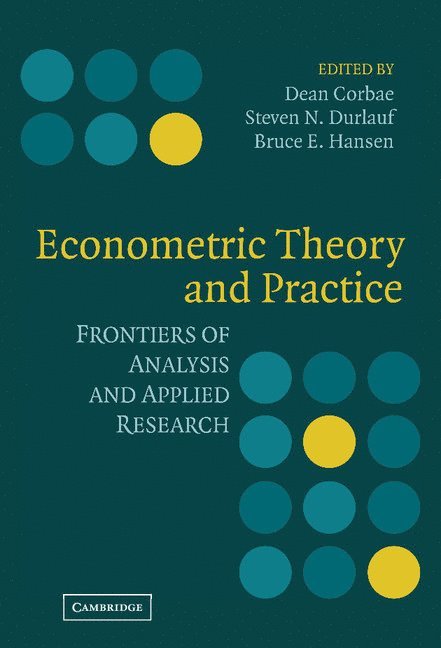
Econometric Theory and Practice
Dean Corbae, Steven N. Durlauf, Bruce E. Hansen
Inbunden, 2006
1 089 kr
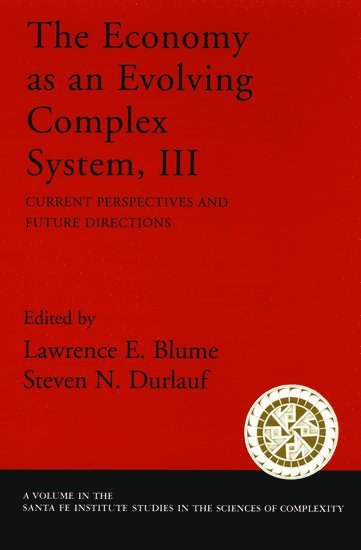
The Economy As an Evolving Complex System III
Lawrence E. Blume, Steven N. Durlauf, Lawrence E. Blume, Steven N. Durlauf
Häftad, 2005
2 029 kr
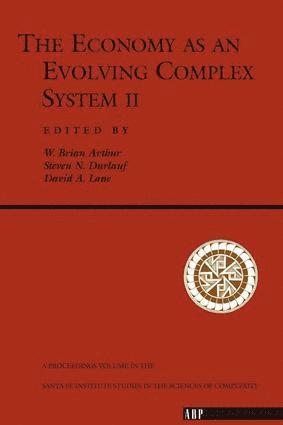
Economy As An Evolving Complex System II
Steven N Durlauf, David Lane, W. Brian Arthur, David Lane, Steven N Durlauf, W. Brian Arthur
Häftad, 1997
1 599 kr