
Del i serien Stanford Studies in Jewish History and Culture
Merchants of Oran
A Jewish Port at the Dawn of Empire
Inbunden, Engelska, 2017
1 819 kr
Beställningsvara. Skickas inom 5-8 vardagar. Fri frakt för medlemmar vid köp för minst 249 kr.
Finns i fler format (1)
The Merchants of Oran weaves together the history of a Mediterranean port city with the lives of Oran's Jewish mercantile elite during the transition to French colonial rule. Through the life of Jacob Lasry and other influential Jewish merchants, Joshua Schreier tells the story of how this diverse and fiercely divided group both responded to, and in turn influenced, French colonialism in Algeria. Jacob Lasry and his cohort established themselves in Oran in the decades after the Regency of Algiers dislodged the Spanish in 1792, during a period of relative tolerance and economic prosperity. In newly Muslim Oran, Jewish merchants found opportunities to ply their trades, dealing in both imports and exports. On the eve of France's long and brutal invasion of Algeria, Oran owed much of its commercial vitality to the success of these Jewish merchants.Under French occupation, the merchants of Oran maintained their commercial, political, and social clout. Yet by the 1840s, French policies began collapsing Oran's diverse Jewish inhabitants into a single social category, legally separating Jews from their Muslim neighbors and creating a racial hierarchy. Schreier argues that France's exclusionary policy of "emancipation," far more than older antipathies, planted the seeds of twentieth-century ruptures between Muslims and Jews.
Produktinformation
- Utgivningsdatum2017-05-16
- Mått152 x 229 x 18 mm
- Vikt417 g
- FormatInbunden
- SpråkEngelska
- SerieStanford Studies in Jewish History and Culture
- Antal sidor216
- FörlagStanford University Press
- ISBN9780804799140
Tillhör följande kategorier
Hoppa över listan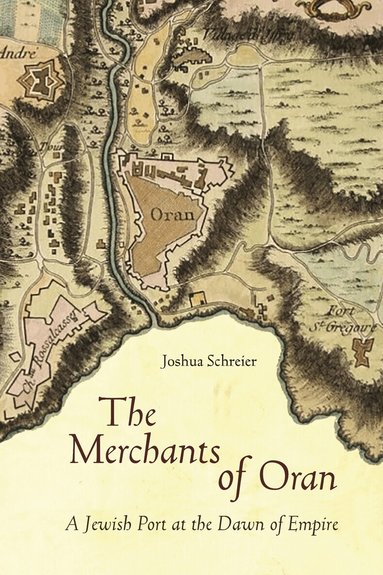









Du kanske också är intresserad av
- Nyhet
Del 6
- Nyhet
- Nyhet
Del 11
- Nyhet
Del 3
- Nyhet
Del 7
- Nyhet
Del 4
- Nyhet
- Nyhet
Del 3