
Del i serien Historical Materialism
Marx's Capital, Method And Revolutionary Subjectivity
Häftad, Engelska, 2017
459 kr
Beställningsvara. Skickas inom 5-8 vardagar. Fri frakt för medlemmar vid köp för minst 249 kr.
Through a methodologically-minded reconstruction of the Marxian critique of political economy, this study shows that the outcome of the historical movement of the objectified form of social mediation, which has turned into the very alienated subject of social life (i.e. capital), is to develop, as its own immanent determination, the constitution of the (self-abolishing) working class as a revolutionary subject.
Produktinformation
- Utgivningsdatum2017-10-10
- Mått152 x 230 x 24 mm
- Vikt502 g
- FormatHäftad
- SpråkEngelska
- SerieHistorical Materialism
- Antal sidor350
- FörlagHaymarket Books
- ISBN9781608467020
Tillhör följande kategorier
Hoppa över listan

Mer från samma författare
Value, Money and Capital
Guido Starosta, Gastón Caligaris, Alejandro Fitzsimons
Inbunden, 2023
3 299 kr
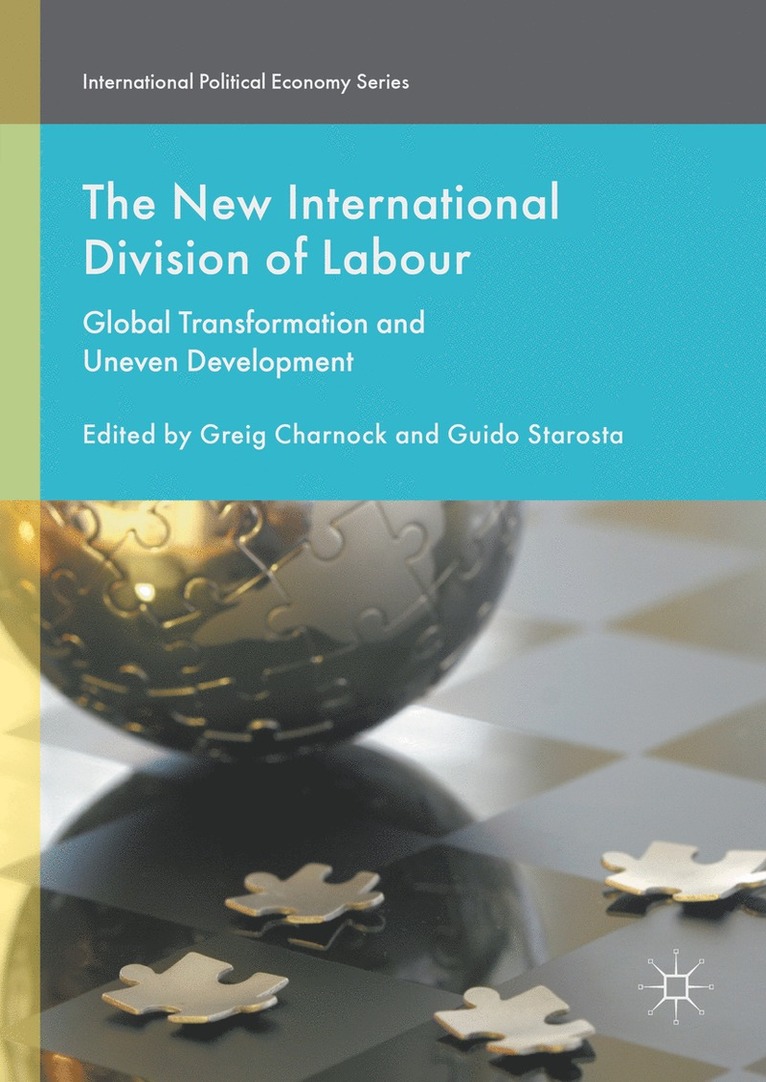
New International Division of Labour
Guido Starosta, Greig Charnock, Guido Starosta
Inbunden, 2016
1 859 kr
In Marx's Laboratory: Critical Interpretations Of The Grundrisse
Riccardo Bellofiore, Guido Starosta, Riccardo Bellofiore, Guido Starosta
Häftad, 2014
539 kr
Hoppa över listan









Mer från samma serie
Dialectic Of The Ideal: Evald Ilyenkov And Creative Soviet Marxism
Alex Levant, Vesa Oittinen
Häftad, 2015
459 kr
Toward a New World: Articles and Essays, 1901-1906
Alexander Bogdanov, David G. Rowley, David G Rowley
Häftad, 2022
529 kr
Hoppa över listan





Du kanske också är intresserad av
New International Division of Labour
Guido Starosta, Greig Charnock, Guido Starosta
Inbunden, 2016
1 859 kr
Value, Money and Capital
Guido Starosta, Gastón Caligaris, Alejandro Fitzsimons
Inbunden, 2023
3 299 kr
In Marx's Laboratory: Critical Interpretations Of The Grundrisse
Riccardo Bellofiore, Guido Starosta, Riccardo Bellofiore, Guido Starosta
Häftad, 2014
539 kr
- Nyhet
Del 3
- Nyhet
Del 11
- Nyhet
- Nyhet
- Nyhet
Del 6
Del 1