
Manhood and the American Renaissance
Inbunden, Engelska, 1989
989 kr
Beställningsvara. Skickas inom 10-15 vardagar. Fri frakt för medlemmar vid köp för minst 249 kr.
Finns i fler format (1)
In the view of David Leverenz, such nineteenth-century American male writers as Emerson, Hawthorne, Melville, Thoreau, and Whitman were influenced more profoundly by the popular model of the entrepreneurial "man of force" than they were by their literary precursors and contemporaries. Drawing on the insights of feminist theory, gender studies, psychoanalytical criticism, and social history, Manhood and the American Renaissance demonstrates that gender pressures and class conflicts played as critical a role in literary creation for the male writers of nineteenth-century America as they did for the women writers.Leverenz interprets male American authors in terms of three major ideologies of manhood linked to the social classes in the Northeast-patrician, artisan, and entrepreneurial. He asserts that the older ideologies of patrician gentility and of artisan independence were being challenged from 1820 to 1860 by the new middle-class ideology of competitive individualism. The male writers of the American Renaissance, patrician almost without exception in their backgrounds and self-expectations, were fascinated yet horrified by the aggressive materialism and the rivalry for dominance they witnessed in the undeferential "new men." In close readings of the works both of well-known male literary figures and of then popular authors such as Richard Henry Dana, Jr., and Francis Parkman, Leverenz discovers a repressed center of manhood beset by fears of humiliation and masochistic fantasies. He discerns different patterns in the works of Whitman, with his artisan's background, and Frederick Douglass, who rose from artisan freedom to entrepreneurial power. Emphasizing the interplay of class and gender, Leverenz also considers how women viewed manhood. He concludes that male writers portrayed manhood as a rivalry for dominance, but contemporary female writers saw it as patriarchy. Two chapters contrast the work of the genteel writers Sarah Hale and Caroline Kirkland with the evangelical works of Susan Warner and Harriet Beecher Stowe.A bold and imaginative work, Manhood and the American Renaissance will enlighten and inspire controversy among all students of American literature, nineteenth-century American history, and the relation of gender and literature.
Produktinformation
- Utgivningsdatum1989-03-23
- Mått152 x 229 x 32 mm
- Vikt907 g
- FormatInbunden
- SpråkEngelska
- Antal sidor384
- FörlagCornell University Press
- ISBN9780801422812
Tillhör följande kategorier
Hoppa över listan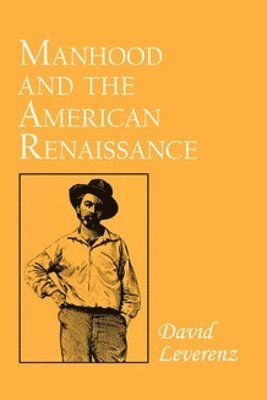



Du kanske också är intresserad av
Del 206
Historical Studies in International Corporate Business
Alice Teichova, Maurice Lévy-Leboyer, Helga Nussbaum
Inbunden, 1989
1 729 kr