
Del i serien Cass Military Studies
Managing Security
Concepts and Challenges
Häftad, Engelska, 2021
829 kr
Beställningsvara. Skickas inom 10-15 vardagar. Fri frakt för medlemmar vid köp för minst 249 kr.
Finns i fler format (1)
This textbook is designed to be used by those tackling the complex and challenging issues of security sector reform (SSR). The questions of ‘What is security?’ and ‘How can governments deliver it in the most efficient and effective manner?’ are central to this volume. The text explores the ways in which security might be achieved, providing readers with the guiding principles of governance and management. Principles are illustrated through reference to the experiences of countries engaged in reform of their security institutions, allowing the reader to identify continuities and discontinuities in the process of change within the security sector. Written by practitioners for practitioners, the book provides readers with a framework with which to assess and respond to first-, second- and third-generation issues within SSR. All chapters include an introduction to the topic, empirical case studies, and exercises to encourage readers to reflect upon their own experiences of governing and managing security.This book will be of much interest to students of security studies, defence management and defence policy, as well as to practitioners in the field of security management.
Produktinformation
- Utgivningsdatum2021-11-29
- Mått174 x 246 x 21 mm
- Vikt480 g
- FormatHäftad
- SpråkEngelska
- SerieCass Military Studies
- Antal sidor252
- FörlagTaylor & Francis Ltd
- ISBN9780367683504
Tillhör följande kategorier
Hoppa över listan


Mer från samma serie
Military Mission Formations and Hybrid Wars
Thomas Vladimir Brønd, Uzi Ben-Shalom, Eyal Ben-Ari
Inbunden, 2020
3 279 kr
Hoppa över listan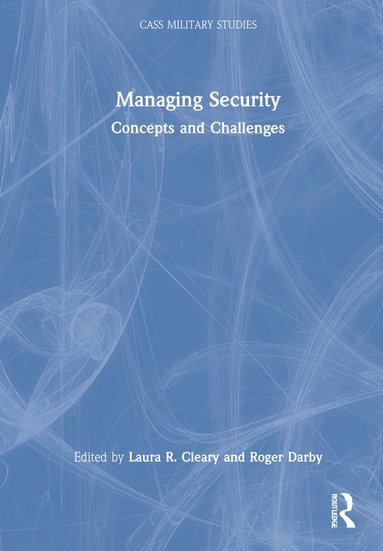







Du kanske också är intresserad av
- Nyhet
Del 7
- Nyhet
Del 4
- Nyhet
Del 6
- Nyhet
Del 3
- Nyhet
Del 11
- Nyhet
- Nyhet