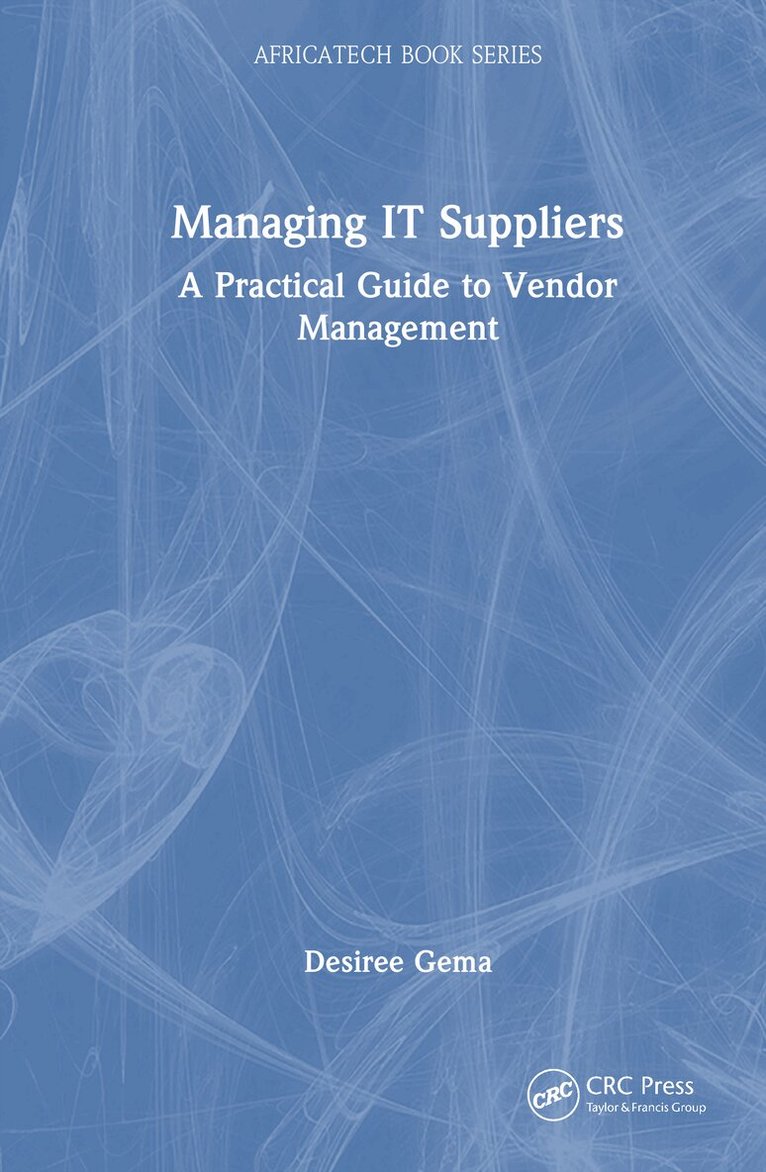
Managing IT Suppliers
- Nyhet
A Practical Guide to Vendor Management
Häftad, Engelska, 2026
1 179 kr
Beställningsvara. Skickas inom 10-15 vardagar. Fri frakt för medlemmar vid köp för minst 249 kr.
Finns i fler format (1)
Produktinformation
- Utgivningsdatum2026-01-25
- Mått156 x 234 x 7 mm
- Vikt240 g
- FormatHäftad
- SpråkEngelska
- SerieAfricaTECH Book Series
- Antal sidor120
- FörlagTaylor & Francis Ltd
- ISBN9781041104155
Tillhör följande kategorier
Desiree Gema started her career in the Information Technology industry—first within the web development space, then as a project manager. She subsequently spent seven years as a Supplier Relationship Manager for Information Technology suppliers at an international bank. It was during this time that she gained an appreciation for the coordination that took place between Supplier Managers, Corporate Lawyers, IT Managers, Financial Administrators, Risk Managers, and Sourcing Personnel during the negotiation and contract drafting process. She also gained insight into the positive impacts of these parties coordinating to achieve well-managed supplier relationships.
- ContentsAbout the Author ......................................................................................................xiAcknowledgments................................................................................................... xiiIntroduction..............................................................................................................1Chapter 1 The Essentials of IT Supplier Management.........................................41.1 Vendors versus Suppliers.......................................................... 41.2 Key Objectives in Managing IT Suppliers ............................... 51.2.1 Streamlining Operations............................................... 51.2.2 Enhancing Service Delivery......................................... 51.2.3 Mitigating Risks ........................................................... 61.2.4 Building Strategic Partnerships.................................... 61.3 Core Components ..................................................................... 71.3.1 Vendor Selection.......................................................... 71.3.2 Contract Negotiation .................................................... 71.3.3 Performance Monitoring .............................................. 81.3.4 Relationship Management............................................ 81.4 IT Supplier Management Life Cycle ........................................ 91.4.1 The Right Strategy ....................................................... 91.4.2 Supplier Selection and Contracting.............................. 91.4.3 Ongoing Management................................................ 101.4.4 Risk Management....................................................... 101.4.5 Relationships .............................................................. 101.5 Final Thoughts ........................................................................ 11Bibliography ...................................................................................... 12Chapter 2 Negotiating with IT Suppliers............................................................132.1 Background Research ............................................................. 132.2 Defining Objectives ................................................................ 142.3 Determining Intentions ........................................................... 142.4 Initial Conversations ............................................................... 142.5 Assembling Resources ............................................................ 152.5.1 Role-Playing Scenarios .............................................. 152.6 Cultural Considerations in Negotiation .................................. 152.7 Cultural Research.................................................................... 162.8 Cultural Intelligence (CQ) ...................................................... 162.8.1 Drive........................................................................... 162.8.2 Knowledge ................................................................. 162.8.3 Strategy....................................................................... 172.8.4 Action......................................................................... 172.9 Engaging Across Cultures ...................................................... 172.9.1 Engagement Style....................................................... 172.10 Guidelines for Negotiation Meetings...................................... 182.10.1 Your Demeanor........................................................ 192.10.2 Your Communication Style ..................................... 192.10.3 Making and Taking Concessions............................. 202.11 Common Mistakes to Avoid................................................... 212.11.1 Underestimating the Vendor’s Position ................... 212.11.2 Failing to Comprehensively UnderstandOrganizational Needs ............................................... 212.11.3 Lack of Clarity in Communication .......................... 212.11.4 Emotional Involvement during Negotiations........... 212.12 Final Thoughts ........................................................................ 22Bibliography....................................................................................... 22Chapter 3 Drafting IT Vendor Contracts ............................................................233.1 Segments of an IT Contract Document .................................. 243.1.1 Master Services Agreement ....................................... 243.2 Customizing Contracts for Different Services........................ 283.2.1 Statement of Works (SOW) ....................................... 283.2.2 Types of Contracts ..................................................... 293.3 Legal Considerations for Data Management .......................... 323.3.1 Governing Law and Jurisdiction................................ 323.3.2 Data Protection Regulations....................................... 333.4 Performance Benchmarks and Penalties................................. 343.4.1 Specificity in Deliverables ......................................... 343.4.2 Service Level Agreements ......................................... 343.4.3 Performance Metrics .................................................. 353.4.4 Penalty Clauses .......................................................... 353.4.5 Incentive Structures.................................................... 363.4.6 Regular Monitoring.................................................... 363.5 Reviewing Contracts with Legal Professionals ...................... 363.6 Regular Updates and Reviews................................................ 373.7 Final Thoughts ........................................................................ 37Bibliography ...................................................................................... 38Chapter 4 Supplier Performance Monitoring......................................................394.1 Key Performance Indicators (KPIs)........................................ 394.1.1 Identify Performance Areas ....................................... 394.1.2 Tailor KPIs to Supplier Service ................................. 404.1.3 Involve Stakeholders in KPI Selection ...................... 404.1.4 Use Visual Dashboards for Real-Time Monitoring..... 404.1.5 Guidelines for Implementing KPI Dashboards.......... 414.2 Regular Reporting and Feedback Mechanisms ...................... 414.2.1 Qualitative and Quantitative Metrics ......................... 424.2.2 Supplier Engagement ................................................. 424.2.3 Peer Review ............................................................... 424.3 Documentation ........................................................................ 434.3.1 Meeting Minutes ........................................................ 434.3.2 Effective Feedback..................................................... 434.3.3 Recognition and Rewards .......................................... 444.4 Conducting Supplier Audits.................................................... 444.4.1 Define the Audit Scope.............................................. 444.4.2 Audit Checklist........................................................... 454.4.3 On-Site Audits............................................................ 454.4.4 Remote Audits............................................................ 454.4.5 Audit Report............................................................... 464.4.6 Implementing Recommendations............................... 464.4.7 Benefits of Audits ...................................................... 464.4.8 Staying Relevant ........................................................ 464.4.9 Root Cause Analysis.................................................. 474.5 Benchmarking Against Industry Standards ............................ 474.5.1 Return on Investment................................................. 484.5.2 Risk and Transparency............................................... 494.5.3 Customer Service ....................................................... 494.6 Final Thoughts ........................................................................ 49Bibliography ...................................................................................... 50Chapter 5 Managing Service Level Agreements ................................................515.1 Components of a Strong SLA ................................................ 515.1.1 Scope of Service ........................................................ 515.2 Performance Metrics and Targets ........................................... 525.3 Penalty Clauses for Non-Compliance..................................... 535.3.1 Types of Penalties ...................................................... 535.3.2 Escalating Penalties.................................................... 545.3.3 Documentation and Evidence .................................... 545.3.4 Opportunity to Remedy.............................................. 555.4 Reviewing and Updating SLAs .............................................. 555.4.1 Impact of Business Changes ...................................... 555.4.2 SLA Revision Policy.................................................. 565.5 Scheduled Reviews ................................................................. 565.5.1 Stakeholder Feedback ................................................ 565.5.2 Incorporating Feedback.............................................. 575.6 Ensuring Supplier Compliance and Improvement.................. 575.6.1 Monitoring Tools: Real-Time Service PerformanceTracking ..................................................................... 575.6.2 Regular Audits: Periodic Compliance Verification ..... 575.6.3 Corrective Actions: Addressing Performance Issues .....585.6.4 Supplier Development Programs: EnhancingCapabilities................................................................. 585.6.5 Continuous Improvement: Building a StrongerPartnership.................................................................. 595.7 Final Thoughts ........................................................................ 59Bibliography ...................................................................................... 59Chapter 6 Risk Management for IT Suppliers....................................................616.1 Types of Risks in IT Supplier Management........................... 616.1.1 Operational Risks ....................................................... 616.1.2 Financial Risk............................................................. 616.1.3 Compliance Risks....................................................... 626.1.4 Technological Risks ................................................... 626.2 The Benefit of Open Communication..................................... 636.3 Risk Assessment Methods ...................................................... 646.3.1 Qualitative Assessment .............................................. 646.3.2 Quantitative Assessment ............................................ 656.3.3 Risk Rating Systems .................................................. 656.3.4 Scenario Analysis....................................................... 666.3.5 Guidelines for Successful Implementation ................ 676.4 Implementing Risk Mitigation Strategies ............................... 676.4.1 Supplier Performance Monitoring.............................. 696.4.2 Contingency Planning ................................................ 696.4.3 Creating Awareness.................................................... 696.5 Monitoring and Reviewing Risks ........................................... 706.5.1 Risk Management Systems ........................................ 706.5.2 Updated Risk Register ............................................... 706.5.3 Monitoring and Review Processes............................. 706.5.4 Real-Time Risk Assessment ...................................... 706.5.5 Feedback Mechanisms ............................................... 716.5.6 Scheduled Audits ....................................................... 716.6 Benefits of Effective Risk Management ................................. 716.6.1 Enhanced Business Continuity................................... 716.6.2 Cost Savings............................................................... 726.6.3 Regulatory Compliance.............................................. 726.6.4 Strong Supplier Relationships.................................... 726.7 Final Thoughts ........................................................................ 72Bibliography ...................................................................................... 73Chapter 7 Ensuring Legal and Regulatory Compliance .....................................757.1 Compliance Checklists and Tools .......................................... 757.2 Cybersecurity Compliance...................................................... 767.3 Role of Legal and Compliance Teams ................................... 777.3.1 Corrective Actions...................................................... 777.3.2 Reporting Non-Compliance ....................................... 787.4 Regulatory Requirements for IT Vendors .............................. 797.4.1 Legal Updates............................................................. 797.5 Handling Non-Compliance Cases........................................... 807.5.1 Identifying Non-Compliance...................................... 807.5.2 Enforcing Compliance through Contracts.................. 817.5.3 Response Protocols .................................................... 817.5.4 Resolving Non-Compliance ....................................... 817.5.5 Penalties and Remedial Actions................................. 817.6 Final Thoughts ........................................................................ 82Bibliography ...................................................................................... 83Chapter 8 Managing Contractual Changes and Renewals..................................848.1 Process for Amending Contracts ............................................ 848.2 Assessing the Need for Contract Renewals............................ 868.2.1 Key Performance Indicators....................................... 868.2.2 Market Analysis ......................................................... 868.2.3 Strategic Alignment.................................................... 868.2.4 Financial Analysis...................................................... 878.2.5 Supplier Performance................................................. 878.2.6 Stakeholder Contributions.......................................... 878.2.7 Legal Input ................................................................. 888.3 Negotiating Terms During Renewal ....................................... 888.3.1 Research Past Performance and MarketAlternatives ................................................................ 888.3.2 Identify and Prioritize Key Terms and Provisionsfor Negotiation ........................................................... 888.3.3 Leverage Existing Supplier Relationships ................. 888.3.4 Create Time for Contract Review and RenewalWorkflows .................................................................. 898.3.5 Adapt to Different Renewal Scenarios ...................... 898.4 Effectively Documenting Changes ......................................... 898.4.1 Use Standard Formatting ........................................... 898.4.2 The Change Log......................................................... 908.4.3 Communicating Changes ........................................... 908.4.4 Scheduling Contract Reviews .................................... 908.4.5 Version Control.......................................................... 918.4.6 Continuous Updates and Audits ................................ 918.5 Maintaining Vendor Relationships ......................................... 918.6 Final Thoughts ........................................................................ 92Bibliography ...................................................................................... 93Chapter 9 Dispute Resolution and Exit Strategies..............................................949.1 Common Causes of Disputes.................................................. 949.2 Methods for Dispute Resolution............................................. 969.2.1 Negotiation ................................................................. 969.2.2 Mediation ................................................................... 969.2.3 Arbitration .................................................................. 969.2.4 Litigation .................................................................... 979.2.5 Contractual Clauses.................................................... 979.2.6 Conflict Management Training .................................. 979.3 Designing Effective Exit Clauses ........................................... 989.3.1 Clear Conditions for Termination .............................. 989.3.2 Transfer of Responsibilities ....................................... 989.3.3 Dispute Resolution upon Exit .................................... 999.3.4 Final Settlements........................................................ 999.4 Steps for Executing an Exit Strategy...................................... 999.5 Maintaining Business Continuity.......................................... 1019.5.1 Backup Suppliers ..................................................... 1019.5.2 Knowledge Transfer................................................. 1019.5.3 Operational Audits ................................................... 1029.5.4 Stakeholder Engagement.......................................... 1029.5.5 Implementation Strategies........................................ 1029.5.6 Continuous Improvement......................................... 1039.6 Final Thoughts ...................................................................... 103Bibliography .................................................................................... 103Chapter 10 Future Trends in IT Supplier Management......................................10510.1 Automation in Supplier Management................................... 10510.1.1 AI-Driven Analytics............................................... 10710.1.2 Machine Learning .................................................. 10710.2 Impact of AI.......................................................................... 10810.3 Increasing Role of Cybersecurity ......................................... 10910.4 Adapting to Global Market Changes.................................... 11110.4.1 Geopolitical Risks .................................................. 11110.4.2 Sustainability.......................................................... 11110.4.3 Economic Hardships .............................................. 11210.5 Digital Transformation in Supplier Management................. 11210.6 Final Thoughts ...................................................................... 113Bibliography .................................................................................... 114Conclusion.............................................................................................................115Index......................................................................................................................118