
Making the Bible Modern
Children's Bibles and Jewish Education in Twentieth-Century America
Inbunden, Engelska, 2003
1 019 kr
Beställningsvara. Skickas inom 10-15 vardagar. Fri frakt för medlemmar vid köp för minst 249 kr.
The Bible has played a critical role in the story of Judaism, modernity, and identity. Penny Schine Gold examines the arena of children's education and the role of the Bible in the reshaping of Jewish identity, especially in the United States in the 1920s and 1930s, when a second generation of Eastern European Jews engaged the task of Americanizing Jewish culture, religion, and institutions. Professional Jewish educators based in the Reform movement undertook a multifaceted agenda for the Bible in America: to modernize it, harmonize it with American values, and move it to the center of the religious school curriculum. Through public schooling, the children of Jewish immigrants brought America home; it was up to the adults to fashion a Judaism that their children could take back out into America. Because of its historic role in the development of Judaism and its cultural significance in American life, Gold finds, the Bible provided Jews with vital links to both the past and the present. The ancient sacred text of the Bible, transformed into highly abridged and amended "Bible tales," was brought into service as a bridge between tradition and modernity.Gold analyzes these American developments with reference to the intellectual history of eighteenth- and nineteenth-century Europe, innovations in public schooling and social theory, Protestant religious education, and later versions of children's Bibles in the United States and Israel. She shows that these seemingly simple children's books are complex markers of the pressing concerns of Jews in the modern world.
Produktinformation
- Utgivningsdatum2003-12-16
- Mått155 x 235 x 24 mm
- Vikt907 g
- FormatInbunden
- SpråkEngelska
- Antal sidor288
- FörlagCornell University Press
- ISBN9780801436673
Tillhör följande kategorier
Hoppa över listan
Mer från samma författare
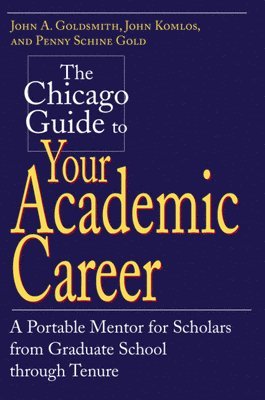
Chicago Guide to Your Academic Career
John A. Goldsmith, John Komlos, Penny Schine Gold
Häftad, 2001
229 kr
Hoppa över listan





Du kanske också är intresserad av
Chicago Guide to Your Academic Career
John A. Goldsmith, John Komlos, Penny Schine Gold
Häftad, 2001
229 kr
- Nyhet
Del 3
- Nyhet
Del 11
- Nyhet
Del 6
- Nyhet
Del 4
Del 3
Del 1
Del 2
Del 7