
Del 16
Del 16 i serien Rochester Studies in Medical History
Ludwik Hirszfeld
The Story of One Life
Inbunden, Engelska, 2010
769 kr
Beställningsvara. Skickas inom 5-8 vardagar. Fri frakt för medlemmar vid köp för minst 249 kr.
An annotated English translation of the autobiography of Polish microbiologist Ludwik Hirszfeld (1884-1954), with a focus on his contributions to international public health.Ludwik Hirszfeld (1884-1954), one of the most prominent serologists of the twentieth century, discovered the inheritance and established the nomenclature of blood groups and opened the field of human population genetics. He also carried out groundbreaking research in the genetics of disease and immunology. Following World War II, he founded Poland's first Institute of Immunology in Wroclaw, which now bears his name. His autobiographical memoir, The Story of One Life, first published in Poland in 1946, immediately became a bestseller and has been reedited several times since. It is an outstanding account of a Holocaust survivor and a writer capable of depicting the uniqueness and the tragedy of countless individuals caught up in the nightmare of 1939-45. He recollects his time as a physician in the Serbian army in 1915 and his satisfaction as a scientist who helped rebuild Poland after the Treaty ofVersailles; in so doing the contrast between the world before and the world after World War II could not be starker. Hirszfeld wrote this book while in hiding after he escaped from the Warsaw ghetto in 1943; he buried the manuscript and retrieved it only after the war.Drawing on interviews with Hirszfeld's former students and family, as well as unpublished documents, this translation is annotated and has an introduction written by two scholars with unique qualifications to understand both the immediate setting in which Hirszfeld lived his life, and the broader implications of his work to the history of medicine.Marta A. Balinska is a writer and an international consultant in public health.William H. Schneider is professor of history at Indiana University.
Produktinformation
- Utgivningsdatum2010-08-01
- Mått152 x 229 x 37 mm
- Vikt1 078 g
- FormatInbunden
- SpråkEngelska
- SerieRochester Studies in Medical History
- Antal sidor508
- FörlagBoydell & Brewer Ltd
- ISBN9781580463386
- ÖversättareMarta A. Balinska, Marta A Balinska
Tillhör följande kategorier
Hoppa över listan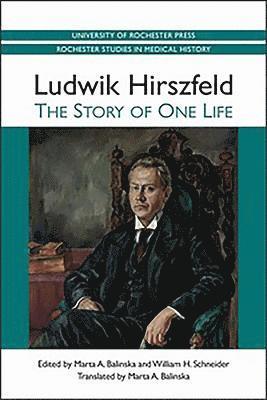




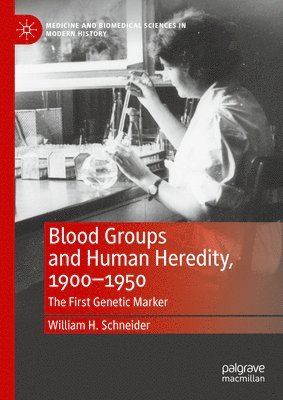
Du kanske också är intresserad av
Del 45
China and the Globalization of Biomedicine
David Luesink, William H. Schneider, Zhang Daqing
Inbunden, 2019
1 639 kr