
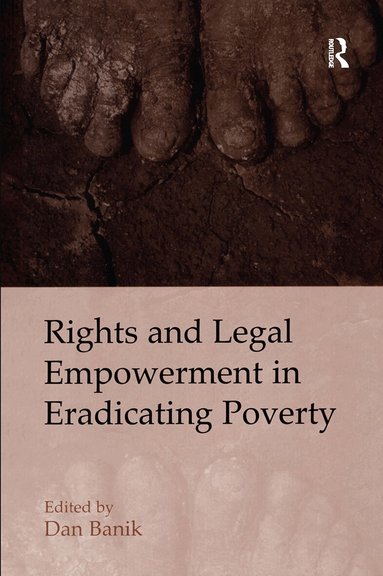
Legal Empowerment Agenda
Poverty, Labour and the Informal Economy in Africa
Häftad, Engelska, 2011
1 109 kr
Beställningsvara. Skickas inom 10-15 vardagar. Fri frakt för medlemmar vid köp för minst 249 kr.
Despite providing society with a set of crucial services, large groups of workers in the informal economy are subject to exclusion and discrimination, and their lives are characterised by various types of vulnerabilities and deprivations that result from the denial of social, economic, political and legal protection. Although not new to the development vocabulary, the informal economy has received renewed attention in recent years largely due to the ILO's 'decent work' agenda and various efforts to promote 'legal empowerment of the poor'. With an explicit focus on labour rights, the book focuses on a nuanced understanding of the regulatory and operational challenges and dilemmas related to implementing the two approaches in selected countries in sub-Saharan Africa. In addition to analyzing structures and relations of power between the formal and the informal economies, the book critically discusses the work of governments, civil society organizations and the poor themselves to address the daily challenges of living in the informal economy.
Produktinformation
- Utgivningsdatum2011-05-19
- Mått156 x 234 x 13 mm
- Vikt476 g
- FormatHäftad
- SpråkEngelska
- Antal sidor242
- FörlagTaylor & Francis Ltd
- ISBN9781409411192
Tillhör följande kategorier
Hoppa över listan
Mer från samma författare
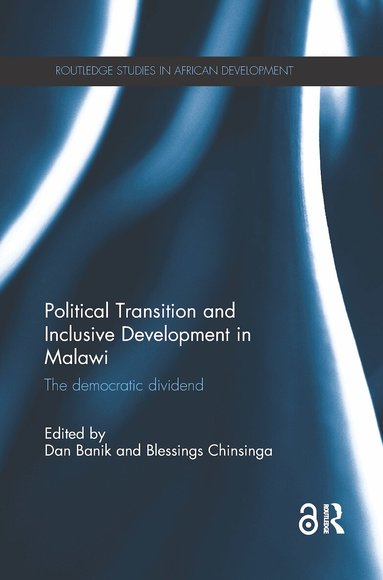
Political Transition and Inclusive Development in Malawi
Dan Banik, Blessings Chinsinga
Häftad, 2017
1 059 kr
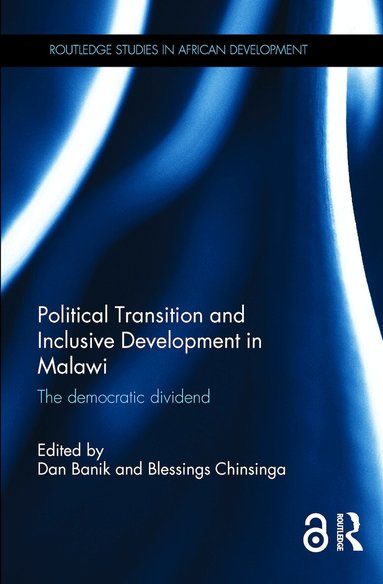
Political Transition and Inclusive Development in Malawi
Dan Banik, Blessings Chinsinga
Inbunden, 2016
3 279 kr
Hoppa över listan


Du kanske också är intresserad av
Political Transition and Inclusive Development in Malawi
Dan Banik, Blessings Chinsinga
Inbunden, 2016
3 279 kr
Political Transition and Inclusive Development in Malawi
Dan Banik, Blessings Chinsinga
Häftad, 2017
1 059 kr
- Nyhet
Del 7
- Nyhet
Del 4
- Nyhet
Del 6
- Nyhet
Del 3