
Late Medieval Ipswich
Trade and Industry
Inbunden, Engelska, 2011
699 kr
Beställningsvara. Skickas inom 5-8 vardagar. Fri frakt för medlemmar vid köp för minst 249 kr.
Finns i fler format (1)
A detailed study of Ipswich at a time of great growth and prosperity, highlighting the activities of its industries, merchants and craftsmen.Ipswich in the late Middle Ages was a flourishing town. A wide range of commodities passed through its port, to and from far-flung markets, bought and sold by merchants from diverse backgrounds, and carried in ships whose design evolved during the fourteenth and fifteenth centuries. Its trading partners, both domestic and overseas, changed in response to developments in the international, national and local economy, as did the occupations of its craftsmen,with textile, leather and metal industries were of particular importance. However, despite its importance, and the richness of its medieval archives, the story of Ipswich at the time has been sadly neglected. This is a gap whichthe author here aims to remedy. His careful study allows a detailed picture of urban life to emerge, shedding new light not only on the borough itself, but on towns more generally at a crucial point in their development, at a period of growing affluence when ordinary people enjoyed an unprecedented rise in standards of living, and the benefits of what might be termed our first consumer revolution.Nicholas Amor gained his doctorate from the University of East Anglia.
Produktinformation
- Utgivningsdatum2011-10-20
- Mått156 x 234 x 25 mm
- Vikt702 g
- FormatInbunden
- SpråkEngelska
- Antal sidor312
- FörlagBoydell & Brewer Ltd
- ISBN9781843836735
Tillhör följande kategorier
Hoppa över listan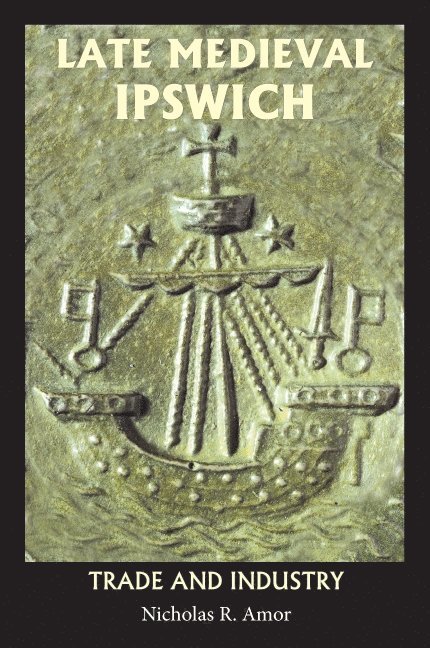







Du kanske också är intresserad av
- Nyhet
Del 3
- Nyhet
Del 11
- Nyhet
Del 4
Del 3
- Nyhet
Del 6
Del 1
Del 2