
Landscape Architecture Criticism
Inbunden, Engelska, 2020
3 309 kr
Beställningsvara. Skickas inom 10-15 vardagar. Fri frakt för medlemmar vid köp för minst 249 kr.
Finns i fler format (1)
Landscape Architecture Criticism offers techniques, perspectives and theories which relate to landscape architecture, a field very different from the more well-known domains of art and architectural criticism. Throughout the book, Bowring delves into questions such as, how do we know if built or unbuilt works of landscape architecture are successful? What strategies are used to measure the success or failure, and by whom? Does design criticism only come in written form? It brings together diverse perspectives on criticism in landscape architecture, establishing a substantial point of reference for approaching design critique, exploring how criticism developed within the discipline. Beginning with an introductory overview to set the framework, the book then moves on to historical perspectives, the purpose of critique, theoretical positions ranging from aesthetics, to politics and experience, unbuilt projects, techniques, and communication. Written for professionals and academics, as well as for students and instructors in landscape architecture, it includes strategies, diagrams, matrices, and full colour illustrations to prompt discussion and provide a basis for exploring design critique.
Produktinformation
- Utgivningsdatum2020-05-18
- Mått138 x 216 x undefined mm
- Vikt700 g
- FormatInbunden
- SpråkEngelska
- Antal sidor292
- FörlagTaylor & Francis Ltd
- ISBN9781138324268
Tillhör följande kategorier
Hoppa över listan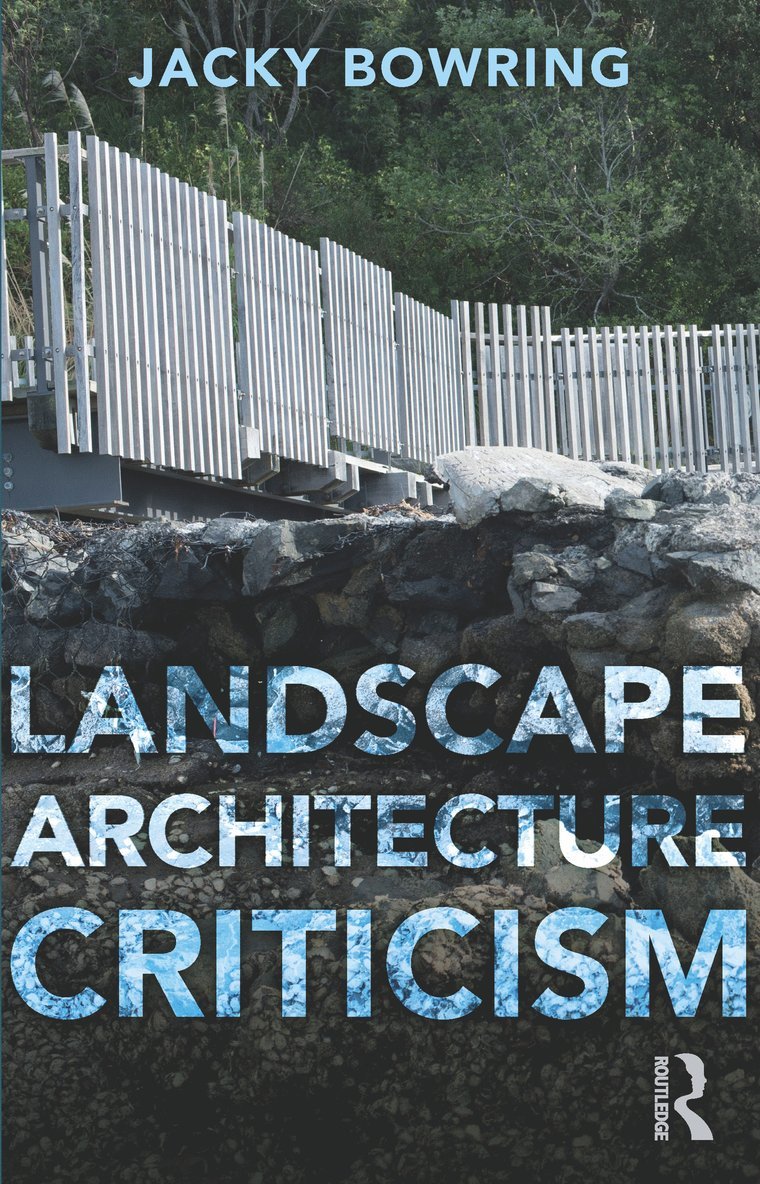





Du kanske också är intresserad av
- Nyhet
- Nyhet
Del 6
Del 3
- Nyhet
Del 11
Del 1
- Nyhet
- Nyhet
Del 4