
Klossowski, Pasolini, Gurrola
A Genealogy of Late Surrealist Film Theory
Inbunden, Engelska, 2026
1 689 kr
Beställningsvara. Skickas inom 7-10 vardagar. Fri frakt för medlemmar vid köp för minst 249 kr.
Beginning with an exploration of Klossowski’s unconventional approach to literary and philosophical production, Michael Newell Witte traces the international impact that Klossowski and his cohorts in the Paris Collège de Sociologie had on the work of some of the most radical artists, filmmakers and theorists of the second half of the 20th century, with a spotlight on the critical reception of surrealist concepts within the work of the Italian film director Pier Paolo Pasolini and the Mexican filmmaker, artist and theatre practitioner, Juan José Gurrola.By engaging with concepts like acinema, the tableau vivant, simulation, anti-economy and the theory of the instinctual drives, this book offers a fresh perspective on the evolution of avant-garde aesthetics, challenging traditional narratives and providing new insights into the complex intellectual history that underlies the fields of avant-garde film and film theory.
Produktinformation
- Utgivningsdatum2026-04-30
- Mått156 x 234 x undefined mm
- Vikt449 g
- FormatInbunden
- SpråkEngelska
- Antal sidor192
- FörlagEdinburgh University Press
- ISBN9781399558747
Hoppa över listan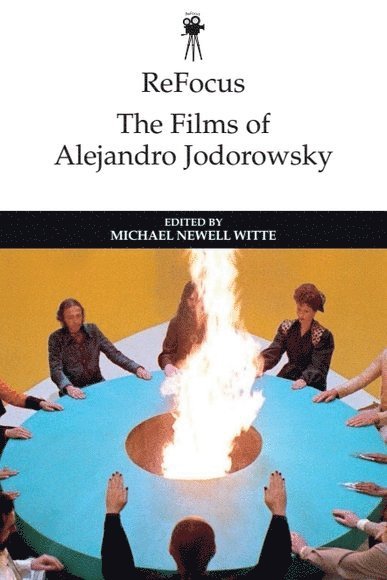





Du kanske också är intresserad av
- Nyhet
Del 3
- Nyhet
Del 11
Del 2
Del 1
- Nyhet
- Nyhet
Del 4
- Nyhet
Del 6
- Nyhet
Del 4