
Del i serien AAR Academy Series
Journey Back to God
Origen on the Problem of Evil
Inbunden, Engelska, 2012
2 699 kr
Beställningsvara. Skickas inom 5-8 vardagar. Fri frakt för medlemmar vid köp för minst 249 kr.
Finns i fler format (1)
Journey Back to God explores Origen of Alexandria's creative, complex, and controversial treatment of the problem of evil. It argues that his layered cosmology functions as a theodicy that discerns deeper meaning beneath the apparent injustices of the world. Origen asks: why does God permit cosmic disparity - that is, why do some suffer more than others? On the surface, the unfair arrangement of the world defies theological coherence. In order to defend God against the charge of injustice Origen develops a theological cosmology that explains the ontological status and origin of evil as well as its cosmic implications. It interprets suffering as a stepping stone to the soul's ascent to God. Essentially, Origen's theodicy hinges on the journey of the soul back to God. Its themes correlate with the soul's creation, fall and descent into materiality, gradual purification, and eventual divinization; the world is a schoolroom or hospital for the soul where it undergoes the necessary education and purgation. Origen carefully calibrates his cosmology and theology, and portrays God as a compassionate and judicious teacher, physician, and father who employs suffering for our amelioration. Journey Back to God frames the systematic study of Origen's theodicy within a broader theory of theodicy as navigation; that is, as the dynamic process whereby we integrate our observations and experiences of suffering within our religious worldviews. Moreover, it unites the logical and spiritual facets of his theodicy, and situatesit in its third-century historical, theological, and philosophical context, correcting the imbalanced perspectives on Origen that pervade scholarship. Furthermore, the study clarifies his ambiguous position on universalism and its place in his theodicy. It demonstrates the contemporary relevance of Origen's approach, which confronts the perennial questions of theodicy with a bold, constructive, and optimistic vision.
Produktinformation
- Utgivningsdatum2012-06-21
- Mått160 x 236 x 22 mm
- Vikt476 g
- FormatInbunden
- SpråkEngelska
- SerieAAR Academy Series
- Antal sidor256
- FörlagOUP USA
- ISBN9780199841141
Tillhör följande kategorier
Hoppa över listan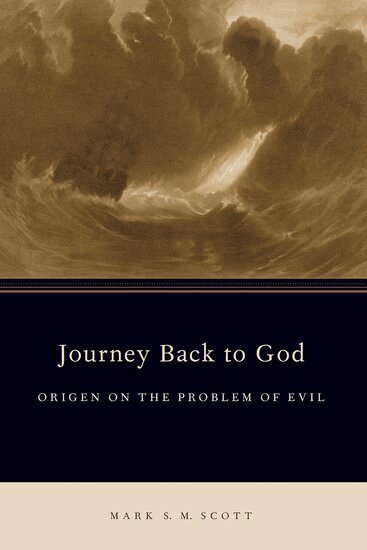





Du kanske också är intresserad av
- Nyhet
Del 6
- Nyhet
Del 3
- Nyhet
Del 4
- Nyhet
Del 7
- Nyhet
- Nyhet
Del 11