
Del 29 i serien Jewish Identities in a Changing World
Jewish Museum
History and Memory, Identity and Art from Vienna to the Bezalel National Museum, Jerusalem
Inbunden, Engelska, 2017
3 699 kr
Beställningsvara. Skickas inom 5-8 vardagar. Fri frakt för medlemmar vid köp för minst 249 kr.
In The Jewish Museum: History and Memory, Identity and Art from Vienna to the Bezalel National Museum, Jerusalem Natalia Berger traces the history of the Jewish museum in its various manifestations in Central Europe, notably in Vienna, Prague and Budapest, up to the establishment of the Bezalel National Museum in Jerusalem. Accordingly, the book scrutinizes collections and exhibitions and broadens our understanding of the different ways that Jewish individuals and communities sought to map their history, culture and art. It is the comparative method that sheds light on each of the museums, and on the processes that initiated the transition from collection and research to assembling a type of collection that would serve to inspire new art.
Produktinformation
- Utgivningsdatum2017-10-12
- Mått155 x 235 x 40 mm
- Vikt1 071 g
- FormatInbunden
- SpråkEngelska
- SerieJewish Identities in a Changing World
- Antal sidor586
- FörlagBrill
- ISBN9789004353879
Tillhör följande kategorier
Hoppa över listan






Mer från samma serie
Del 5
Del 8
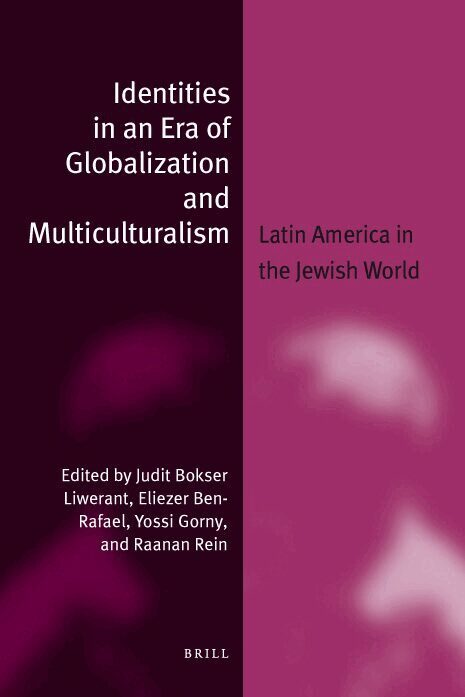
Identities in an Era of Globalization and Multiculturalism
Judit Bokser Liwerant, Eliezer Ben-Rafael, Yosef Gorny, Raanan Rein
Inbunden, 2008
4 729 kr
Del 9
Del 10
Del 11
Del 12
Del 13
Del 11
Place of the Mediterranean in Modern Israeli Identity (paperback)
Alexandra Nocke
Häftad, 2010
1 529 kr
Del 14
Del 15
Hoppa över listan



Du kanske också är intresserad av
Del 8
Identities in an Era of Globalization and Multiculturalism
Judit Bokser Liwerant, Eliezer Ben-Rafael, Yosef Gorny, Raanan Rein
Inbunden, 2008
4 729 kr
Del 31
Del 13
Del 2
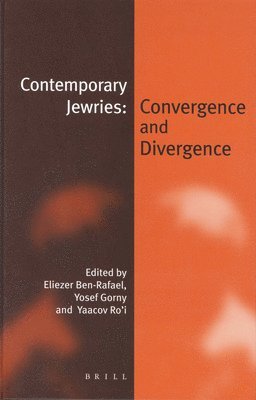
Contemporary Jewries: Convergence and Divergence
Eliezer Ben-Rafael, Yosef Gorny, Yaacov Ro'i
Häftad, 2012
979 kr
Del 18
Del 23
Postwar Jewish Displacement and Rebirth
Françoise S. Ouzan, Manfred Gerstenfeld
Inbunden, 2014
2 989 kr
Del 8
Identities in an Era of Globalization and Multiculturalism (paperback)
Judit Bokser Liwerant, Eliezer Ben-Rafael, Yosef Gorny, Raanan Rein
Häftad, 2010
1 529 kr
Del 24
Del 6
Jewry between Tradition and Secularism
Eliezer Ben-Rafael, Yosef Gorny, Thomas Gergely
Häftad, 2012
979 kr