
Del 19 i serien Sir Henry Wellcome Asian Series
Jewel of Annual Astrology
A Parallel Sanskrit-English Critical Edition of Balabhadra’s Hāyanaratna
Inbunden, Engelska, 2020
1 829 kr
Beställningsvara. Skickas inom 5-8 vardagar. Fri frakt för medlemmar vid köp för minst 249 kr.
The Jewel of Annual Astrology is an encyclopaedic treatise on Tājika or Sanskritized Perso-Arabic astrology, dealing particularly with the casting and interpretation of anniversary horoscopes. Authored in 1649 CE by Balabhadra Daivajña, court astrologer to Shāh Shujāʿ – governor of Bengal and second son of the Mughal emperor Shāh Jahān – it casts light on the historical development of the Tājika school by extensive quotations from earlier works spanning five centuries.With this first-ever scholarly edition and translation of a Tājika text, Martin Gansten makes a significant contribution not only to the study of an important but little known knowledge tradition, but also to the intellectual historiography of Asia and the transmission of horoscopic astrology in the medieval and early modern periods.
Produktinformation
- Utgivningsdatum2020-08-06
- Mått155 x 235 x 49 mm
- Vikt1 469 g
- FormatInbunden
- SpråkEngelska
- SerieSir Henry Wellcome Asian Series
- Antal sidor1 030
- FörlagBrill
- ISBN9789004426658
Tillhör följande kategorier
Hoppa över listan

Mer från samma författare
Annual Predictive Techniques of the Greek, Arabic and Indian Astrologers
Martin Gansten
Häftad, 2020
299 kr
Hoppa över listan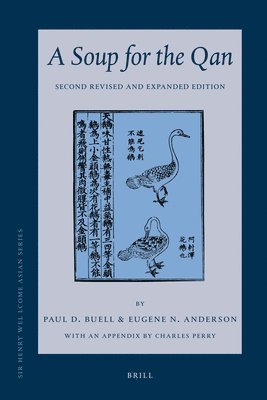

Mer från samma serie
Del 9
Soup for the Qan: Chinese Dietary Medicine of the Mongol Era As Seen in Hu Sihui's Yinshan Zhengyao
Paul D. Buell, Eugene N. Anderson
Inbunden, 2010
3 279 kr
Del 11
Del 12
Del 16
Del 17
Del 20
Del 21
Science and Society in the Sanskrit World
Christopher T. Fleming, Toke Lindegaard Knudsen, Anuj Misra, Vishal Sharma
Inbunden, 2023
2 939 kr
Del 23
Del 24
Del 7
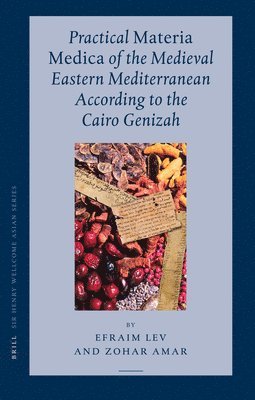
Practical Materia Medica of the Medieval Eastern Mediterranean According to the Cairo Genizah
Efraim Lev, Amar
Inbunden, 2007
5 679 kr
Hoppa över listan

Du kanske också är intresserad av
Annual Predictive Techniques of the Greek, Arabic and Indian Astrologers
Martin Gansten
Häftad, 2020
299 kr
Del 11
Del 7
Practical Materia Medica of the Medieval Eastern Mediterranean According to the Cairo Genizah
Efraim Lev, Amar
Inbunden, 2007
5 679 kr
- Nyhet
Del 3
Del 24
Del 9
Soup for the Qan: Chinese Dietary Medicine of the Mongol Era As Seen in Hu Sihui's Yinshan Zhengyao
Paul D. Buell, Eugene N. Anderson
Inbunden, 2010
3 279 kr
- Nyhet
Del 11
Del 17
Del 12