
Japanese Industrial Targeting
The Neomercantilist Path to Economic Superpower
Häftad, Engelska, 1991
2 159 kr
Beställningsvara. Skickas inom 10-15 vardagar. Fri frakt för medlemmar vid köp för minst 249 kr.
Finns i fler format (1)
Japan achieved it's present economic position by rejecting free trade theory and instead mastering neomercantilist policies which target strategic industries for development with a range of government sponsored cartels, subsidies, import barriers and export incentives. These policies stimulated an economic growth rate which averaged ten percent before 1973, and five percent since, rates four and two times greater than America's during the same periods. This book analyzes the policy making process, implementation, successes, occasional shortcomings, and challenges posed by Tokyo's neomercantilist policies toward its trade rivals.
Produktinformation
- Utgivningsdatum1991-01-01
- Mått140 x 216 x 18 mm
- Vikt394 g
- FormatHäftad
- SpråkEngelska
- Antal sidor297
- Upplaga1991
- FörlagPalgrave Macmillan
- ISBN9781349212866
Tillhör följande kategorier
Hoppa över listan








Mer från samma författare
The Foundation of Japanese Power: Continuities, Changes, Challenges
William R. Nester
Inbunden, 1990
4 849 kr
Hoppa över listan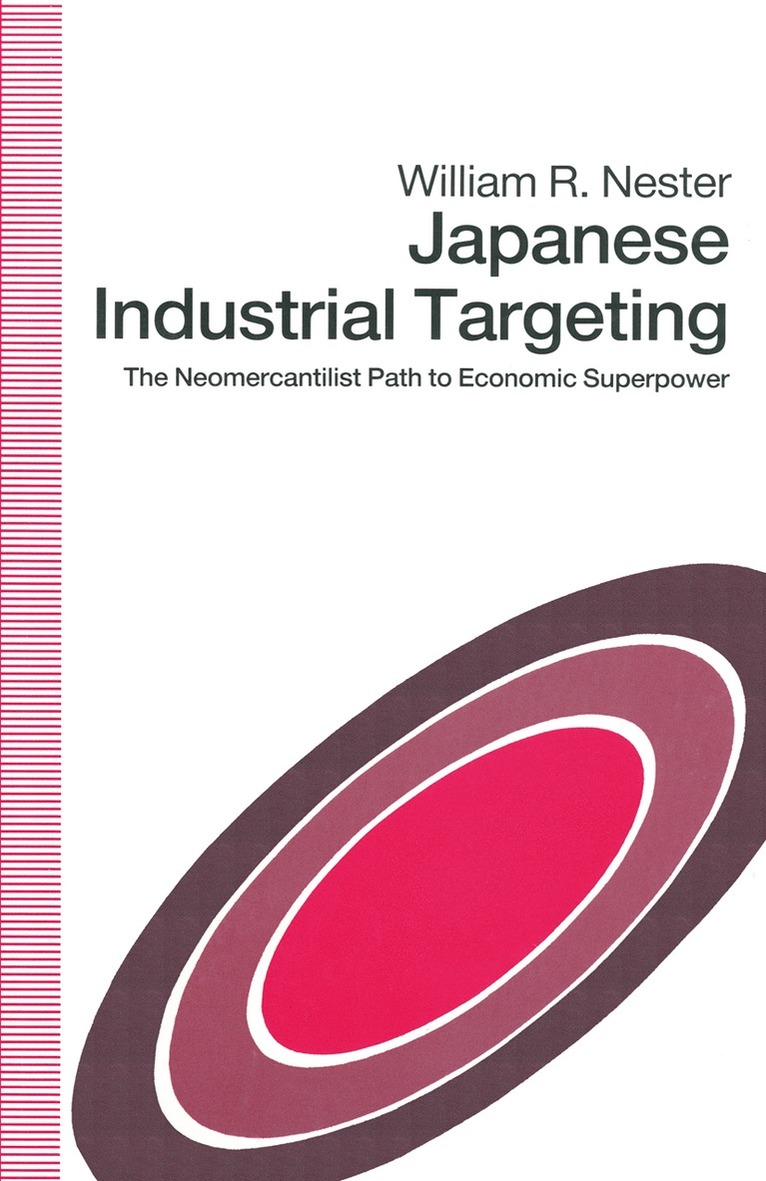



Du kanske också är intresserad av
The Foundation of Japanese Power: Continuities, Changes, Challenges
William R. Nester
Inbunden, 1990
4 849 kr